this must be archive.php

MDS World Awareness Day – 25th October

WP_20141020_006

                                    MDS World Awareness Day – Preparations for 2015

We are preparing for MDS Day 2015.  Do contact us if you’d like to participate in any events around the country to mark this international awareness day for Myelodysplastic Syndromes.
See below for MDS day 2014 – in the UK and in other countries.

MDS World Awareness Day – 25th October 2014

MDS Patient Support Groups worldwide are preparing throughout this week to mark the day on Saturday, 25th October 2014.

In the UK, patients and relatives are making use of our busy Facebook page to post pictures, messages and facts about MDS.

In Ireland, our Irish group is holding a patient meeting on Saturday WP_20141020_007

In Germany, our colleagues are having a patient information day in Munich.

10411416_758370320903477_2065326733665717063_n


Spain is hosting a radio talk, and football game.

In the USA, the MDS Foundation will be hosting a twitter chat on Saturday, on behalf of the MDS Alliance, the newly created umbrella group for all MDS support groups worldwide.
Read more on this topic and see all our colleagues worldwide here: Worldwide MDS Groups

And more about previous World Awareness Days.

We will be posting pictures and messages over the next few days to illustrate events and patient contributions.
Please also check our Patient Stories page – being updated regularly: MDS Patient Stories.

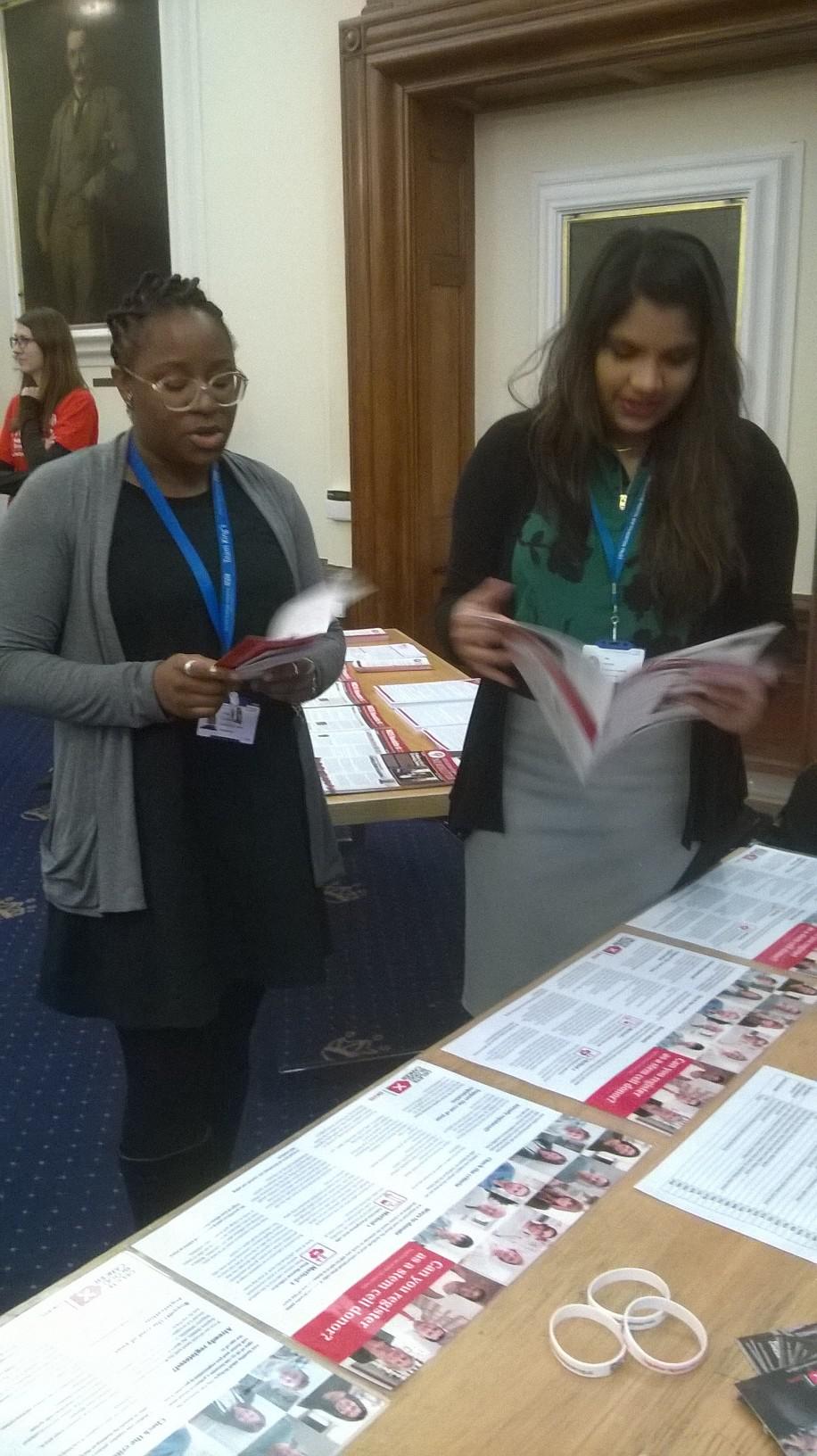
Here are the first photos of our preparation day at King’s, attended by staff and patients.  We also displayed information from Delete Blood Cancer UK, Anthony Nolan, and Leukaemia and Lymphoma Research, and Leukaemia CARE.

Thank you to all who dropped by today and picked up their badges for the 25th October – MDS World Awareness Day.

On Friday 24th – we ask you to pay particular attention to a document we will be releasing together with Leukaemia CARE, about care and treatment of older MDS patients – a Call to Action – adressed to all who look after MDS patients.

WP_20141022_004 WP_20141022_005 WP_20141022_009 WP_20141022_010 WP_20141022_012 WP_20141022_013 WP_20141022_014 WP_20141022_015 WP_20141022_016 WP_20141022_017 WP_20141022_018 WP_20141022_020 WP_20141022_021 WP_20141022_023  WP_20141022_027 WP_20141022_030

WP_20141022_002

WP_20141022_026


Consultation on proposed changes to Cancer Drug Fund

nhs england - logo

NHS England launches consultation on proposed changes to Cancer Drug Fund Standard Operating Procedures


Patients and individuals are encouraged to comment and respond to this important consultation.
The deadline is the midnight on Friday 31st October.

MDS patients have benefited enormously from the CDF to date, without which many patients would not have had access to drugs such as azacitidine and lenalidomide prior to the NICE approval.
The changes are indicative of a need to again monitor costs of new drugs – in order to sustain a system that will benefit all cancer patients.

MDS UK has attended a briefing event organised by CDF for patients groups on 20th October – and will submit comments to NHS England on behalf of MDS patients.


Further information about the consultation and proposed changes below:

The consultation is focused on a number of proposals to change the current Standard Operating Procedure, which sets out how the fund is managed.
There are three proposed changes:
• Implementation of a re-evaluation process to assess the drugs on the current national list, and remove those which represent the lowest levels of clinical benefit
• Inclusion into this re-evaluation system of a confidential element which assesses the average cost of a drug per patient in relation to the clinical benefit delivered
• Inclusion of an option which enables pharmaceutical companies to make adjustments to drug prices, in order to allow their drug/indication to remain on the CDF list

The proposals represent a significant change to the way the CDF is currently managed, and therefore NHS England is keen to test out the proposals with as many people as possible who have an interest in the fund.

Details of the consultation, and how you can submit responses, can be found on the CONSULTATION PAGE, where you will find two documents and an online consultation survey:
A CONSULTATION GUIDE – this document introduces the Standard Operating Procedure; explains why we are consulting on it, and sets out the proposals for change and associated questions;
THE PROPOSED STANDARD OPERATING PROCEDURE FOR THE CDF – this document sets out of the proposed changes to the current procedures, and are clearly highlighted for ease of reference.

If you have any questions about the materials listed above please contact: england.cdfconsultation@nhs.net 


Cancer Drug Fund News

department-of-health28/08/14 – NHS England have announced the allocation of further funds for the Cancer Drug Fund (CDF)

This is good news for cancer patients, whilst we are waiting to see how NICE will finally alter their appraisal system, following the recent consultation on Value Based Assessments (VBA).

However – the CDF is only a temporary solution to a long-term problem.
Until NICE resolves the issues it has with appraising drugs for rare diseases, and working with scarce data, we will continue to need a CDF to temporarily plug the gaps.
HTA stakeholders do assist NICE in every way they can – in their search for a better understanding or more precise data, or to correct misunderstandings – but this takes time, efforts and money.  And in rare or life-threatening diseases – time is something most patients don’t have much of.

Here is the full article, from the CDF webpage:
“NHS England sets out plan for a sustainable Cancer Drugs Fund – 28 August 2014 – 00:01

NHS England has today pledged a £160m boost over two years for the Cancer Drugs Fund, giving more patients access to innovative drugs not routinely available on the NHS.

Two new drugs will now also be added to the Fund; enzalutamide for prostate cancer and lenalidomide for a group of patients with myelodysplastic syndrome, a rare blood condition.  (* see note below for lenalidomide clarification)

With an annual budget of £200m, now rising by 40 per cent to £280m, the Fund has delivered important benefits for more than 55,000 patients since it began in 2010.

Professor Peter Clark, Chair of the Cancer Drugs Fund (CDF), has written to NHS England Chief Executive Simon Stevens recommending CDF’s panel of experts re-evaluate a number of drugs currently on the list, making evidence-based decisions about what will deliver greatest benefit to patients. NHS England has accepted and agreed these proposals. Copies of the letters are on the NHS England website.

Professor Clark, who is an oncologist, said: “The Cancer Drugs Fund has had a positive impact on cancer treatment for patients, with 2,000 people gaining access to the Fund every month. To ensure patients continue to have access to the best innovative treatments now and in the future, we must re-evaluate some of the drugs on the list. This is absolutely the right thing to do for patients, and I am pleased Simon Stevens has accepted my recommendations.”

Responding to Professor Clark’s proposal, Simon Stevens, NHS England’s Chief Executive, said: “Since its inception, The Cancer Drugs Fund has successfully enabled the funding of new cancer medicines for tens of thousands of patients in England. We want to build on that success by expanding funding again this year to enable cancer patients to access innovative effective new treatments.

“Within this extra funding we want to ensure the drugs provide maximum benefits to patients and that the CDF incentivises responsible pricing by drug companies. We want to create a sustainable Cancer Drugs Fund that will ensure patients don’t miss out on innovative treatments that are on the horizon.”

Mr Stevens has also asked Professor Clark to work with NICE, patient groups and the Association of the British Pharmaceutical Industry (ABPI) to develop options for ensuring greater alignment between CDF and NICE assessment processes. The CDF panel will also develop options for a new Evaluation through Commissioning scheme. This would allow the evaluation of the clinical effectiveness of promising new drugs, which are not currently supported by enough evidence to allow NICE to recommend they are made routinely available.

The CDF panel, comprising doctors, pharmacists and patient representatives, will review all available evidence for a number of drugs currently on the list. The panel’s decisions will be published in due course.”
Cancer Drug Fund article

MDS UK is particularly pleased to hear that Mr Stevens is valuing cooperation with patient groups – which actually the CDF has been doing exceptionally well already.  We thank them for this good working relationship – and look forward to working further with the CDF team whenever necessary.
We also read the following in the article in the FT:

“Sir Andrew Dillon, Nice chief executive, suggested in an interview with the Financial Times last week that, once the CDF expired, a new way should be found to evaluate drugs. This would potentially allow drugs to be launched for an interim period so that information could be gleaned about their effectiveness before a final price was agreed.”   Financial Times – full article.

Having an interim decision – especially when NICE is unable to make a clear decision, due to uncertainties in the cost-effectiveness financial model – is something MDS UK has suggested at previous NICE appraisal meetings.
We therefore definitely welcome such a suggestion from Andrew Dillon – and hope this will be implemented as soon as possible.  This would most certainly help to reduce delays and would help to gather the necessary practical evidence often missing with rare diseases and scarce trial data.
It may also help to rely less heavily on the current QALY system, which again is inadequate for scarce data.

A further NICE improvement would be to allow all stakeholders – clinical experts, patient experts and pharma – to be present at all NICE appraisal meetings – in order to provide additional expert information and reduce misinterpretations.  Currently only the pharma industry is allowed to participate in all appraisal meetings.
Clinical experts – as well as patient experts are only allowed as public observers – after the initial NICE meeting.

* The CDF has now approved the use of lenalidomide for MDS del 5q patients with 1 more chromosomal abnormality.
NICE has now already approved lenalidomide for del 5q as a single chromosomal abnormality – see our previous News item here: 
NICE approves lenalidomide – 20/08/14

Further news and media coverage of the CDF announcement:

Dept of Health press release

Guardian article

Reuters article

Telegraph article

The Independent

Daily Mail article


UK’s first – not for profit – hotel for sufferers of life-limiting illnesses

The Grove - logo

When looking for a meeting location for our new local Patient Support Group in Bournemouth, we came across a very special hotel – the Grove. Not only does it cater exclusively for cancer patients – it is also a charity – and operates on a not for profit basis.
MDS UK will now start holding it Bournemouth local meetings there – from November 2014.
We would like to thank the Grove for their assistance and cooperation in setting up our meetings there – and look forward to meeting the staff and enjoying the location with our MDS UK patient members.

And we’d like to share the information about this unique hotel with our readers – as the Grove is the UK’s only not for profit hotel for use exclusively by sufferers of Cancer and other life-limiting illnesses, specially adapted to the needs of their guests.

Here are their full details – and a description of services:

The Grove Bournemouth Hotel

UK’s exclusive hotel created for sufferers of life-limiting illnesses

The seaside resort of Bournemouth is the idyllic setting to escape from the world for a while. For Cancer sufferers, often that is exactly what is required – taking their mind off their illness and getting away for a short, well-deserved break. With first class care in mind, The Grove Hotel in Bournemouth has recently been launched, serving as the UK’s only hotel of its kind exclusively for use by sufferers of Cancer and other life-limiting illnesses.

Previously, Albany Lodge was launched to serve this market, and had been running for over 25 years. However, with growing demand, the Albany was no longer fit for purpose and a new and even more charming site needed to be found – resulting in the launch of The Grove.

Situated on Bournemouth’s leafy East Cliff, and just minutes away from the town’s famous 7 miles of golden beaches, The Grove Hotel was created as a haven offering a week or two away from the tough business of getting well, and simply focuses on recuperation and relaxation. During their stay, guests of the hotel will enjoy evenings of entertainment arranged by the hotel and exceptional dining laid on by their team of talented chefs, who are entirely mindful and trained to deal with any specific dietary requirements which are products of the guests’ illnesses. 

To the delight of guests, The Grove has a dedicated beach hut in a prime location so that guests can take advantage of the sunshine in the ultimate comfort. To enhance their stay, complimentary coach tours are arranged by the Hotel to allow guests to explore the surrounding areas of the New Forest and the Purbeck and Jurassic coast.

Given its focus on healthcare, The Grove has a duty nurse available 24 hours a day. They are on hand to offer guidance and support and to arrange any services that they may require. The Grove is owned and operated by Macmillan Caring Locally based in Christchurch Dorset, whose aim is to support people suffering from cancer and other life threatening illnesses, as well as members of their family and carers. As the hotel is a registered charity, they welcome support and donations to help them provide outstanding breaks for their guests.

General Manager of The Grove Hotel, Brenden Howard, spoke about the idea behind the property: “Our aim was to create the UK’s leading hotel exclusively for sufferers of life-threatening diseases. Of course we welcome their family or carers to join them at the hotel which will hopefully enhance their stay. We strive to offer a serenely peaceful and enriching holiday, whilst offering the highest level of service and care.”

Hotel guest, Gillian Burr, commented on her stay: “The staff at The Grove are just wonderful – nothing is too much trouble for them! The food was also fantastic – such a lovely variety every day! This is exactly what I needed to take my mind off things for a week, and I cannot wait for my next holiday here.”

For more information, visit www.thegrovebournemouth.co.uk.

Please click here if you’d like to download their leaflet: The Grove – leaflet, do you need a holiday?


We look forward to our first Bournemouth Group meeting  on 12th November  – click here for details about the meeting.


Scientists discover new way to make human platelets

Another fantastic discovery suggest that human platelets could be produced artifically through the use of stem cell technology. There is a number of benefits associated with the laboratory generated platelets of relevance to those who rely on frequent platelets transfusions.

For more details read the full article on Bio-Medicine website (click here to access), also copied below:


Scientists discover new way to make human platelets

Scientists report they have discovered a new way to make fully functional human platelets, which are the blood cells that form clots.

Using human stem cells and a device called a bioreactor, which mimics the body’s natural way of producing blood cells but on a larger scale, the researchers said their method eliminates risks and complications associated with donor blood transfusion. Those include a five-day shelf-life, contamination, rejection and infection. They added that their findings could help meet increasing global demand for donor blood.

“The ability to generate an alternative source of functional human platelets with virtually no disease transmission represents a paradigm shift in how we collect platelets that may allow us to meet the growing need for blood transfusions,” study author Jonathan Thon, from the division of hematology at Brigham and Women’s Hospital in Boston, said in a hospital news release.

Blood cells, such as platelets, are made in bone marrow. The bioreactor, the researchers explained, combines the major components of bone marrow and models its composition and blood flow characteristics.

“By being able to develop a device that successfully models bone marrow represents a crucial bridge connecting our understanding of the physiological triggers of platelet formation,” study senior author Joseph Italiano Jr., of the division of hematology at Brigham and Women’s Hospital and the Vascular Biology Program at Boston Children’s Hospital, said in the news release.

The researchers hope to begin human clinical trials in 2017.

“The regulatory bar is appropriately set high for blood products, and it is important to us that we show platelet quality, function and safety over these next three years since we’ll likely be recipients of these platelets ourselves at some point,” Thon said.

One expert agreed the findings could change the way platelets are collected.

“A major factor that has limited our ability to compare bioreactor platelets to donor platelets is the inefficiency of growing platelets, a problem that slows progress of clinical research,” Dr. William Savage, medical director of the Kraft Family Blood Donor Center at Dana Farber Cancer Institute/Brigham and Women’s Hospital, said in the news release. He was not part of the study. “This study addresses that gap, while contributing to our understanding of platelet biology at the same time.”

In the United States, more than 2.17 million platelet units from donors are transfused each year to treat trauma patients and those undergoing chemotherapy, organ transplants and surgery, the researchers noted.

The study, published July 21 in the journal Blood, was partially funded by the U.S. National Institutes of Health. Thon and Italiano are co-founders of Platelet BioGenesis, a company that aims to produce donor-independent human platelets from human stem cells.

More information

The U.S. National Institutes of Health provides more information on blood transfusions and donations.

SOURCE: Bio-Medicine. (21 July 2014). Scientists Discover New Way to Make Human Platelets [News release], Retrieved from http://www.bio-medicine.org/medicine-news-1/Scientists-Discover-New-Way-to-Make-Human-Platelets-128548-1/


Pharma companies to share experimental compounds with UK researchers

A ground-breaking collaboration project between Medical Research Council in UK and seven leading pharma companies has been announced, as drugmakers agreed to share data on their experimental pharmaceutical compounds. British academics will now be able to use pharma’s existing findings to further test these compounds and explore if they could be improved or used for other indications.

This is an incredibly useful step for both research and also in terms of improved cooperation with the pharma industry, with a huge potential for improving the health of patients in the UK and worldwide.

Full article on this innovative collaboration is available on MRC website (click here to access) but for the benefit of our readers full text also copied below:


Seven pharma companies offer up compounds to UK researchers

21 Jul 2014

UK researchers will be granted access to a ‘virtual library’ of deprioritised pharmaceutical compounds through a new partnership between the Medical Research Council (MRC) and seven global drug companies, announced today by Business Secretary Vince Cable.

AstraZeneca, GlaxoSmithKline, Janssen Research & Development LLC*, Lilly, Pfizer, Takeda and UCB will each offer up a number of their deprioritised molecules for use in new studies to improve our understanding of a range of diseases, with a view to developing more effective treatments.

The compounds have undergone some degree of industry development, but have all stalled at some point in early testing – often because they are not sufficiently effective against the disease in question. However, they may still be useful against other diseases with shared biological pathways.

These compounds are incredibly valuable to academic researchers, who can use them to understand how a disease takes hold in the body and how it might be stopped or slowed down. It is hoped that re-purposing such compounds could lead to the development of new medicines for many debilitating conditions. And because the compounds have already undergone some preliminary development, such as safety testing, any new treatments arising from the research could reach patients much faster.

Projects funded through a previous compound sharing initiative between the MRC and AstraZeneca are already demonstrating success in this area, with the first human trials of a new treatment for chronic cough getting underway (see case study below).

Professor Sir John Savill, Chief Executive of the Medical Research Council, added:

“Our ground-breaking compound collaboration with AstraZeneca attracted a huge amount interest from the academic community and saw the MRC award £7 million for research into Alzheimer’s, cancer and rare diseases. We’re now building on this success by expanding into a rolling programme with seven companies that will allow the academic community to access even more assets for use in innovative research projects. By funding studies using these compounds, which otherwise would not be carried out, we will enable scientific breakthroughs that will improve the health of patients in the UK and worldwide.”

A full list of available compounds will be published later this year, when UK scientists will be able to apply for MRC funding to use them in academic research projects. There is no fixed budget for the programme, which will make the compounds available on a continuous basis via the MRC’s normal response-mode funding mechanism. It is hoped that more companies, and more compounds, will be added as the scheme progresses.

Stephen Whitehead, Chief Executive of the Association of the British Pharmaceutical Industry (ABPI), said:

“This partnership between the Medical Research Council (MRC) and seven pharmaceutical companies is a fantastic example of open innovation that benefits both industry and academia by opening up new interesting avenues for research that may not otherwise be available, or even redirecting towards other diseases. The ABPI and our members are committed to greater collaboration with UK researchers and the whole of the academic community to improve our understanding of diseases so that we can continue to develop life-changing medicines for the benefit of patients. “

Research proposals will be submitted to the MRC, which will independently judge the scientific quality of the applications and award funding accordingly. The rights to intellectual property (IP) generated using the compounds will vary from project to project, but will be equitable and similar to those currently used in academically-led research.

Case study: from acid reflux to chronic cough

A number of the projects funded through the MRC’s previous compound sharing collaboration with AstraZeneca, launched in December 2011, are already beginning to bear fruit.

In Manchester, clinical trials are underway to see whether a drug designed originally to treat gastro-oesophageal reflux disease can be ‘repurposed’ to treat chronic cough.

Cough is the single most common reason that people seek medical care. It is thought that one in five people in the UK suffer from chronic coughing (lasting longer than eight weeks), which can have a huge impact on their quality of life.

Previous work by The University of Manchester researchers, led by Professor Jacky Smith, found that in around half of people with chronic cough, the cough reflex is related to gastro-oesophageal reflux, where the stomach contents escape back up into the food pipe causing a burning sensation.

It is hoped that the repurposed drug, which was not found to be helpful in patients with heartburn who were already taking acid-blocking treatments, may be successful in improving cough.

Further information

*A Johnson & Johnson company in collaboration with Johnson & Johnson Innovation

To request an interview with Professor Jacky Smith or an MRC spokesperson, or one of the seven companies involved in the partnership, contact Hannah Isom in the MRC press office on 0207 395 2345 (out of hours: 07818 428 297) or email press.office@headoffice.mrc.ac.uk.

SOURCE: MRC. (21 July 2014). Seven pharma companies offer up compounds to UK researchers [Press release], Retrieved from http://www.mrc.ac.uk/news-events/news/seven-pharma-companies-offer-up-compounds-to-uk-researchers/


Newsletter 5 is out!

NEWSLETTER 5 – June 2014

We have just finalised our 5th edition of our MDS UK Newsletter.

It is a bumper issue – with 16 pages – as we had a lot of information and news to cover.
In the past, we had editions of 8 and 12 pages.
We would appreciate your comments and feedback, in order to keep improving our newsletter for you, our readers.
Also let us know what else you’d like to read about – or if you’d like us to feature more – or less – of certain topics.

As ever – all registered members of MDS UK will receive a paper copy sent to their home address by the end of June.
If you have not received yours by the 1st July – please call or email us, so we can check your registration details.

All hospitals will also receive a stock of newsletters.
If your hospital is not registered with us, please contact us – and we’ll mail you all relevant information.

Patients and families – if you can’t see our leaflets and newsletters in your hospital – please ask staff to contact us – or let us know – we’ll send stocks of material to your hospital.

[one_fourth]
Newsletter5-Front

[/one_fourth]

[three_fourth_last]

June 2014

Our fifth edition of the MDS UK Newsletter is now out. Click the image to download.

[/three_fourth_last]

Previous editions of our newsletters and how to order them for hospitals can be found here:
https://mdspatientsupport.org.uk/what-is-mds/newsletter/


19th Congress of the European Hematology Association – 12th-15th June 2014

EHA logo

19th Congress of the European Haematology Association (EHA) has taken place this year between 12th and 15th June in Milan, Italy.

This event is set up for physicians and representatives of patient support groups to  promote excellence in patient care, research and education in haematology.

As part of the Worldwide Alliance of national MDS Patient support and advocacy groups, MDS UK representative – Sophie Wintrich – attended this event to better serve the MDS patient and caregiver community.Print
We have provided below a brief summary of the Patient Advocacy Track and activities.
As usual, interesting MDS clinical news and updates will be provided separately and posted on our website, Facebook and our Newsletter 6.
This year Dr Wendy Ingram in Cardiff kindly agreed to write up on MDS News at EHA.

This year for the first time, the EHA congress program is complemented by a dedicated Advocacy Track. This track combines all patient and policy related sessions into one, comprehensive yet very diverse program for those interested in advocacy in haematology, patient advocacy and other related topics; and will involve:

  • EHA Patient Advocacy Booth (booth #206)

This is a central meeting place of all patient advocates and their peers

EHA booth1-web   EHA booth3-web

  • Patient Advocates Meeting (FRI 11:30-12:30, Room Yellow),

This is a meeting for all patient advocates in order to strengthen collaboration and links between our patient advocacy groups

EHA patient meeting1-web   EHA patient meeting3-web

  • Patient Advocacy Session “Generics in Haematology: The doctors’ and patients’ perspective” (Sat 8:00-9:15, Room Amber 5+6 SW 2)

This session will outline how patients can be involved as partners in clinical research and how the challenges of informed consent, trial results, and ethics in bio banking can be turned into opportunities.
EHA19 Chair Comments – Part 1 – Generics in Hamatology: The doctors’ and patients’ perspective
Jan Geissler

EHA19 Chair comments – Part 1 – Generics in Hematology: The doctors’ and patients’ perspective
Androulla Eleftheriou

Drug quality in generics, substandard drugs, copies – the pharmacologist perspective
Atholl Johnston

Use of generic drugs and discussions with the government on drug quality
Mahmoud Hadipour Dehshal

The hematologists’ clinical perspective
Ivana Urosevic

The patients’ perspective
Sarunas Narbutas

VIDEO clips of all talks here

  • Patient Advocacy Session “The challenges of young patients with old people’s diseases” (Sat 9:30-10:15, Room Amber 5+6 SW 2

Old people’s diseases in young patients with chronic rare anaemias, Sexuality, fertility, family planning in haematological diseases.

  • ESH-EHA Joint Symposium “What do you mean, he can’t have the treatment?  An interactive session for haematologists and patients” (Sat 11.45-12.45, Amber 5+6 SW2)

This  renowned interactive EHA/ESH Joint Symposium will deal with how to explain to a patient that he/she can no longer receive treatment that is endorsed by national guidelines as her/his best option, or, in short: ‘what do you mean, I can’t have the treatment’?
EHA-ESH session-web

This interactive role playing session showed the importance of doctor patient communication in consultation – as well as patient – family interaction.  MDS UK gets many calls from patients who don’t feel comfortable asking too many questions, or requesting an additional opinion from an MDS expert at a Centre of Excellence.  Doctor patient communication is sometimes not easy for either party, especially when it comes to difficult diagnosis – but it can be improved.

  • EHA-ASH Joint Symposium “Access to medicines and fair pricing: The cost of innovative drugs” (Sat 14 June, 13:15-14:15, Room Silver, NW 2)

This EHA/ASH Joint Symposium will present a transnational view on the effects of the financial and economic crises, happening against a backdrop of an ageing population and an increasing prevalence of non-communicable diseases that weighs down heavily on health care budgets.
EHA-Drug price-web     EHA-drug price2-web
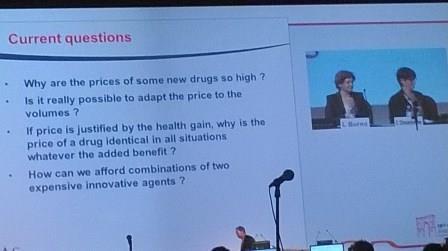
This was a really interesting session, inviting Prof JL Harousseau (ICO, France) and R Bergstroem, (EFPIA), to discuss the reasons why drug prices are so high.
Prof Harousseau is professor of haematology at the University of Nantes, France and Chairman of the French National Authority for Health (HAS). HAS can be compared to NICE, but operates more independently from Government.  He was questioning why more can’t be done to lower prices by using drug volumes.  He also asked why drug prices are identical, whatever the added benefit.
R Bergstroem is head of EFPIA: The European Federation of Pharmaceutical Industries and Associations represents the pharmaceutical industry operating in Europe.
He argued that Research and Development costs of past and future drugs need to be paid for, and that industry researchers are entitled to become millionaires or multi-millionaires (sic) should their drugs be effective and successfull.   Marketing of those drugs also needs to be paid for.

We thought that the questions were extremely good ones, but sadly, the head of EFPIA failed to raise to the challenge to answer them in a tone and professionalism this EHA audience of doctors and patient advocates expected.  Very disappointing.
The topic of drug prices is a truly difficult one – and will require a lot more flexibility from all involved to make innovative drugs available.

VIDEO – JP Harrousseau at EHA 2014

  • EHA Advocacy Session “The Future of Haematological Research in Europe” (Sat 14 June, 16:15-17:30, Room Amber 5+6, SW 2)

This is EHA’s own advocacy session highlighting EHA’s advocacy work and illustrating the importance of politics by the case of personalised medicine.

  • Scientific Working Group on Quality of Life (Thurs 18.30-20.00)

We welcome the addition of the Advocacy Track to the EHA congress programme and encourage our members to access the webcasts of the relevant sessions, which will be freely available to all on EHA website.

We will also post them on our website – when they become available – and open them up for comments on our on-line discussion forum.

20/06/14
We just added some photos of the EHA congress and the very successful Patient Advocacy Track, attended by many physicians and patient advocates from all over the world.

We thank the EHA Board again for their continued support, partnership and cooperation with patient advocates and look forward to EHA 2015, with some exciting new themes for the now very well established EHA Patient Advocacy Track.
We also congratulate this year’s EHA President Dr Christine Chomienne and all of the EHA teams and contributors for the most successful EHA congress to date – with an amazing 10.400 attendees.
And many thanks to patient advocate Jan Geissler from EUPATI and CML Advocates, for being such a strong and passionate spokesperson for all patient advocacy issues.
Finally thank you to all patient support group representatives and colleagues who attended EHA this year, helped man our patient advocacy booth, answered physician queries and requests and contributed to all patient advocacy sessions.
We hope to see many more of you at EHA 2015 in Vienna!

UPDATE – SEPTEMBER 2014 – video clips of most talks are now available from the EHA website:
http://www.ehaweb.org/news/eha-news/advocacy-track-eha19/generics-in-hematology/

Videos for 2013 EHA Advocacy sessions are available here:
EHA Advocacy 2013 – talks

 EHA booth4-web


Research Project in Scotland – artificial blood an alternative to blood transfusions

A new and very promising research project is being conducted at the University of Edinburgh with an aim to generate red blood cells in laboratory, using stem cell technology. Ultimately it is hoped that these red blood cells could be given to patients instead of using human blood donors. Using lab-generated blood, which is also infection-free, is thought to offer additional benefits particularly to those relying on regular transfusions.

Although the scientific project is still in its early stages, Dr Emma King – one of the researchers working at the University of Edinburgh – is eager to include patient views on using lab-generated blood. The team would like to set up some face-to-face interviews in Scotland to gather opinions from different groups of patients.

She sent us this message to identify MDS patient interviewees:

“My name is Dr Emma King and I am a researcher at the University of Edinburgh, based in a research group which looks at social science to do with the life sciences.

 I am currently working with a team of scientists who are seeking to grow red blood cells in the laboratory, with the aim of eventually reducing the requirement for human blood donations. My job is to find out what people think about this new technology.

 I am looking for a small number of volunteers who are transfusion dependent and live in Scotland to take part in an interview. This will involve a discussion with me about your experiences with MDS and your thoughts towards this potential new blood product. We are not able to pay you, but we are happy to travel to your home or another convenient location. The interview will last around an hour and will be voice recorded. You are welcome to have a friend or relative join in the interview with you. This project has full ethical approval from the University of Edinburgh and I am happy to provide more information about how this data will be stored and used”

Project conducted by:

Science, Technology and Innovation Studies (STIS)
School of Social and Political Science
The University of Edinburgh
Old Surgeons’ Hall
High School Yards
Edinburgh EH1 1LZ

Please visit their website for further details.

If you are interested in being interviewed by Dr Emma King, please contact our Main Office:

Tel: 02077337558
Email: mds-uk@mds-foundation.org


Greater Manchester opportunity for involvement

This is an opportunity for patients and relatives to get involved in Primary Care issues in the Greater Manchester area.
It would be beneficial if Myelodysplastic Syndromes were represented, so as to improve awareness of the disease generally – and make sure their needs are met.

We were asked to share the following information:

Call for applicants to become a member of the GMPSTRC Core Research User Group

The GM PSTRC (Greater Manchester Primary Care Patient Safety Translational Research Centre) is currently looking for new members to join their Research User Group either as a Core or Associate member.  You will need to use NHS primary care services (GP surgeries or pharmacies) in Greater Manchester, have a keen interest in health research and be able to commit to regular meetings (fees and expenses reimbursed).  For more information about the different types of membership and to download an application pack, please visit their website. (www.gmpstrc.nihr.ac.uk)
Please get in touch with this group directly if you are interested.

Thank you


Free donations by shopping