this must be archive.php

Aplastic Anaemia Awareness Day – 4th March 2015

Aplastic anaemia (AA) is a rare but serious acquired bone marrow failure disorder of considerable clinical similarity to the hypoplastic type of MDS.  In same cases AA  may also progress to MDS.

Given the link between the two conditions we often collaborate with the the support group for AA patients – Aplastic Anaemia Trust. Together we organise joint fundraising and awareness raising events e.g. annual Windsor Walk in May. We also run our local Patient Support Group meetings at King’s College Hospital in London in collaboration.

Click here for details of our next AA/MDS/AML meeting at Kings.


We support AAT’s efforts in raising awareness of this very rare blood disorder and promote the Aplastic Anaemia Awareness Day on their behalf. 

AA Awareness Day poster

Please read the AAT’s message to all its supporters below:

“On 4th March we will be holding the first Aplastic Anaemia Awareness Day in the UK when we are asking our patients, their families and supporters to help raise awareness of aplastic anaemia and the vital work of the Aplastic Anaemia Trust. The date has been chosen to coincide with the Aplastic Anemia & MDS Awareness Week in the USA.

It’s as easy as arranging a dress down day at work, holding a cake sale or encouraging friends and work colleagues to put their spare change in one of our cardboard collecting boxes. You can show your support by wearing an AAT wristband, pin badge or ribbon.

Perhaps you can educate others about aplastic anaemia by sharing your AA story in a local newspaper or radio station or use social media such as Facebook and Twitter to tell your friends about AA and the work of The AAT. The more people know about aplastic anaemia the better!

Contact Bryony at Patient Support for collecting boxes and posters. Pin badges, wristbands, ribbons and other AAT merchandise are available from our online shop or from the AAT office.

You can help us make a difference!”

Bryony Partridge, Patient Support, Aplastic Anaemia Trust

Contact details:
The Aplastic Anaemia Trust
PO Box 289
Bexhill-on-Sea
TN40 1EJ

Tel: 0870 487 0099
Email: support@theaat.org.uk


Please show your support by marking Aplastic Anaemia Day!

For further information on Aplastic Anaemia please visit the website of the Aplastic Anaemia Trust – www.theaat.org.uk

AAT-Logo


Daisy Turner – an inspirational young MDS survivor

Daisy Turner and her MDS experience

 Daisy-Turner-edited-618x350

We are pleased to share the story of a very brave and inspirational young MDS patient – Daisy Turner.

Daisy was diagnosed with MDS as a teenager and represents one of the uncommonly occurring cases of MDS in young people. However, her young age isn’t the only thing that makes her story unique. After being successfully treated with Bone Marrow Transplant few years ago, Daisy made a decision to dedicate her career to support other young people suffering from cancer. She now works as Fundraising Manager for CLIC Sargent – UK’s leading cancer charity for children and young people, and their families.

Her enthusiasm and commitment were recently recognised by Platform505 – an on-line site providing inspiration, thought and discussion for women who take an active part in life and have something to say.

An interview conducted by Platmorm505 with Diasy was published on their website last month – please click here to see the article.

PLATFORM-505-Logo-website-heading-936px

The interview can also be found on our Patient stories page – please click here to see the stories of our members: Joseph Vella, Christina Fowler, Jayne Snell, Maynel Vessey and Daisy Turner.

More stories will be added to this page in future – to help other patients and their families to learn to live with MDS and share experiences.

Please get in touch if you too would like to share your MDS story –  whether you are a patient, family member or friend.
Email it to mds-uk@mds-foundation.org, or mail it to our main office.
You may talk about any aspect of the condition, or how your experience has affected or changed you.
Feel free to add photos as well.


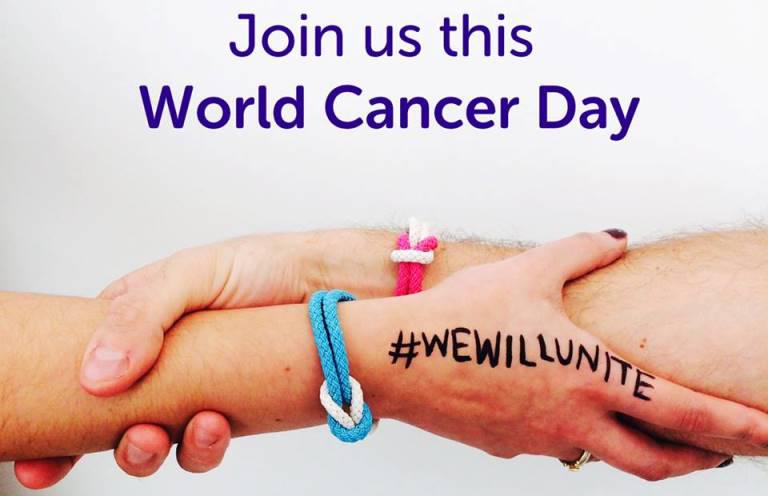
World Cancer Day – Wednesday 4th February 2015

world cancer day2


World Cancer Day is a truly global event to unite the world’s population in the fight against cancer. Its aim is to raise awareness that there is much that can be done at an individual, community and governmental level, to harness and mobilise the solutions and catalyse positive change.

World Cancer Day is an initiative of the Union for International Cancer Control (UICC), a leading international non-governmental organisation that unites the cancer community to reduce the global cancer burden, to promote greater equity, and to integrate cancer control into the world health and development agenda. Please read more about UICC and World Cancer Day here.


MDS UK supports this important initiative and calls all our supporters to join in to mark World Cancer Day – and unite in MDS.

All you need to do is write #wewillunite onyour hand – MDS – and maybe the name of the person with MDS you are supporting.
Then please post this to us on mds-uk@mds-foundation.org
We will upload all photos to this webpage as a mark of support to all those battling MDS – those who survived MDS or those who sadly lost their life to MDS.

Below you can see some of the photos we’ve go already.
Lets – all together make a giant statement to mark this important day – and show how many people struggle with this almost invisible – but very difficult disease.
Show your support to one another – together we are stronger.
Thank you!

WeWillUnite04.02.15


Cancer Drug Fund – update

Cancer Drug Fund – 20/01/15

The CDF team was recently forced to remove 20 drugs from the list of drugs they fund – in order to balance the budget allocated to them by the Department of Health.
The CDF was never supposed to become a permanent solution to the problem of funding cancer drugs.
Instead, NHS England was supposed to set in place an improved system, via Value Based Pricing, and via a reform of NICE.
To date, and in prime pre-election time, these changes have not yet been implemented, and therefore changes had to be made to how the funds for the CDF were going to be used.

In the article below, Peter Clark explains the decision and the broader issues of cancer drug funding.
He also talks about the difficulties of obtaining data that is “robust” enough for NICE – which is often a significant problem when assessing drugs for rarer cancers – as patient numbers are low.

MDS UK is glad to hear that NICE is considering changing their threshold, to reflect how the public views cancer.
It is clear that the public views cancer as a top priority – affecting people across all ages.

As a separate point on the CDF, MDS UK was slightly disappointed to hear how much importance is accorded to Quality of Life (QOL) issues – in relation to other data.  Furthermore, the CDF insists on QOL data collected during trials only – and peer reviewed data.
This is particularly frustrating for support groups who don’t necessarily have this type of data – but are able to supply plenty of QOL patient evidence – especially when such QOL of data is missing from clinical trials.
This decision to only accept a standard and established type of QOL date seems at odds with the CDF’s suggestion they would accept to fund those drugs where the evidence is still “uncertain”.

As a reminder – no MDS drugs were removed from the CDF list.
Both MDS licensed drugs are recommended by NICE:

  • azacitidine (Vidaza) – for Intermediate and high-risk MDS, AML and CMML
  • lenalidomide (Revlimid) – for isolated del 5q MDS

Only Del 5q with 1 other chromosomal abnormality is currently funded by the CDF.

Further article in the Pharmaceutical Journal – 20/01/15:

“Cancer Drugs Fund has undermined NICE, its chair admits”

Comments from its Chair, Peter Clark and NICE Deputy Chief Executive, Gillian Leng

http://www.pharmaceutical-journal.com/news-and-analysis/news/cancer-drugs-fund-has-undermined-nice-its-chair-admits/20067634.article

“The Cancer Drugs Fund (CDF) has undermined the National Institute for Health and Care Excellence (NICE) and has provided a “get out of jail card” for pharmaceutical companies, says Peter Clark, the chair of the CDF.

In an address to the Westminster Health Forum on 15 January 2015, Clark, a practising oncologist, said he regrets that the CDF has undermined the NICE approval process and admitted that the system for commissioning chemotherapy in England is “broken”.

“CDF has stacked up drug indications with no long-term decisions about the future of [the fund],” said Clark.

The CDF budget for 2014–2015 is £280m but it is set to overspend by £110m, he said. In response to the overspend, a number of drugs and indications will be removed from the fund. Clark said the move, announced on 12 January 2015, was “inevitable” and that there would be further prioritisation of the drugs that are funded through the CDF.

To be eligible for CDF funding, cancer drugs are now assessed on clinical benefit versus cost but Clark conceded that the simple evaluation used by the CDF was “in no way a cost-effectiveness analysis or doing what NICE does”. “This is all we can do,” he said.

Clark wants the CDF to fund drugs that offer significant benefits to patients while they are appraised by NICE and to facilitate further data collection and evaluation.

In Clark’s vision, a positive decision from NICE would see the drug funded through “baseline commissioning” but a negative decision could lead to one of two things happening. Drugs that received a negative decision based on solid long-term data would be removed from the CDF. Where there was uncertainty about the drug’s effectiveness, further outcome data based on its use within the NHS should be collected. In turn, these data would be shared with the drug’s manufacturer, NICE and the CDF, at which point the drug would be reappraised by NICE, but this time with “mature data”.

“My view is that with this maturity-of-data process there will be many more NICE [approvals],” said Clark.

Clark believes that cancer has a special place in people’s psyche, which influences their willingness to pay for treatment. Gillian Leng, deputy chief executive of NICE, suggested that NICE may be asked to up the cost effectiveness threshold for cancer medicines. “If cancer is deemed a priority, then we’ll make it a priority,” she said.

A report by the National Audit Office was released on the same day as the Westminster Health Forum event. It reveals that cancer survival in the UK has improved since 2011 but remains about 10% lower than the European average.”

Citation: The Pharmaceutical Journal, 31 January 2015, Vol 294, No 7847, online | URI: 20067634


LLR grant for Familial MDS/AML

LLRlogoLeukaemia and Lymphoma Grant for research into Familial MDS

MDS is not considered a hereditary disease – but there is a very small percentage of cases where 2 or 3 members of the same family are affected.

This is why Leukaemia & Lymphoma Research have granted the Barts Cancer Institute £1.4 Mio pounds for research into this really important area.  This grant will help researchers get closer to understanding why this happens – and help families at risk.

MDS UK looks forward to working with Barts and LLR to support MDS families affected by this diagnosis.


FMLlogoFrom the Barts Cancer Institute website:
http://www.bci.qmul.ac.uk/news/grants-a-awards/item/llr-grant-fml-bci-blizard

What are the research aims?

The programme begins in April 2015 and aims to uncover the cause(s) of familial myeloid leukaemia (FML) that include principally acute myeloid leukaemia (AML) or myelodysplastic syndrome (MDS) and to provide the necessary companion diagnostics to see improvements in diagnosis and management of these groups of patients.
Current challenges for researchers and clinicians working on FML include:

  •     It is an under-reported condition
  •     Patients themselves may be unaware of their familial predisposition
  •     The genetic basis is known in fewer than half of affected families
  •     Large variation in the age of onset, disease manifestation and transmission via otherwise healthy mutation carriers
  •     Absence of customised diagnostic techniques to meet the clinical needs of this patient group and their families.
  •     Few clear clinical guidelines
  •     Little known regarding “clinical heterogeneity” (differences in symptoms), or the nature of secondary mutations impacting on disease outcome

Professor Dokal said:

“This research award represents the most comprehensive and integrated programme to date internationally. We aim to change our understanding of this group of diseases as well as clinical management and outcomes. The research will be a collaboration, drawing on expertise across the medical school and we look forward to getting underway.”

The project’s aims include:

  • Identify and characterise new cases of leukaemia and MDS to build our understanding of this group of life threatening disorders.
  • Determine the genetic variability of the disease including what governs its progression from mild to severe.
  • Find and study novel disease-related genes, as many patients remain uncharacterised at the genetic level.
  • Improve clinical management by establishing centralised genetic testing of patients with known or suspected of having an inherited   component and the development of specific guidelines and a patient support group.

Professor Fitzgibbon and Dr Vulliamy summarised:

“Studying larger series of familial cases will provide an unique insight into these diseases compared with  looking at sporadic cases alone; when every case has the same starter mutation we hope to gain an understanding of disease latency (time taken for the onset of overt disease) and offer explanations for the heterogeneity in outcome seen both within and between families”

Professor Dokal went on to say:

“Collectively these studies will enable us to determine the causes of leukaemia and familial myelodysplasia (MDS). From this we hope to develop new diagnostic genetic tests for these patients, and more accurately predict the number of patients with these disorders to facilitate better planning of health services. Together, this will significantly improve clinical outcomes for patients.”

Patient Support

Part of this project is focused on helping patients and their physicians correctly manage current and future treatments. For example, while we would often select people’s siblings as bone marrow donors if the need arises, a sibling with no symptoms could not donate for MDS, as they might also have mutations despite not experiencing the disease themselves.

As well as the medical practicalities, there is the need for personal support. The internet has provided useful spaces for patients with rare diseases to share their experience and discuss challenges in understanding and helpful environments – together with patients, our researchers will help set up such groups.


Researchers awarded a £1.4million from the charity Leukaemia and Lymphoma Research

12 January 2015
http://blizard.qmul.ac.uk/about/news/1053-researchers-awarded-a-1-4million-from-the-charity-leukaemia-and-lymphoma-research.html

A team of researchers from the Blizard Institute (Professor Inderjeet Dokal and Dr Tom Vulliamy) and Barts Cancer Institute (Professor Jude Fitzgibbon) have been awarded a Specialist Programme Grant of £1.4million from the charity Leukaemia & Lymphoma Research. This award constitutes a five-year programme entitled ‘The biology and management of familial myelodysplasia and leukaemia’ and will begin in April 2015.

The team aims to identify and characterise new cases of familial myelodysplasia (MDS) and leukaemia, determine the genetic variability of the disease including progression from mild to severe disease, and improve clinical management by developing specific clinical guidelines and establishing a patient support group.

This research award represents the most comprehensive and integrated programme to date internationally, as it aims to provide a step change in the basic understanding of this group of diseases as well as in clinical management and outcomes.


TED talk on MDS/AML research – by expert Dr A Raza

TED talk on MDS/AML research by expert Dr Azra Raza.

Published on 15 Jan 2015

Cancer research relies heavily on testing drugs in mice — yet it’s clear that for effective treatment, we need to be testing in humans. In an informative talk, oncologist Azra Raza walks us through the challenges of personalized cancer research and offers a potential solution, based on decades of sample collection.

Oncologist Azra Raza is the director of the MDS Center at Columbia, where she moves the latest cancer therapies from theory to practice.

This talk was given on Saturday, November 1, 2014 at TEDxNewYork. The theme was “Grand, Central.” For more information, visit http://tedxnewyork.com or follow http://twitter.com/tedxnewyork.

More news to on fundraising event set up to help research on MDS in the USA:

The Columbia University Medical Center has benefited from a great fundraising concert, to help fund further research into MDS.
Read more here:

http://www.nearnessofyouconcert.org/

columbiaconcertCancer has either directly or indirectly touched practically everyone. Since the sequencing of the human genome, a host of rapidly evolving technological advances have thrown open exciting new vistas for therapy driven research, with the aim ofcuring several cancers. Thanks to the work of hundreds of thousands of investigators over the last several decades, we are finally witnessing encouraging developments in several types of cancers already.

Columbia University Medical Center (CUMC) finds itself at an auspicious moment with the opportunity to dramatically change the course of Myelodysplastic Syndrome (MDS) research, treatment and patient care. Every element needed to discover a cure for MDS is here—our ability to perform research with the largest group of patients and tissue samples; the technology and facilities offered by the Herbert Irving Comprehensive Cancer Center (HICCC); the capacity to approach every area of patient care; and our access to the best clinical staff in the field. CUMC is eager to capitalize on this rare opportunity to become the leader in MDS care in the country, and the world.

Performers and Line up:

Hosted by Deborra-Lee Furness and Hugh Jackman. The Nearness of You Concert in honor of Michael Brecker. Special performers included Paul Simon, James Taylor, Dianne Reeves, Randy Brecker, and Bobby McFerrin.

This further article provided more information about Michael Brecker’s battle with MDS:
http://www.guitarworld.com/acoustic-nation-paul-simon-and-james-taylor-headline-concert-benefit-cancer-research

On Tuesday, January 20, 2015, Paul Simon, James Taylor, Bobby McFerrin, and other prominent musicians will honor the memory of their friend and colleague, 15-time Grammy-winning saxophonist Michael Brecker, at “The Nearness of You” benefit concert in New York City.

Hugh Jackman and Deborra-lee Furness are the benefit chairs, and Meredith Viera will serve as master of ceremonies.

Proceeds from the concert will support cancer research at Columbia University Medical Center (CUMC) and the work of Azra Raza, MD, and Siddhartha Mukherjee, MD, PhD. Dr. Raza is director of the Myelodisplastic Syndromes (MDS) Center at CUMC.

Dr. Mukherjee is a physician and researcher at the MDS Center. In 2011, he won a Pulitzer Prize for The Emperor of All Maladies: A Biography of Cancer.

In 2004, Brecker was diagnosed with MDS. In need of a bone marrow transplant, he searched in the International Bone Marrow Registry for a match. He failed to find a matching donor, and in 2007 he died at age 57.

As a result of the tens of thousands of people worldwide who registered in an effort to save Brecker’s life, 54 lives were saved when new registrants were perfect matches for others in need.

“When I learned that a cure for MDS will likely provide the key to curing leukemia, I realized there was no better way to honor my husband’s legacy than by raising important funds for research through this benefit concert,” said Brecker’s widow, event producer Susan Brecker.

Partial support of the “The Nearness of You” concert has been provided by Novartis. The concert will be held in The Appel Room at Jazz at Lincoln Center’s Frederick P. Rose Hall. General tickets, starting at $200, may be purchased as of Monday, November 17, at The Jazz at Lincoln Center box office, located on the ground floor of the Time Warner Center (Broadway and 60th Street), by Center Charge phone at 212-721-6500, or online at www.jazz.org/events/all/”

This concert helped raise $1.2million dollars – which will help this particular research center to work further on MDS and AML.
Together with all the work done in all international haematology experts centres – research is getting closer to a cure for MDS and AML.


MDS patients achieve access to vital new treatment option

January 2015 update
Equal and easy access to MDS drugs is crucial for all MDS patients. Here is an update on the MDS specific treatments available currently :

  • Azacitidine (Vidaza) – NICE and SMC recommended for routine NHS use – available nationwide in the UK
    Licensed for IPSS risk groups Intermediate 2 and high-risk MDS, AML and CMML.
    Must be given for at least 6 cycles – followed by a biopsy to check response to the drug.

  • Lenalidomide (Revlimid) – NICE and SMC recommended for routine use in NHS:
    Licensed for isolated del 5q MDS patients who are transfusion dependent.For patients with del 5q MDS plus 1 other chromosomal abnormality – lenalidomide is available through the Cancer Drug Fund.

    Lenalidomide is sometimes also used for MDS patients without del 5q – either as part of a trial, or via IFRs (Individual Funding Requests), and has shown good results for many patients.
    Please speak to your haematologist to find out if you may benefit from trying this drug out.

  • Deferasirox (Exjade) – this oral iron chelation should be available anywhere in the UK, but patients may need to try the traditional pump treatment deferoxamine first – to evaluate its ease of use.
    Let us know if you need/wish to be on this oral chelation drug but experience funding problems
    For MDS patients on regular blood transfusion and with a high ferritin level.

Always contact us should you have problems accessing any drugs recommended by your haematologist.  Local commissioning can vary unfortunately.

Always also involve your MP if you have any difficulties accessing medication to help with your MDS.

March 2013:
Azacitidine now seems to be easily available throughout the country – which is wonderful news.

Should anyone encounter any issues however – please contact us.
As a reminder – azacitidine must be given and funded for at least 4 cycles to establish whether the patient is responding to the drug (unless of course clinicians decide to stop the treatment for clinical reasons).
Some patients may not respond until 6 cycles – so discuss this with your physician.

Other issues our patients encounter:
Oral iron chelation drug: Some patients have reported access/funding problems for the drug Exjade (deferasirox).
Generally speaking, patients who need iron chelation – due to numerous blood transfusions – are first asked to use the Desferal (deferoxamine) pump or injections to reduce their ferritin levels.
If this method proves unsuitable for patients – or when patients do not tolerated the desferal pump, the oral chelator Exjade (deferasirox) can be prescribed and must be funded by the PCT (Primary Care Trust).
Each PCT will have issues their own funding guidelines about this – so it is worth checking those and discussing this with your haematologist or specialist nurse should you encounter problems.

Also – always inform your MP about any treatment access issues you encounter.  This is of special importance with the new commissioning methods in place.

And of course – send us details of the problems – so we can help – and highlight the issues.

August 2012:
Access to MDS treatment has improved immensely since the NICE approval of MDS drug azacitidine in February 2011.

See all details in article below.  Azacitidine is now available on the NHS in all hospitals – and funding is now no longer an issue.

Should you encounter any difficulties – please contact us.

We will shortly also include more news about treatment access.

London, 17 February 2011

The National Institute for Health and Clinical Excellence (NICE) announced today that Vidaza (azacitidine), the only licensed drug available specifically to treat myelodysplastic syndromes (MDS) – a range of life-threatening bone marrow disorders – will be available through the NHS. The MDS UK Patient Support Group, which has been in consultation with NICE during the approval process and campaigned on behalf and in conjunction with MDS patients across the UK, welcomes this announcement.

There are nearly 3,000 new cases of MDS in the UK each year and many people newly diagnosed with MDS have not heard of this disorder before. A person with MDS will suffer from chronic tiredness and weakness due to the often extremely low levels of haemoglobin, owing to a malfunction in the bone marrow in producing the correct quantity and quality of blood cells. This is debilitating in itself and often requires regular blood transfusions.

Azacitidine is an anticancer drug that is thought to work by re-establishing cells’ natural mechanisms to control abnormal growth. The final appraisal determination by NICE recommends the use of azacitidine for the treatment of MDS, chronic myelomonocytic leukaemia (CML) and acute myeloid leukaemia (AML) following a revision to the patient access scheme provided by Celgene (the manufacturers of azacitidine). Rodney Taylor, Deputy Chairman of MDS UK Patient Support Group said, “I am delighted to hear of NICE’s decision to recommend azacitidine for these patient groups which can benefit from this form of treatment. Having been on azacitidine myself, I know how effective it can be in promoting a good quality of life, giving independence from blood transfusions and allowing patients to lead a normal family life. Azacitidine is the only specific treatment for MDS that improves quality of life, prolongs survival and delays disease progression. It is great news that many more patients will now be able to benefit from it.”

While the announcement is good news for MDS patients in England and Wales, MDS UK Patient Support Group is concerned that access to this vital new treatment is still denied to MDS patients in Scotland, who are still waiting for a decision from The Scottish Medicines Consortium (SMC). We urge all concerned to apply both maximum effort and the highest priority to bring azacitidine to Scotland, in line with England and Wales. “Clearly I am delighted that NICE has approved azacitidine for use in England and Wales in conjunction with the associated patient access scheme,” said Dominic Culligan, Consultant Haematologist, Aberdeen Royal Infirmary, Scotland. “I hope that Celgene will re-submit azacitidine to the SMC as a matter of urgency, so that further consideration can be given to making this important treatment for high risk MDS and some patients with AML available in Scotland.”

It is a distressing reality that, during the protracted evaluation process attendant to the successful outcome of this appraisal, some MDS patients have progressed to AML, and some did not survive, in the absence of azacitidine. MDS UK Patient Support Group are aware of the complex financial constraints and cost effectiveness criteria attendant to the adoption of new drugs, and ask only that even more effort is applied in reaching speedier positive conclusions in critical, end of life situations such as MDS.

This recommendation for use of azacitidine was obtained after the manufacturer of the drug agreed a revised patient access scheme with the Department of Health in which azacitidine for the treatment of myelodysplastic syndromes, chronic myelomonocytic leukaemia and acute myeloid leukaemia would be available with a discount. This discount is commercial-in-confidence.

Implementation of this new NICE guideline:

When a NICE technology appraisal recommends use of a drug or treatment, or other technology, the NHS must usually provide funding and resources for it within 3 months of the guidance being published. Please do let us know if you experience any problems accessing azacitidine during this time, as the funding for the drug moves from the Cancer Drug Fund to a standard NHS drug recommended by NICE.


Haematology conference updates – Part 1

Further updates on clinical and research news from the two main haematology conferences in Europe and the USA.

Part 1 – Europe – from the EHA conference
Part 2 – International – from the ASH conference (report in preparation)

EHA logo

Report provided by
Dr Wendy Ingram
Consultant Haematologist, University Hospital of Wales, Cardiff

Report from the 19th Congress of the European Haematology Association (EHA), Milan, June 2014

The EHA Congress continues to attract international experts and delegates from across the globe providing the opportunity to exchange cutting edge scientific and clinical data.   With respect to MDS, significant advances have been made in the understanding of the biology of the disease and as such, remained the focus of this year’s meeting.

MDS Biology

An excellent educational session led by three key international MDS speakers provided an overview of the biology and genetic mutations implicated in MDS.  Technological advances have enabled the scientific community to identify many of the gene mutations involved in MDS, although the precise mechanism of how such genes cause disease remains unanswered.
Many of these genes are currently not tested for in routine practice.  The data presented supports the need to move towards integrating such developments, in order to help both with the diagnosis and with treatment decisions.
Some of the gene mutations have been shown to correlate with prognosis as well as response to therapy. One example of which is the TET2 mutation, which has been shown to predict a better response to azacitidine or decitabine therapy.
On the contrary, other mutations correlate with a poorer response to therapy in particular following allogeneic stem cell transplantation.
Current studies in larger groups of patients are being conducted to provide us with more knowledge of how and when such gene mutations should be used in daily practice.

Prognostic Scoring Systems

Many of you will be familiar with the newer prognostic scoring systems such as the IPSS-R (revised international prognostic scoring sytem) and WPSS (WHO prognostic scoring system).  Data was presented at both the educational and poster sessions supporting their continued use as they predict both survival and risk of transforming to leukaemia.  Furthermore, a correlation between prognostic score and outcome following transplantation was described.  As such, the use of prognostic scores remains an invaluable tool to guide clinicians and patients alike during the often difficult time of when to commence therapy.

The response to azacitidine remains difficult to predict.  An azacitidine prognostic score has been developed which correlates with the likelihood of responding to therapy.  Larger studies are required to support its use in routine practice.  Such scores will enable us to better predict if a therapy is likely to benefit a particular patient.

Advances in MDS Therapy

The older age of many MDS patients and frequent co-existing medical illnesses continues to be a challenge when treating MDS.  As such, supportive care with blood transfusions and treatment of infections remains the mainstay of therapy.  Enrolment into clinical trials often proves difficult as a result of the issues described above.  Nevertheless, despite current treatments being limited, new therapies are being explored.

With regards to lower risk MDS several clinical studies being conducted are focused on improving the blood count (anaemia) and reducing the need for blood transfusions.  One such drug called Rigosertib is an oral agent, which has shown promising results in early clinical studies.
Another exciting and promising agent called ACE-536 has been developed for the treatment of anaemia. Again a reduction in transfusions and improved blood counts has been observed.  Both of these agents require further studies in larger groups of patients.

An oral form of azacitidine is also being explored in lower risk MDS patients who are transfusion dependent and who have a low platelet count.  This study is currently recruiting is selected centres in the UK.

Drugs which increase the platelet count, (Romiplostim and Eltrombopag) also remain in clinical trial development and show promise in early studies.

Azacitidine remains the only licensed therapy in higher risk MDS.  Many of the studies in this group of patients are focused on the addition of agents to azacitidine.  An example of which is the ALLG MDS4 study, which is evaluating the outcome of dual therapy (lenalidomide and azacitidine).  The results of such studies are awaited.

I remain excited by the developments in the field of MDS and look forward to reporting any further developments over forthcoming years.
Dr Wendy Ingram

We thank Dr Ingram for her contribution, help and valuable time getting this information to us.

We are now awaiting reports from several other physicians on the more recent ASH congress – for Part 2 of this research update.

If you are a haematologist, researcher or nurse working in the field of MDS – and would like to report back to us on any conference you have attended, please contact us.  We are always keen to provide our patients with some clear and practical information regarding on-going research.
Please contact us on mds-uk@mds-foundation.org


2015 opportunities to support MDS UK

ULTRA Challenge series in 2015

Walk it, Jog it or Run it – choose your distance!

 It’s Your Challenge – Your Way!

ultra challenge logo

If you’re looking for a challenge in 2015 you might be tempted to join any of the following 2015 events and help raise funds for our charity.

Several people have already signed up – but we need more brave participants to help us maintain our services in future.

Click here to read more about our first 2015 Ultra fundraising Team.


These challenges are organised by Action Challenge. Further information from the organisers about the ULTRA Challenge 2015 series below:

Whether you set out from London towards the coast, along the river or canal towpath into the countryside, or make a weekend of it on the Isle of Wight – push yourself further in 2015. Walk, Jog, or Run a full 100 km distance – with some training, our support & famous hospitality – it’s achievable! With 50 km & 25 km options also – there’s a Challenge here for everyone! Join as a Team or as an Individual, and fundraise for a Charity of your choice. It’s Your Challenge, Your Way, for Your Charity!

These series of events are all fully supported, with rest stops, medics, free food & drinks, marshals along the route, and massages at various rest stops. At the finish line, you’ll be welcomed back with a glass of bubbly, commemorative t-shirt, and a finisher’s medal to cheers and celebrations from family and friends! And if that wasn’t good enough, you’ll go home proud of your achievement, safe in the knowledge that you’ve made a real difference in helping your charity!

To sign up any of the Ultra Challenges, please see the website links below and follow the instructions to register. By you taking part, it would be helping to make a real difference to your chosen charity and we know it’s an amazing experience that you’ll never forget.

• 100km – £49 to register with a minimum fundraising target of £475 for your chosen charity
• 50km – £39 to register with a minimum fundraising target of £295 for for your chosen charity
• 25km – £29 to register with a minimum fundraising target of £175 for for your chosen charity


London 2 Brighton Challenge, 23rd – 24th May 2015

Hundreds of registrations have already been flooding in for one of our most popular and iconic events! New for 2015 is the 44km second half route addition, which means participants can now choose between this; the first 56km or the full 100km. This is now one of the UK’s greatest endurance walking challenges, and the UK’s largest Ultra-Marathon run.

For further details about the London 2 Brighton Challenge or to register, click here.

Grand Union Challenge, 27th – 28th June 2015

London’s Great Escape saw a fantastic first year launch and is now ready for 2015 too! A scenic challenge that follows the Grand Union canal out of London towards the Chilterns, this has all kinds of routes available including 25km (a choice of all 4 legs!), 50km and 100km. Push yourself further for 2015 and explore this fantastic hidden green corridor out of the capital – it’s one of London’s best kept secrets!

For further details about the Grand Union Challenge or to register click here.

Isle of Wight Challenge, 2nd – 3rd May, 2015

With a brand new date for 2015 – the Isle of Wight Challenge has partnered with the Isle of Wight walking festival – now part of Europe’s biggest walking festival! A 106 km coastal loop route, or challengers can tackle a 30km route to the needles, or a ‘half-way’ 56km challenge – all centring around our ‘Base Camp’. Arguably the toughest challenge of the series – but will be one of the most rewarding!

For further details about the Isle of Wight Challenge event or to register here.

The London 2 Cambridge Challenge, 29th – 30th August 2015

New for 2015 – The London 2 Cambridge Challenge is a 100km or 50km walk or run following the quiet and pretty River Lea out of the capital. The route continues across wild flower meadows and through farmland, occasionally passing through quaint rural villages, before joining a direct route into Cambridge. An iconic and historic city to mark the end of an epic challenge.

For further details about the London 2 Cambridge Challenge or to register click here.

Thames Path Challenge, 12th – 13th September 2015

Due to be 2015’s biggest challenge event of the Series, this also has the multi route options available with the 25km, 50km and 100km routes. With most of the year to fundraise and train, this is the biggest and most memorable journey from start to finish. With it’s beautiful and varied scenery, this certainly makes for one of the best events of the series, as well as being the perfect event for teams!

For further details about the Thames Path Challenge or to register click here.


Please get in touch to tell us more about your fundraising activities – we would love to feature your fundraising story on our website and support your efforts!

We have a supply of materials including: T-shirts, badges, posters and information leaflets – ready for you to order. Do let us know if there is anything else we can do to help.

Call our main office on 02077337558 or email us on mds-uk@mds-foundation.org


Call to Action Report

MDS – Call to Action Report

MDS World Awareness Day is taking place on Saturday 25th October, where patients and patient groups come together to raise awareness of MDS and help to improve the standard of treatment for these patients.

To coincide with this important date and together with blood cancer charity Leukaemia CARE, MDS UK is launching a report:
‘Addressing the management of MDS in elderly patients’, calling for better care for older MDS patients whose care needs are still unmet.
This document is available for download, here: Call to Action report

Call to ActionThere is growing evidence to suggest that cancer is under treated in elderly patients, an example of this is with MDS, which predominately affects patients aged over 60. The report reveals that elderly people with MDS are not consistently being managed according to official treatment guidelines, resulting in substandard care.

What are we calling for?

We are calling for all of those working within the field of MDS and its treatment to take action and implement the recommendations outlined in the report to improve patient care and experiences.

If you have any questions about the report, or would like to help us in disseminating this information, please get in touch.

Please do take a copy of this important document to your MP as well.


The report is the outcome of a round table with geriatricians, MDS experts, haematology nurses and patient groups.
We would like to thank all involved in the production of this report for their input and expertise.


Further information for clinical staff:


For everyone:

If you would like to find out more and support MDS World Awareness Day – please go to:


Thank you
MDS UK & Leukaemia CARE


MDS UK Contacts:
Tel 0207 733 7558 – Helpline 9am to 6pm – Mon-Fri
Email mds-uk@mds-foundation.org
Facebook MDS UK Patient Support Group
Twitter @MDS_UK

Leukaemia CARE Contacts:
communications@leukaemiacare.org.uk
Tel: 01905 755977 – 24-hour CARE Line: 08088 010 444 (free from landlines and all major mobile networks) www.leukaemiacare.org.uk
Like us on Facebook: LeukaemiaCARE
Follow us on Twitter: @LeukaemiaCAREuk
Join us on LinkedIn: Leukaemia-care
Pin it on Pinterest: LeukaemiaCARE


Free donations by shopping