this must be archive.php

Regional Patient Groups – in association with Leukaemia Care

Regional Group Meetings, by Leukaemia Care

Leukaemia CARE is a national blood cancer support charity. It provides vital advice and information to anyone affected by a diagnosis of blood cancer: Leukaemia Care Website

Our organisations are mutually beneficial and complementary.

On the link below you’ll be able to find some regional groups offered by our colleagues of Leukaemia Care:

Leukaemia Care: Find a Support Group

Important Note:  The Leukaemia Care groups are open to all types of malignant haematology/blood cancer patients – not just MDS – so please don’t be surprised to meet patients with other types of blood disorders.

Many blood cancer patients will have several issues and symptoms in common – and you will therefore benefit from talking to one another.

Typical issues will be: blood transfusions, fatigue, iron chelation, emotional burden and unpredictability of the disease, weakened immune system and infections, bone marrow transplants and many more probably.

Find an MDS UK Patient Support Group Meeting


Rare Disease Day – 28/02/2014 – London Reception – all welcome

Rare Disease Day – A special reception at the Science Museum, London

When: Friday 28th February 2014

Time: 12noon to 2pm

Where: Exhibition Road, South Kensington, London, SW7 2DD

On the occasion of Rare Disease Day, a special reception has been set up in conjunction with a year-long campaign called Challenge the Unchallengeable, which aims to increase understanding in the UK of rare diseases and their impact on patients’ lives.
A sculpture will also be unveiled on the occasion – featuring 2000 raised hands – described as follows:
“Your hand will become part of a powerful, contemporary art installation that will be designed by an aspiring British artist. The installation will bring 2,000 hands together as 1, thus serving as a lasting reminder of our combined efforts against rare diseases.  This piece of art will be prominently unveiled on 28th February (Rare Disease Day) 2014, so you will have the opportunity to go and see your hand in the installation and meet others who have made a difference”.

Website http://www.raiseyourhand.co.uk/news

Patients and families are invited to attend this reception – which MDS UK will attend as well – to mark this special day for MDS as a Rare Disease.
We hope to see some of you there.
If you are planning to attend – PLEASE MAKE SURE YOU RSVP – for catering purposes:

Juliet – PR for Raise Your Hand
Tel 01273 208356MDS Patient Support01273 208356 – or – 0778 465 2520MDS Patient Support0778 465 2520
Email julietmorrison@btconnect.com

Please specify name and number of people attending.  Thank you.
Only a few spaces are now left for the exclusive unveiling this art installation on #RareDisease Day.

More information about this campaign
The campaign aims to increase awareness that as many as one in 2,000 people are affected by a rare disease, many of which are relatively unknown to the general public and in some cases, even to healthcare professionals, yet they have a devastating impact on patients and families.

The idea is that by running stories in the press on people who have a rare disease, tied into the story of the campaign,that we attract 2,000 people to the Raise Your Hand website.
This event is organised and sponsored by pharma company Alexion.

More events and information about International Rare Disease Day 2014


This Rare Disease Day 2014 video is now available in seven different languages for you to enjoy and to share. With the focus on Care this year, the 2014 video poignantly demonstrates the kind of care people with rare diseases need and deserve, and the ways family members, health professionals, and the entire rare disease community are working together to provide care.

Created in Barcelona by production company These Glory Days, the Rare Disease Day 2014 video is accompanied by the music of Delorentos, who generously offered the use of their aptly named song Care For.

Besides These Glory Days and Delorentos, a big round of applause goes out to the many individuals and families living with a rare disease who appear in the video, including Maria and Judit; Luis; Roman and Mireia and Carla; Arturo and David; Carla and Bertie and Jordi; Isaac; Nacho and David; as well as the health professionals and researchers who participated. The cooperation in joining together to create the Rare Disease Day 2014 video is emblematic of the unity and solidarity patients and families, professionals and policy makers, researchers and industry are demonstrating to find treatments and care for people with rare diseases. Be a part of the Rare Disease Day momentum – share the Rare Disease Day 2014 video and let’s show the world that it is entirely possible to Join Together for Better Care.
Louise Taylor, Communications and Development Writer, EURORDIS

Feel free to organise your own Rare Disease Day locally – and let us and the following organisations know what you have planned:
Rare Disease UK http://www.raredisease.org.uk/rare_disease_day_2014.htm
And http://www.rarediseaseday.org/news
Genetic Alliance UK http://www.geneticalliance.org.uk/index.html
Facebook – Rare Disease Day https://www.facebook.com/rarediseaseday

EURORDIS http://www.eurordis.org/

Rare Disease UK: “We will be holding receptions in England, Scotland and Wales to mark Rare Disease Day 2014. We will also work with our colleagues in the NIRDP (Northern Ireland Rare Disease Partnership) to hold an all-Ireland event in Belfast on Rare Disease Day.

This year we will be focusing on the importance of implementing the UK Strategy for Rare Diseases which was recently launched on 22nd November. More information on the UK Strategy is available here.”

To register at one of their events across the UK, please follow the links below:
Welsh Assembly, Cardiff – Tuesday 11th February 6pm – 8pm
Scottish Parliament, Edinburgh – Tuesday 25th February 6:00pm – 8:00pm
House of Commons, London – Wednesday 26th February 4pm – 6pm (This event is now full, please check back at a later date for available tickets)
Riddell Hall, Belfast – Friday 28th February 10:30am – 3pm

Contact Campaign – Rare Disease UK needs your help in contacting politicians in each of the UK’s home nations to raise awareness of rare diseases and to encourage them to attend their parliamentary events. You can download template letters and find out more information here.

Your activities to mark Rare Disease Day – we encourage you or your organisation to conduct awareness or fundraising activities of your own to tie in with Rare Disease Day.Things members have done in the past include:
– Organising conferences/events
– Conducting awareness days in schools
– Producing Rare Disease Day materials/literature
– Holding cake/jumble sales etc
– Conducting local media activity
– Holding special Rare Disease Day promotions in charity shops
– Holding stands at hospitals with information about their condition
– Holding Rare Disease Day activities in the workplace

Follow Rare Disease Day on Twitter: @rarediseaseday


Important survey on availability of medicines in Europe

Important new survey started by EHA – the European Haematology Association.
EHA is interested in finding out if certain medicines are not available in some parts of the country – or in some parts of Europe.
This survey can be completed by anyone who is aware of a shortage or lack of a medicine in the UK or Europe:
Patients, relatives, doctors, nurses, patient groups.

We have a problem…

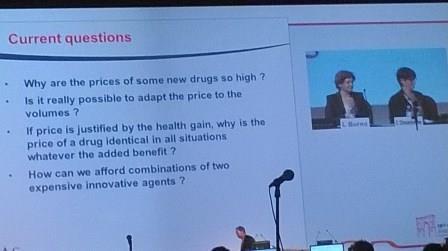
Many European doctors tell us that the most effective medicines are often not available for their patients. Irrespective of whether this is due to shortages, or because the medicine is not affordable or is not marketed in specific countries or for any other reason, lack of access to essential medicines is clearly a problem for hematologists. And in Europe this problem appears to be growing.

MDS Patient Support

MDS Patient Support

MDS Patient Support

MDS Patient Support

Access to medicines problems occur across the board in medicine, but research amongst pharmacists indicates that hematology is in the top 5 specialties that suffer the most from lack of availability of medicines. 

We all know that prioritizing patients, substituting standard regimens with substandard ones or choosing unproven treatment options can have serious consequences for both patients and practice. As the EHA, we feel these risks should be addressed and we believe that access to medicines is an issue that should be high up on the European political agenda. To achieve this, we need your help.

Whenever you find a hematology medicine is not available, please let us know; systematically collecting evidence is the first step in addressing these problems effectively.

MDS Patient Support

MDS Patient Support

MDS Patient Support


MDS Patient Support

MDS Patient Support

MDS Patient Support

In short, we call on you to help strengthen our efforts to improve patients’ access to medicine across Europe and report unavailable hematology medicines to EHA today!

Please fill out the ‘unavailable medicines’ form. You can find the form on the EHA website  or click here to access it directly.

Filling out the form will take no more than 5 minutes.

Thank you! 


MDS Beacon articles – for the latest research and trial updates

The MDS Beacon is a great source of information on MDS.

There you can find the latest research articles – in a language patients can understand.
We used some of their articles in our latest newsletter – but if you’d like to read more, do check their website online:

http://www.mdsbeacon.com/tag/research-summary/

For example:

Campath May Be Effective In Some Patients With Lower-Risk Myelodysplastic Syndromes

A small retrospective study by German researchers suggests that a short course of treatment with the im­mu­no­sup­pres­sive agent Campath may be safe and ef­fec­tive in patients with lower-risk myelo­dys­plastic syndromes who are good can­di­dates for im­mu­no­sup­pres­sive therapy.
More on http://www.mdsbeacon.com/news/2013/08/30/campath-lower-risk-myelodysplastic-syndromes/

Half Of MDS Patients With Chromosome 5 Deletion Also Have Important Genetic Mutations

European researchers recently published results of a study looking at genetic mutations in myelodysplastic syndromes patients with a deletion in chromosome 5.

In their study, the researchers focused on 25 genes that often are mutated in patients with myeloid disorders, which include myelodysplastic syn­dromes (MDS), acute myeloid leukemia, and several other diseases.
More on http://www.mdsbeacon.com/news/2013/10/01/mds-del-5q-chromosome-5-deletion-genetic-mutations/

Zolinza Plus Cytarabine May Be A Good Treatment Option For Higher-Risk MDS Patients Following Vidaza Treatment Failure

Results of a recent Phase 1 clinical trial conducted in France show that treat­ment with Zolinza and low-dose cytarabine is safe and possibly more effective than current treat­ment options for higher-risk MDS patients who no longer respond to Vidaza treat­ment.
More on http://www.mdsbeacon.com/news/2013/10/23/zolinza-vorinostat-cytarabine-after-vidaza-failure-mds/

Do check in regularly.

http://www.mdsbeacon.com/


Comments on Cancer Drug Fund – by Myeloma UK

17/11/13 – Article by our great Myeloma UK  colleague Eric Low – about the Cancer Drug Fund.

“Cancer Drugs Fund: Friend and Foe?

An article by Myeloma UK Chief Executive Eric Low on the National Cancer Drugs Fund (CDF) has been published in the November edition of the Pharmafocus. Eric has been invited to write this column on a monthly basis for the magazine.

The article calls for a more effective long-term solution to the challenge of approving new cancer drugs for use on the NHS.”

The full article on page 19 of the magazine is available here:http://tinyurl.com/o676eml


We fully endorse Eric comments and views on the subject, not only because it is only a temporary measure, but also because it is not available everywhere in the UK.


Awards and Commendations!

allyboyle-awardAlly Boyle – who won the Anthony Nolan Award for Best Recruiter of the Year – at the event on the 4th November.

Ally was diagnosed with MDS a few years ago – and this has not stopped him from getting on with things. On the contrary!


Ally is a fire fighter by profession in Scotland and has done an amazing work with his colleagues from the Scottish Fire and Rescue Service and Strathclyde Fire and Rescue – to  recruit stem cell donors for Anthony Nolan.

Here is what he says on his Facebook page:
Fabulous and inspiring evening at Anthony Nolan Awards and delighted to report that we won! Obviously none of this is about recognition but I am very proud of what has been achieved. From the grimmest news on my diagnosis to the knowledge we are saving lives. The credit belongs to the Core Group Andrew Watt, Ian McMeekin, Paul Devlin, Cathy Barlow, Siobhan Hynes, Hamish Macrae, Mark Conlon and our amazing volunteers. 5,000 recruited so far so here’s to the next 5,000 and beyond!
And this is from the Anthony Nolan website:
http://www.anthonynolan.org/Hidden/ANSAS.aspx

Wonderful stuff Ally and team!  Thank you on behalf of all MDS patients in need of a transplant.


Berger-anthonynolanawardsAnd the next amazing people are Sharon Berger’s children Jonni and Caz, who have been especially commended for BAME Advocate of the Year.
Jonni and Caz have done so much for the recruitment of stem cell donors, after it was decided that their Mum Sharon (who is also our treasurer) needed an urgent bone marrow transplant – see our previous news item on our website).
Through their efforts, they radically changed the number of jewish stem cell donors in the UK – and even further afield.

Here is what Anthony Nolan says about them:
Earlier this year, Jonni and Caroline launched a campaign to recruit more Jewish donors to Anthony Nolan’s register when they were told that their mother, Sharon, needed a bone marrow transplant. They appealed to the Jewish media and twitter community using the hashtag #Spit4Mum.  In the first four months of 2013, over 1,000 Jewish people joined the Anthony Nolan register compared with only 100 during the same period in 2012.


Sharon was diagnosed with myelodysplastic syndrome and was told that she needed an urgent bone marrow transplant to survive. Finding a matching donor was more difficult for Sharon because Jewish people are under-represented on the bone marrow donor register and a donor is most likely to be someone with the same ethnic background as the recipient. Sharon had a bone marrow transplant in July and is recovering well.

Caroline says, “I’m very proud to have been nominated and it is humbling that the campaign has been recognised. I think the award should go to my mum who has bravely tackled blood cancer for the past year. I only hope that the campaign helps find matches for other people facing a similar situation.  Without the incredible work that Anthony Nolan does, my mum wouldn’t have found the hero who saved her life. There is a Jewish saying that ‘to save one life is as if you have saved the world’. That is what Anthony Nolan means to me.”

Jonni adds, “I am pleased to have been able to increase the number of Jewish donors on the register as well as to have raised awareness about the lack of minority ethnic donors on the stem cell register through our #Spit4Mum campaign. Whilst the initial aim was to help my Mum Sharon, who thankfully had a stem cell transplant recently, there is also the satisfaction that I have significantly increased the number of potential donors on the register for everyone in need of a lifesaving transplant in the future.”

Henny Braund, Chief Executive at Anthony Nolan, says, “Jonni and Caroline’s campaign to recruit more Jewish donors to the register has been a huge success and has had a considerable impact on the number of Jewish donors joining the register. We were all so pleased when we heard that their mother, Sharon, had found a donor for her bone marrow transplant. Raising awareness is key to recruiting more donors and it is down to the hard work of supporters like Jonni and Caroline that we are able to help provide lifesaving transplants for people like Sharon.

http://www.anthonynolan.org/News/CAMPAIGN-FOR-JEWISH-DONORS-SHORTLISTED-FOR-NATIONA.aspx?year=2013&month=11

Thank you to both of you Jonni and Caz ! Bone marrow failure patients need more people like you to raise the awareness amongst ethnic communities – where there is a desperate need for more donors to come forward! Fantastic work.


Stem Cell transplantation discussion in Parliament

Stem Cell transplantation discussion in Parliament

On the 6th September, the APPG (All Party Parliamentary Group) on Stem Cell Transplantation had a meeting where the need for stem cell donors from ethnic minorities was discussed.
Jonni Berger gave a great talk on his personal perspective as the son of an ethnic minority patient (Sharon Berger) who needed an urgent stem cell transplant at the beginning of 2013.
You can read more on Sharon Berger here: https://mdspatientsupport.org.uk/sharon-berger-transplant-update/

Please see Jonni’s talk and those of Anthony Nolan and Great Ormond Street Hospital by clicking the links below:

http://ukstemcell.org/news-events/

6th September 2013

The minutes of the September meeting are available to download here. Please click on the speaker’s name to download a copy of their presentation.

Orin Lewis, National BAME Transplant Alliance

Ann O’Leary, Anthony Nolan

Dr Paul Veys, Great Ormond Street Hospital

Spit4Mum – Jonni Berger

A short video book with press cuttings of the #spit4mum campaign is also available to download here.


About APPG on Stem Cell Transplantation

The All-Party Parliamentary Group on Stem Cell Transplantation is a group of parliamentarians with an interest in the use and development of stem cell transplantation in the UK. The aims of the group are to:

• Inform parliamentarians about the use of stem cell transplantation in saving lives
• Facilitate debate and scrutiny on the collection and use of adult stem cells and umbilical cord blood in the UK
• Promote the widespread collection and storage of cord blood
• Promote the expansion of stem cell donation in the UK

The APPG is currently co-chaired by Mark Tami MP and David Burrowes MP. Information about the composition of the group can be found here. Please direct queries about the APPG and its work to Iana Vidal at iana.vidal@anthonynolan.org.


Bone Marrow Transplant Blogs

What happens before, during and after a bone marrow transplant?

Updated on 24/09/2018

If you are interested in learning more about what happens before, during and after a bone marrow transplant - we have different MDS transplant blogs to share with you:

Emma Payne (Blog): https://emmafightsmds.wordpress.com/

Chris Spencer (Blog): http://chrisspencer416.blogspot.co.uk

Revel Rev (Blog:) https://revrebel.blogspot.com

Evie McClean(YouTube): Evie McClean YouTube Channel

Jayne Snell (Twitter account):@JayneMSnell

All blogs are quite different in style - but all helpful and well written. Thanks to all for maintaining the sites and for carrying on writing.

Emma Paine:

Emma had a first stem cell transplant in 2011 and recovered well. But her MDS came back in 2015 and she needed a second transplant.
Funding for second transplants has been revised in the UK due to “cost-effectiveness” issues and hospitals all over the UK need to seek special funding requests for those patients (IFR=Individual Funding Requests)

Emma battled to be granted a further chance to live and she managed to have a second transplant in January 2016. You can read all about her and her campaign to get the second transplant funded in her blog Emma’s Fight against MDS

Jayne Snell:

Jayne was diagnosed with MDS in early 2011 and had her transplant in 2012, when it was determined that her condition was at high risk of progressing to AML - Acute Myeloid Leukaemia.

She introduces her blog like this: "I originally started this blog for my family and friends, so that I could stay in touch with them throughout my periods of isolation.  However, it turned into something huge!  It was my support system, the love and the care that I received through this blog was like a blanket of protection and I really cant thank you all enough for that.

This is NOT a sad story.  I hope this blog helps others who are about to start treatment.  Just stay focussed on getting the cure, do not lose sight of that, and remember that everything that happens to you through your journey is one step closer to wellness."
Jayne's Twitter Account

Chris Spencer:

We stumbled across Chris's blog via the Anthony Nolan Facebook page.

We don't know him personally - but thought his blog may also be helpful to any other MDS patient out there.

My Diary

Rebel Rev:

Where angels fear to tread

The ups and downs of life as a former hospital chaplain and rare blood cancer sufferer.
I was diagnosed with MDS (Myelo Dysplastic Syndrome) in 2000. I had a bone marrow transplant in Oct 2016. Since then I’ve been living with extensive GVHD (Graft Verses Host Disease).

Hope you find something that helps in these blogs.

Evie McClean

Evie McClean is a member of MDS UK Patients Support. In July 2014, when she was 8 years old, Evie was diagnosed with leukemia. After 4 months of chemo she had 6 month of remission, but then she became ill again. In July 2015 she was diagnosed with MDS and bravely endured more bouts of chemo. In November Evie received a bone marrow transplant.
You can watch here some of Evie’s amazing video clips, where she tells all about her favourite things and the ways she and her family have learned to live with her illness.

The following long-standing blogs were written by patients who sadly passed away due to severe infections some time after their transplant.

We still encourage you to read these excellent blogs, which are full really useful information on how to prepare yourself – and what the day to day will be like in hospital.

And please please please – do remember that EVERY transplant experience is unique.

This is also why we decided to keep these blogs for people to read. Similar people have gone on to have very successful transplants.

We also want to pay tribute to these patients who were amazing members and supporters of MDS UK – and their families, friends and colleagues, who are staying in touch with us. Thank you all.

Brenda Goodland:

After many years living with a very stable form of MDS, Brenda's MDS progressed and she underwent a stem-cell transplant procedure.
The donor was her sister Heather (left in the picture  below), but Brenda's condition returned. Brenda sadly passed away on the 30th of August 2017.  https://brendagoodland57.wordpress.com/

Richard Barker

This is the “MDS in the Family” blog, which was kept by father and daughter team Roz and Richard Barker.
http://mds-in-the-family.blogspot.co.uk/
Roz and Richard started this blog when Roz (daughter) was diagnosed with MDS.  She then proceeded to have a bone marrow transplant – and is now doing very well.
Richard (father) was diagnosed shortly after Roz’s transplant,  and saddly passed away in 2015,  five years after his diagnosis. Richard was able to see one son married, celebrated his grandson passing his first GCSE and his granddaughter passing many ballet exams.

Glyn Jones

Glyn was diagnosed with MDS on 8th August 2014 and sadly passed away in 2016.
He wrote a very comprehensive blog about his experience as an MDS patient and campaigner.
Read more: http://glyn.webnode.com/

Please remember that MDS patient's treatments and experiences will vary from person to person and that response to a bone marrow transplant relies on many different parameters and variables.
ALWAYS talk to your haematologist or nurse specialist if you have ANY clinical questions or issues.

Please be aware that MDS is NOT considered to be a genetic condition that runs in families. However - there are some very rare occurrences, where more than 1 family member will develop MDS.  In those situations please make particularly sure you are treated in a MDS Centre of Excellence.  This will not only benefit you, as the monitoring will be very thorough, but you will also assist researchers to better understand the nature and perhaps causes of this disease.


Newsletter – Issue 4

Our next Newsletter is now out.
All members should have received their paper copies by 5th October 2013.

All clinical staff on our database will have received a stock of newsletters by 7th October 2013.

Click on link here:  https://mdspatientsupport.org.uk/what-is-mds/newsletter/


Should you NOT have received your copy or stock, please contact us with:

Name
Address
Tel number
Number of copies required

Patients and family members:
If you have recently moved homes, please update us with your new contact details.

Clinical staff:
If you have changed jobs, please let us know – please also tell us who has taken over in our previous hospital – so we update our clinical contacts database.

Thank you all for your kind cooperation


Shingles/varicella vaccine – urgent update

Urgent Clarification on shingles/varicella vaccine policy for MDS patients

MDS specialists have issued the following advice regarding shingles vaccine:


“Current advice from the UK MDS Forum is not to give the Live Varicella Vaccine to patients with MDS.”

You can read further information on the topic, on the UK MDS Forum webpage (the specialist website) here:
http://www.ukmdsforum.org/

If you are due this vaccine – or if your GP is mentioning it – please refer them to the website above, where they will be able to read further details – or ask for clarifications if needed.


Free donations by shopping