this must be archive.php

Prof Bowen explains how new treatments for MDS are developed and the importance of clinical trials

Watch Prof Bowen Video on MDS Clinical Trials

In the second video of this series, Professor David Bowen, Consultant Haematologist at St James University Hospital, Leeds, explains why clinical trials are key in the development of new treatments for MDS.  

Prof Bowen is an honorary professor of Myeloid Leukemia Studies and Consultant Hematologist at St. James’s Institute of Oncology, Leeds, in the United Kingdom. 

He is chief and co-investigator for several national MDS clinical trials and a member of the NICE Appraisal Committee evaluating cost-effectiveness of newly licensed drugs for potential use within the UK NHS. He also co-chairs the Steering Committee of the EUMDS Registry Trial.

We are honoured to have Prof Bowen as one of MDS UK Patient Support Group Scientific Advisors.

Read More


The MDS cheer team was at the Cabbage Patch on October 15!

Cabbage Patch 10 is nearly upon us!

We are getting together for the Cabbage Patch 10 mile run on the 15th October to support our runners and shout out about MDS in the run-up to MDS World Awareness Day.

Join us on the 15th of October to raise awareness and fundraise for MDS.

Or why not having a go at dancing for a repeat of our legendary flashmob following Gloria Gaynor's inspiring tune "I am what I am?"

Share the Cabbage Patch Run details

Watch our flash mob video & learn the moves

Hurrah for our fundraisers!

We have an amazing team of 15 runners fundraising for us. Click on their names to sponsor their efforts on their Virgin Money Giving Pages:
Darren Laverty
Daniel Holah
Sarah Mayo
Nicky Morgan
Lisa Hepburn
Alec Holah
Alicia Madgwick
Hayley Saunders
Gareth Clifton
Simon Gardiner
Mark Read
Chris Fawcett
Mike Leigh
Russell Cook
Rowland Phillips

More upcoming events for all abilities

MDS Patient Support

Help improve the blood transfusion experience for MDS patients

How can blood transfusions be improved?

Depending on blood transfusion has a negative impact on the quality of life of MDS patients, but it is unavoidable for many patients.

That is the reason why a group of Canadian and United Kingdom haematologists are looking into running a series of studies to improve the red blood cell transfusion experience for MDS patients and improve their quality of life.

Before doing so, they are on a quest to understand better how red blood cell transfusions are being conducted today and ask patients what could be done, in their opinion, to make it better.

How can you help?

If you are a Myelodysplastic Syndromes (MDS) patient, you live in the US, the UK or Canada and you've been receiving at least one unit of red blood cells every eight weeks for the last 4 month period, the research team would like to hear from you.

MDS Red Blood Cell Transfusion Survey

You are invited to participate in this online survey.

The online survey will take approximately 5-10 minutes. Your responses will be kept strictly confidential. Be reassured that they will not collect any information that will personally identify you.

Your participation in the study is voluntary, i.e. you may choose not to participate at all and you may exit the survey at any time.

MDS Patient Support

The Research Team

Rena Buckstein MD FRCPC Associate Professor, University of Toronto, Department of Medicine, Division of Hematology/Oncology
Yulia Lin MD FRCPC Associate Professor, University of Toronto, Department of Laboratory Medicine and Pathobiology
Jeannie Callum MD FRCPC Associate Professor, University of Toronto, Department of Laboratory Medicine and Pathobiology
Simon Stanworth MD Consultant Hematologist, NHS Blood and Transplant, Oxford University Hospitals NHS Trust

Take a look at current MDS clinical trials


Amadeus UK

Amadeus UK have signed up to do a Group Skydive: a hair-raising obstacle assault course on September 24th in support of MDS UK Patient Support Group.

MDS Patient Support

Amadeus, the leading provider of IT solutions to the global tourism and travel industry, are not new to giving, having donated an amazing £3,000 for MacMillan last year.

This year, they are not only fundraising for MDS UK Patient Support Group, but also doing an incredible job at raising awareness of the disease:

We are raising money for our colleague who is suffering from a cancer condition called Myelodysplastic Syndrome known as MDS, very few people are diagnosed in the UK from this condition and infact in the USA just 63 per year.

A person with MDS will suffer from chronic tiredness and weakness due to the low levels of haemoglobin in the red blood cells, which carries oxygen to the body.
This is debilitating in itself and often requires regular blood transfusions. Transfusions are time consuming and restrictive.

In MDS, platelet numbers, which prevent bleeding and bruising, can often be very low. This can result in spontaneous bleeding and bruising.
If an injury is sustained blood loss may be excessive. Clearly these factors result in many constraints and difficulties. Platelet transfusions may be required on a regular basis.

When white cells numbers become very low (as they often do in MDS) the body is unable to fight off infection normally. This results in a greater than usual incidence of infections which take longer than usual to clear and might require hospitalisation. White cells cannot be given by transfusion.

We are collecting money for the charity that is looking into new research to better manage the situation and look for extending quality of life. Our colleague has a young family and lives in Crawley in West Sussex and has been unable to work for over two years now.

For us, as a small charity, it is a dream to get such a generous fundraiser. We are extremely grateful to Amadeus for thinking of us.

All the money raised will go to ensure that all patients and families receive the attention and information they need during those particularly difficult times – straight after diagnosis, at treatment changes, time of transplant or progression of the condition./strong>

MDS Patient Support

About Amadeus


When is the right time to give a blood transfusion?

When is a blood transfusion considered? How low should the cell count be?

When the blood lacks enough healthy red blood cells or haemoglobin, anemia symptoms develop, typically fatigue, shortness of breath, weight loss, paler than normal skin, etc and a blood transfusion is considered.

There is no set haemoglobin level at which a blood transfusion is given, but your doctor will assess your symptoms and you will decide together.

Prof. David Bowen says in a recent article:

I often delve back deep into the case notes to try to find a ‘normal’ haemoglobin level for that individual from many years before their diagnosis. I think that it helps to say to a patient for example ‘you are 30% down on your normal haemoglobin so it’s not surprising that you are feeling the effects’. This also helps us both to understand that the patient may have meaningful symptoms of anaemia despite their haemoglobin level being higher than that recommended for active treatment in the guidelines that we follow.

How often can a patient have a blood transfusion?

How often you have transfusions will vary between patients; some need transfusions every few months whilst others need one every every couple of weeks. Very often, once a patient has started having regular blood transfusions, the length of time between transfusions will gradually get shorter.
We asked Prof. Bowen if there is a limit on how often a patient could have blood transfusions. Prof. Bowen replied:

The simple answer is that there is no limit.
If blood transfusions are becoming considerably more frequent then the doctor needs to consider if there could be an explanation in addition to the MDS such as bleeding (usually internal) or the red blood cells being destroyed more quickly (haemolysis). These may be able to be treated and the transfusions will then reduce. However by far the most common situation is that the red blood cell production from the bone marrow gets poorer and poorer with time in some patients. We will transfuse as often as is needed to maintain acceptable quality of life and we often transfuse patients every 2 weeks and sometimes weekly. There is a move towards thinking about more frequent transfusions with fewer bags each time as this mimics the normal situation better without the big peaks and troughs of energy gain then energy deterioration.

Blood transfusions lead to (temporary) improvements in a patient’s quality of life

Image of bags of blood in a tray in preparation for a blood transfusion

The potential side effect of blood transfusions: Iron Overload

With every unit of blood you receive from a transfusion, you will receive an excess amount of iron. Over time this can accumulate in your body and could possibly cause damage to certain organs, like your heart or liver.

There is still considerable uncertainty whether too much iron in your body is always harmful. The level of iron in your body should be checked regularly, especially when you are on a regular transfusion program and you may need treatment for the build-up of excess iron. This is called iron chelation. There is currently uncertainty about the benefits of removing iron. Whether you are offered iron chelation treatment or not will depend on the likely benefits versus the likely disadvantages in your
individual case. This will be discussed with you before you make a decision to start iron chelation.

Some patients will develop complications that could be related to iron overload such as heart failure, liver abnormalities and diabetes, but these complications have other causes in older age, and it is always difficult to be certain how much iron overload is responsible, and we have drugs that can effectively remove iron from the body.


More information about transfusions on MDS UK

Free NHS App for Blood Transfusion Patients

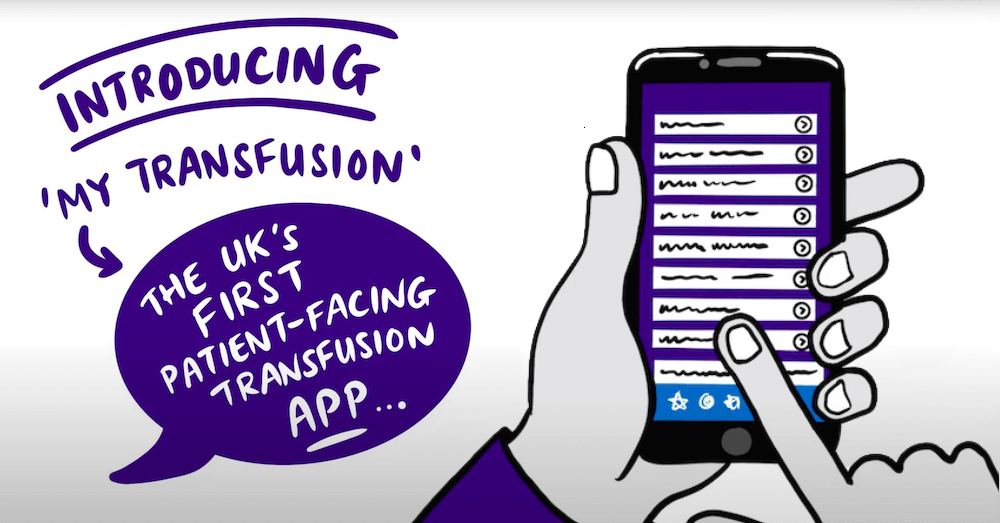
Illustration showing hands holding a mobile phone with the My Transfusion app on screen, with the text ‘Introducing My Transfusion’
My Transfusion is a new NHS-supported app created by SHOT (Serious Hazards of Transfusion) to help patients and carers better understand blood transfusions and feel more confident in their care.
The app includes:
  • Key information about blood transfusions
  • Alternatives to transfusion
  • Consent and preparation guidance
  • Safety checks and recognising reactions
  • Post-transfusion advice

Mortgage Brain

An incredibly generous donation of £8,000 for MDS UK Patient Support Group has come from Mortgage Brain – a firm offering mortgage software solutions for Intermediaries and Lenders with over 100 employees based in London and Worcestershire

MDS Patient Support

Suzanne Green, director of Marketing and Partner Propositions, communicated the great news to us:

We raised a substantial amount of money at a 30th Birthday Charity event attended by 320 colleagues and customers in London through sponsorship, a silent auction, raffle and personal donations on 27th April and it was by all accounts a great night had by all.

So I am delighted on behalf of Mortgage Brain to confirm that we will be making an approximate donation of £8,000 to the MDS UK Patient Support Group. The charity was nominated by our Mortgage Brain colleague, Kay Goodwin.

All the charities nominated are all actively supported through fundraising or volunteering by one or more of my colleagues. The donation will be a mixture of corporate and personal donations.

We are utterly grateful to Mortgage Brain and to Kay Goodwin for thinking of us. What a superb fundraiser event! Our CONGRATULATIONS for these 30 years of success for the company!

MDS Patient Support

For us, as a small charity, it is a dream to get such a generous fundraiser.

THANKS A MILLION TO MORTGAGE BRAIN EMPLOYEES FOR THEIR GENEROSITY!!

MDS Patient Support
MDS Patient Support

MDS Foundation Newsletter Spring Summer 2017


“Patients condemned to die”: the campaign to make 2nd stem cell transplant available to all

Anthony Nolan's Trust urged the Government to ensure every patient could access the treatment they needed and on the 24 February 2017 NHS England reinstated funding to 2nd stem cell transplants.

  • Stem cell transplants help cancer patients replace damaged blood cells
  • Procedure costs the National Health Service between £50,000 and £120,000 
  • In 2016 the NHS banned second transplant if disease came back after first
  • Anthony Nolan Trust charity said: "22 transplant patients relapse each year"

In a joint letter to the Department of Health, Anthony Nolan Trust and some of leading names in British medicine rallied against the new guidance by the NHS.

‘Without a second transplant, the small percentage of patients considered suitable for one will die of their underlying disease,’ said Professor David Marks, former president of the British Society of Bone Marrow Transplantation and one of 18,000 signatories, including dozens of specialists in blood disease, to a letter handed to Health Secretary Jeremy Hunt.

The treatment, which offers the best chance of survival to these patients, was given routinely in the US and Europe, and Prof Marks, director of the Bristol Bone Marrow Transplant Unit, said: ‘I know of no other first-world country where people with a 30 per cent chance of a cure are denied a transplant.’

Before 2013, patients in the UK eligible for a second transplant received one, but in that year NHS England (NHSE) began evaluating whether repeat transplants should continue to be funded.

For the following three years, doctors had to submit individual funding requests. Some were turned down, and NHSE declared then that second transplants were ‘not currently affordable’.

Henny Braund, chief executive officer of British transplant charity the Anthony Nolan Trust, which co-ordinated the petition asked the public to write to their MPs, and said: ‘This is a step backwards for patients."

The cost of a transplant was lower than the cost of caring for a patient who was refused a transplant

A transplant costs between £50,000 and £120,000, but the cost of caring for one patient refused a transplant in those few years was £130,000 for the year they survived, and for another patient who survived three years it was £160,000.

‘Of those who do get a second transplant, one in three survive at least five years, and many are young people leading fulfilling lives and making a contribution to society. Denying those patients a chance of life amounts to a death sentence.’

Emily Wellfare's Story

MDS Patient Support

One of those presenting the protest petition was acute myeloid leukaemia sufferer Emily Wellfare, who was told she would die if she did not get a second transplant.

She said: ‘My consultant at the Royal Marsden Hospital told me it would be the only thing that could save my life.  'He mentioned he would have to apply for funding, and it never occurred to me it could be refused.’

In February the 25-year-old from Eastbourne was given the shocking news that the application had been refused.

‘My doctors said the hospital was going to give me the transplant anyway. I am so grateful they fought so hard for me, but I want to know why the NHS thought my life wasn’t worth fighting for,’ added Emily.

She was in the second year of a law degree course when she started suffering from incessant coughs and colds in early 2012. In April that year she was diagnosed with acute myeloid leukaemia.

After chemotherapy, Emily spent a year in remission before discovering at her routine one-year check-up that her leukaemia had returned.

She was told she would need a transplant of stem cells – a procedure once called a bone-marrow transplant.

Cells, taken from a donor, grow in the bloodstream and make healthy blood cells to replace a patients’ own damaged ones.

Emily had her first transplant in February 2014, following three more rounds of chemotherapy.

After nearly two further years in remission, it was discovered at the end of last year that Emily’s cancer had returned again.

Since having her second transplant on March 14, Emily has been well but has to take steroids, antibacterial and anti-fungal drugs and immuno-suppressants.

Dr Jenny Byrne, honorary consultant haematologist at the city’s university hospital trust, said: ‘It was extremely disappointing and frustrating, given that we have plenty of patients in Nottingham who have had second transplants and are long-term survivors, fit and well and cured.’

Watch your animated guide to becoming a bone marrow donor. Steve Coogan narrates. Find out everything you ever wanted to know about a stem cell donation, from joining the register to what happens if you are a match.

How to be an Anthony Nolan bone marrow donor

How to donate bone marrow

If you’re between 16 – 30 and in good health, sign up to Anthony Nolan's register and you could be a lifesaving match for someone with blood cancer

You Can Become a Donor!

Even if you’re older than 30 you can become a blood donor if you're in good health. Check your eligibility at the dkms site


The RIGHT treatment for the right patient at the right time – a crucial EU initiative

More than 70 participants representing medical specialists and nurses caring for MDS patients, MDS patient advocates, medical researchers and data managers, healthcare authorities, regulators, HTA experts and industry representatives gathered for the first MDS-RIGHT multi-stakeholder meeting on the 3 May 2017 in Valencia, Spain - in conjunction with the biannual MDS 2017 International Symposium. 

This project is an essential and fantastic EU initiative – and we urge all dealing with Myelodysplastic Syndromes to keep abreast of news and developments.

Here are the main articles and reports:

You may also be interested in this recent interview with Prof David Bowen

More from MDS RIGHT


Would you like to run for us? Help patients by raising awareness & money for 3 patients meetings!

This year, our charity MDS UK was lucky enough to have 2 runners in the 2017 London Marathon Alec Holah, brother in law of Gavin Hepburn, who passed away a year ago, and Kirsty Crozier, an MDS Clinical Nurse Specialist in Oxford and Member of the MDS Committee.

We took this opportunity to conduct several interviews about the marathon, our charity and what it means to work closely with us.

We thank each one of our interviewees deeply for their kind, dedicated, thoughtful and generous input. They are wonderful friends, very close to our dear charity.

"It's not just about raising money, it's raising awareness" Dan & Alec Holah

Russel Cook, Deputy Chairman and Head of Fundraising. He ran several marathons after his transplant for MDS

"More people will start to understand the illness"... "The charity is amazing" Olivia & Tilly Hepburn

"We will always want to work with the charity. I feel we need to keep that awareness going" Lisa Hepburn


Free donations by shopping