this must be archive.php

Take part in an NHS consultation on new standards to diagnose cancers earlier

The NHS launches a consultation on proposed new standards that will help diagnose more cancers earlier and save more lives

Developed with clinical leaders, the proposals – supported by NHS staff as well as patient groups and cancer charities – aim to simplify and update cancer standards, based on the recommendations of the Independent Cancer Taskforce.

Patients, clinicians and the public are asked to share their views on the proposed standards, with a report setting out the changes published today.

Cancer currently has a complex set of nine separate performance standards, with different targets covering different routes into the system, for example, screening or a GP referral.

The new plan proposes ensuring patients have the same opportunity for faster diagnosis and treatment, including:

  • The 28-day faster diagnosis standard, which would see patients who have been urgently referred, have breast symptoms, or have been picked up through screening, have cancer ruled out or receive a diagnosis within 28 days.
  • A 62-day referral to treatment standard, meaning patients who receive a cancer diagnosis will start treatment within nine weeks from the date of referral.
  • A 31-day decision to treat to treatment standard, so that cancer patients receive their first treatment within a month of a decision to treat following diagnosis.

These new standards aim to make diagnosis and treatment timelines easier to understand for people with suspected cancer and their families, while also helping to diagnose cancers earlier and save more lives.

Before the faster diagnosis standard was introduced, access standards for cancer have remained unchanged since 2009. The current two week wait target sets no expectation of when patients should receive test results or actually get a confirmed diagnosis.

Cancer care has been prioritised throughout the pandemic with latest data showing the number of people getting checked for cancer increased by over half a million (512,110) in one year between December 2020 and December 2021.

In December alone, there were over 215,000 urgent referrals for cancer and more than nine out of 10 people started treatment within one month.

Dame Cally Palmer, NHS National Director for Cancer said: “Access standards have been key to improving timeliness of treatment for people with cancer since they were first introduced in 2000.

“As we see advances in diagnosis and treatments for cancer, it is only right that these standards are modernised – so that we can ensure patients are diagnosed more quickly and are given the treatment they need as soon as possible, helping us save even more lives.

“These proposed changes are an important part of improving cancer care and so from today, the NHS will be inviting views from patients, staff and the public”.

Professor Peter Johnson, National Clinical Director for Cancer for NHS England, said: “We know that people having tests for possible cancer want to know the results quickly, and updating the standards to reflect this will help us to make sure we are able to deliver the best possible care.

“We are encouraging colleagues in NHS cancer services to share their views on the consultation to ensure we have standards that are better for people with cancer”.

Health and Social Care Secretary, Sajid Javid said: “As part of our 10-Year Cancer Plan, we want to offer patients the best possible care and treatment.

“These proposals will help us speed up diagnosis times and treatment, and save more lives.

“The NHS wants to hear from as many people as possible – and is seeking advice from patients, staff and the public. Please, make your voices heard”.

Under the new proposals, the NHS would focus on the time from referral to people finding out their results within a maximum of 28 days. This faster diagnosis standard has a clearer focus on measuring and incentivising early diagnosis, rather than just time to first be seen.

Areas where the new standards have been tested have shown that performance against the 62-day referral to treatment standard was significantly higher (74.9%) than the control group (71.7%) when using the new measures.

Proposals are in addition to the target announced in the elective recovery plan, published last month, which outlined the NHS aim to return the number of people waiting more than 62 days from an urgent referral back to pre-pandemic levels by March 2023.

Catherine Harper-Wynne, Chair of the Breast Cancer Faster Diagnosis Group, said: “The proposed update in standards provides a better reflection of our current clinical approach and allows for greater flexibility to offer patients the most efficient route to diagnosis, allowing us to start treatment as quickly as possible. For breast cancer patients, there is evidence, from the pilot already completed, that a higher proportion of patients had cancer ruled out within 28 days”.

Jane Lyons, CEO of charity Cancer52, said: “People with rare and less common cancers often have vague symptoms and it can take longer for their cancer to be diagnosed. So a commitment to a diagnosis in 28 days for all cancers, including those that are more challenging to diagnose, is a good step forward. Earlier diagnosis can mean more people start treatment sooner and more lives will be saved, and we support work to help the NHS meet its ambitions to diagnose more cancers faster and earlier”.

Patients have told the NHS that the focus on achieving a rapid diagnosis or ruling out of cancer is the right one, and is more meaningful to patients than the timing of a first appointment.


3rd & 4th doses COVID-19 vaccination for MDS patients

Coronavirus (COVID-19) vaccine for people with a severely weakened immune system - Updated March 9th, 2022

A 3rd dose and booster dose (4th dose) of the coronavirus (COVID-19) vaccine is being offered to people aged 12 and over who had a severely weakened immune system when they had their first 2 doses.

This includes patients who had or have a blood cancer such as MDS or CMML and patients who had a bone marrow transplant.

If you're booking a 3rd dose all of these must apply:

  • you’ve received a letter from your GP or hospital specialist inviting you to book a 3rd dose
  • you’re aged 16 years old or over
  • it’s been 26 days since your previous dose - you'll be shown appointments from 8 weeks (56 days) after your 2nd dose
  • You’ll need to bring the letter with you to your appointment.

If you do not have a letter from your GP or hospital specialist inviting you for a 3rd dose, you must bring either:

  • a hospital letter that describes the condition or treatment that caused you to have a severely weakened immune system at the time of your 1st or 2nd dose
  • a prescription or a medicine box with your name and the date showing when the medicine was prescribed - this must show that you had a severely weakened immune system at the time of your 1st or 2nd dose
  • A clinician at the site will check to make sure that you’re eligible for a 3rd dose.

If you think you’re eligible for a 3rd dose but you do not have a suitable letter, prescription or medicine box, please contact your GP or hospital specialist.

If you're booking a booster (4th dose) all of these must apply:

  • you have a letter from a GP or hospital specialist inviting you to book a 3rd dose or booster (4th dose) for people with a severely weakened immune system
  • you're aged 16 years old or over
  • it's been 2 months (61 days) since your previous dose - you'll be shown appointments from 3 months (91 days) after your previous dose
  • You'll need to bring the letter with you to your appointment.

A clinician at the site will check to make sure that you're eligible for a booster (4th dose).

If you think you're eligible for a booster (4th dose) but you do not have a suitable letter, please contact your GP or hospital specialist.

Learn more: 

MDS Patient Support

Covid Vaccines and Treatments for MDS Patients – 21st February 2022 status - Postal Letter to Members

Please read this clear summary and guidelines for MDS patients. Print it and share it with your GP if necessary.

Download PDF

MDS Patient Support

Please know we are continuing to communicate with NHSE to improve the situation on both vaccination and treatment

Which medical evidence can be used to confirm your eligibility for the 3rd and 4th doses? (Excerpt from the NHS document)

"If you are eligible and you do not have a referral letter from your GP or hospital consultant, you can still opt for a walk-in vaccination appointment, but you will need to present relevant medical documentation confirming your condition and have an assessment on site by a qualified healthcare professional.
It is important to be aware that not every walk-in site is able to offer vaccination for people who are severely immunosuppressed, so please use our online walk-in site finder to make sure you choose the right site for you.
Examples of medical evidence that can be used to confirm your eligibility includes, but is not limited to:
• A hospital letter describing your condition at the time of your 1st and/or 2nd dose.
• Evidence of prescribed medication at the time of your 1st/2nd dose – either in a hospital letter that describes the medication being prescribed, a prescription copy or a medication box with your name and the date on it."


Letter to Members with Updated Advice on Covid-19 for MDS Patients

Summary of latest advice on COVID protection – Updated on February, 2022

Dear MDS patients,

At the end of February we sent out a postal letter to all patients without internet access.

The postal letter included the latest Covid instructions.

We include these instructions here so that you can read them carefully and follow them to increase your protection.

We are aware that not all MDS patients have received this information from the NHS. Please show it to your GP if necessary.

We keep working to resolve issues with the NHS to ensure all patients receive all necessary official letters.

Best wishes,

Caroline Mc Govern – Office Manager

Chaudian Morgan – Membership Officer

Sophie Wintrich – CEO

Covid Vaccines and Covid Treatments – 21st February 2022 status

Some MDS patients have had problems getting access to their fourth dose of the covid vaccine and may not have been made aware of the four new COVID treatments available to MDS patients, both of which they are entitled to. This is the result of the NHS Digital having omitted to include several types of blood cancers, and due to the overwhelming pressure of work at many GP surgeries. Some of you will have received all the relevant information, but for those who have not, here are some tips put together by fellow MDS patients who had missed out on information from NHS centrally, or their GP.

All MDS patients are urged to ensure that they receive their 4th vaccine, and that they are aware of the priority COVID treatments and how to obtain them if they develop COVID symptoms.

4th Dose of COVID Vaccine

MDS patients should receive a 1st, 2nd, and 3rd 'Primary' dose, and then a 4th dose (the 'Booster') at least 91 days after the 3rd Primary dose. Experience of many of our members has found that, at some GP surgeries, MDS patients have had their 3rd dose recorded as a 'booster' in error - which has then led to them not being invited back for their 4th dose (their real 'booster').

If that has happened to you:

  • Contact your GP surgery and ask for your 4th dose of the covid vaccine.
  • If necessary, remind your GP surgery that an MDS diagnosis puts you in the highly vulnerable group (with MDS being a rare condition, the Admin Staff at GP surgeries can often not be aware of this).
  • You can also get your 4th dose at a Walk-In Centre, but you may need a letter from your consultant.
  • Contact your MDS clinical care team (via your specialist hospital nurse or Consultant’s office) if you haven’t already had a letter which states that you needed a 3rd Primary dose / 4th Booster dose.

 Access to Urgent Treatments Should You Catch Covid

All MDS patients are also entitled to be assessed to receive one of four different covid treatments, two of which are given intravenously on a day-visit to a local hospital, and two which are dispensed in tablet form.
These medicines are called Sotrovimab, Paxlovid, Remdesivir and Molnupiravir.

These drug treatments must be started within 5 days of symptoms starting – so speedy access is crucial.

Priority PCR Test Kits are available to MDS patients to have on 'stand-by' at home to help speed up the process. If you haven't already been sent one then you should telephone the NHS 119, see below.

Do this straightaway, and don’t wait until you develop symptoms, the idea is to have one on hand at home in case you need one. These priority PCR test kits are labelled differently to ordinary PCR test kits, so that when they are received at the laboratory and they are confirmed as positive for COVID, you are 'flagged' for priority access to the treatments through what is known as a CMDU (Covid Medicines Delivery Unit).

  • Dial 119 (be prepared to have to make up to 7 or 8 ‘option’ choices). You need to speak with someone about PCR tests, to obtain a ‘Priority PCR Test Kit.’ You may need to be gently persistent and ask to be put through to the Elective Care Team. They will be able to take your details and send you the Priority Kit.
  • If you develop covid symptoms use this Priority PCR Kit and send it off URGENTLY.
  • It is not absolutely necessary to use the Priority PCR Kit if you haven't received one. It is also now possible to use an LFT (Lateral Flow Test) but if you do, it is important that you register the result by phoning 119 (or if you are able, online at https://www.gov.uk/report-covid19-result ).

Because of the urgency required in receiving these treatments if you catch covid, it is also recommended that if you test positive on a Lateral Flow Test at home, or through a PCR test that you have sent away, you should also contact your hospital MDS care team as soon as possible to advise them, as they may also be able to arrange for you to receive one of the urgent treatments.

This 'belt & braces' approach is recommended, to reduce the risk of any delay in receiving one of the treatments. Remember that the COVID treatments must be started within 5 days of symptoms appearing.

Covid Vaccines and Treatments for MDS Patients – 21st February 2022 status - Postal Letter to Members

Please read this clear summary and guidelines for MDS patients. Print it and share it with your GP if necessary.

Download PDF


Lateral Flow and PCR tests to remain free of charge for vulnerable patients after 1st April 2022

Sajid Javid announced today (03/03/22) that Lateral Flow Tests and PCR tests will remain free of charge for vulnerable patients after 1st April 2022.
All blood cancer charities are now requesting clarifications about which patient groups exactly will be entitled to the free tests.
We are also calling for free tests for friends, families and employers of vulnerable individuals.

If you are using Twitter, or your friends and families are, please support our twitter posts.

This is very important as we need maximum visibility for MDS.

Do also feel free to contact your MP, stating that:

  • you require access to free LFT and PCR tests, for family/friends
  • NHS Digital and NHS England MUST include MDS in the extremely vulnerable cohorts, to ensure all MDS patients receive all necessary information for their care, directly from the NHS, and not from a GP or local hospital.
MDS Patient Support

For those on Twitter, our colleagues from Blood Cancer UK sourced the announcement by Sajid Javid:

Please know we are continuing to communicate with NHSE to improve the situation on both vaccination and treatment

Having issues accessing PCR kits for potential COVID-19 antibody treatments?

  1. Ask your GP to send you this letter:
    https://www.england.nhs.uk/coronavirus/wp-content/uploads/sites/52/2021/12/C1480-patient-notification-letter-important-information-about-new-treatments-for-coronavirus.pdf
  2. Call 119 for advice, selecting the option for Test & Trace:
    > if you have not received a PCR test by 10 January 2022 Classification
    > or you develop symptoms before your PCR test arrives or
    > or you lose your PCR test or it has any damage or missing parts

Learn more: Treatments for COVID-19 and their eligibility


28/02 is Rare Disease Day: Take part!

What is Rare Disease Day?

Rare Disease Day is the globally-coordinated movement on rare diseases, working towards equity in social opportunity, healthcare, and access to diagnosis and therapies for people living with a rare disease.

MDS: a Rare Blood Cancer

MDS is 'the forgotten blood cancer'. It is often not labelled as a form of cancer, and therefore not captured in the guidelines developed by the health authorities. This has become critical during the pandemics, where MDS - and CMML - have been frequently excluded from the lists of diseases deserving special treatment.

Now, with Covid restrictions lifting, we would like to highlight on Rare Disease Day the dangers this poses to MDS and other blood cancer conditions.

Approximately 7,000 people live with MDS in the UK, and they all struggle to live with COVID: even with four vaccine doses their protection to the virus may still be weak.

Read a recent study published by The Lancet:
Omicron neutralising antibodies after third COVID-19 vaccine dose in patients with cancer

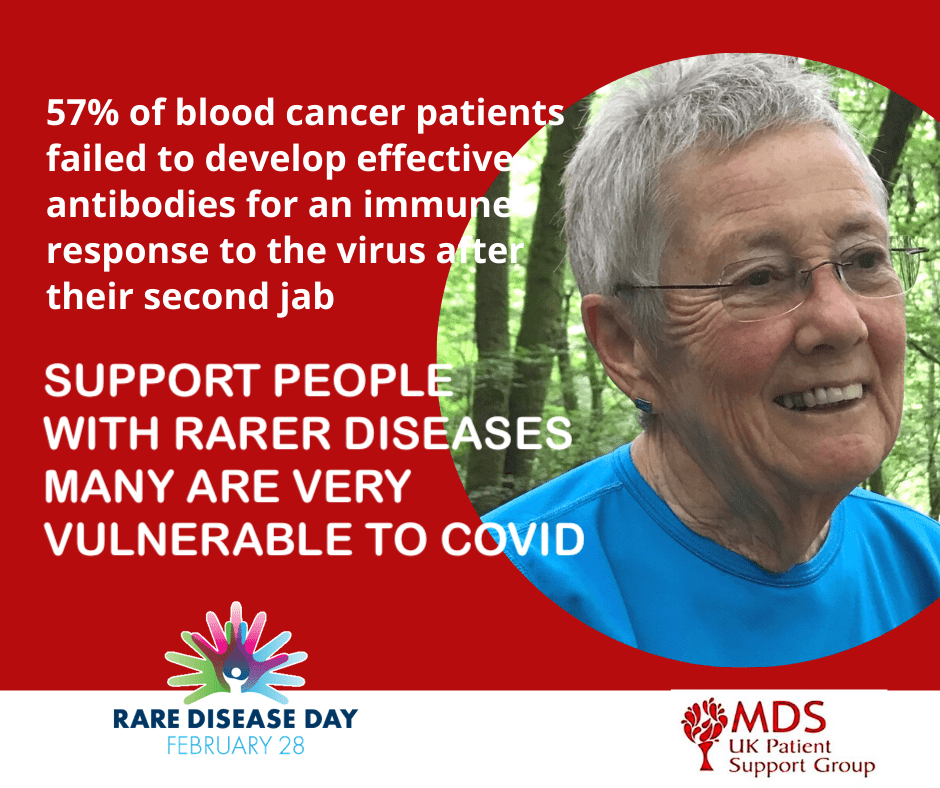
SUPPORT PEOPLE  WITH RARER DISEASES MANY ARE VERY VULNERABLE TO COVID

Rare diseases get forgotten

"Neil had a stem cell transplant scheduled for early March. Then UCLH checked his ferritin levels. If you’re having regular transfusions your iron levels should be monitored, Neil’s weren’t. After a year of iron-rich blood transfusions these were found to be stratospheric, so the transplant was put on the back burner."

Read Neil's story >

How can you participate?

  • Join the global chain of lights and light or decorate your home with the Rare Disease Day colors at 7:00 PM your local time on February 28th
  • Start a conversation on social media using the hashtag #RareDiseaseDay
  • Share your story
  • Advocate for equity
  • Read and share the School Toolkit which help explains living with a rare disease to young children
  • Find an event near you
MDS Patient Support
MDS Patient Support
MDS Patient Support
MDS Patient Support
MDS Patient Support

COVID-19 Vaccination and Treatment in Scotland and Wales

SCOTLAND

Getting your fourth vaccine

Some patients categorised as CEV (clinically extremely vulnerable) were sent appointment letters for a fourth vaccine in December, but when our patient representative for Scotland (Maureen) reached twelve weeks post third primary vaccination (confusingly sometimes wrongly referred to as booster), she heard nothing.

It was easy to book a next day vaccination at her local centre through the link below and she received this last Friday (no queues this time).

The same username and password as for the original vaccines. There is also a telephone number, if required:

https://www.nhsinform.scot/covid-19-vaccine/the-vaccines/coronavirus-covid-19-booster-vaccination

Covid-19 treatments for those on the “Highest Risk List”

You have to fulfil the following 3 criteria to be eligible for consideration:

  1. A positive PCR test in the last five days
  2. Symptoms of Coronavirus that have started in the last 5 days
  3. Are a member of the high risk group (MDS is specifically included on this list under “Patients with a haematologic malignancy”.)

Health Boards can accept a positive Lateral Flow Device (LFD) test result whilst waiting for confirmation of PCR test in certain circumstances.

The link below provides a table of the relevant Health Board telephone numbers for you to call (open 7 days a week including public holidays). Treatment will be provided when this is considered clinically appropriate.

We heard that some haematology patients had not required treatment because their illness was improving or their Covid symptoms were very mild.

Apparently – clinicians are also informed directly of any high risk patient with a positive PCR test result.

https://www.nhsinform.scot/illnesses-and-conditions/infections-and-poisoning/coronavirus-covid-19/coronavirus-covid-19-treatments

Patients in Scotland should have received:

  • A recent letter from the CMO describing how to get a Distance Aware Badge or Lanyard

and

  • How to obtain a priority PCR test

You should use the link below and specify that you are in the highest risk group when booking - Or phone 119

https://www.nhsinform.scot/illnesses-and-conditions/infections-and-poisoning/coronavirus-covid-19/test-and-protect/coronavirus-covid-19-get-a-test-if-you-have-symptoms

WALES

No offers to date for Priority kits from NHS Wales.
One welsh MDS patient, Tony, reported having to apply for a normal PCR test after getting Covid symptoms, meaning that result may not be back within the 5 days when an antibody/antiviral treatment MUST be started.

He added that Covid is more prevalent in his village than at any time before.

If you have more news and feedback for England, Scotland or Wales – please forward it to info@mdspatientsupport.org.uk

Please know we are continuing to communicate with NHSE to improve the situation on both vaccination and treatment


World Cancer Day 04/02/2022

Today – 4th February 2022 is World Cancer Day
Browse the interesting programme: https://www.worldcancerday.org/live#programme

This year the MDS community is marking the day in an effort to ensure Myelodysplastic Syndromes are consistently referred to as a form of blood cancer. Too often, some patients are still not told MDS falls under the general umbrella of cancer – due to the differences between lower-risk and higher-risk MDS.

NOT calling MDS a cancer immediately at diagnosis, ultimately causes more anxiety and confusion in patients and families, who will inevitably browse the internet, attend ‘cancer’ wards, be prescribed ‘chemo’ treatment, or speak to ‘Macmillan cancer’ nurses.
In each of these situations, if cancer was not previously mentioned, they will be at best confused, or at worst highly alarmed, as not prepared for it.

In addition, patients who benefit from additional support through specialist nurses, charities and/or peer to peer contact, generally cope better with their condition. Sadly, only a mere 20% of patients end up contacting a support group, as many patients are not aware of the help available.
80% of patients miss out on this additional support– so important in rarer cancers in particular.

We request and recommend for all clinicians to:

  • Call MDS a blood cancer immediately at diagnosis.
  • Strongly recommend patients contact a support group.
  • Hand the patient a support group leaflet.

On World Cancer Day

We review the barriers that stand in the way of cancer care.

https://www.worldcancerday.org/close-care-gap

Three of them are particularly relevant in MDS:

  • Ageism
  • Poverty
  • Rural settings

We would also highlight lack of IT literacy in particular, as a significant proportion of MDS patients still struggle to access online services and information, with 10% having no access to the internet at all.

What are the 7 barriers that stand in the way of cancer care?

Have a look at the images below or save and download "Inside the Equity Gap" PDF by clicking here


New treatments available for MDS and CMML patients with COVID-19

Have you got COVID-19? New Treatments are available for MDS and CMML patients

Covid-19 treatments for some severely immune-compromised patients are now available.
The Department of Health and Social Care (DHSC) has issued a ‘Rapid Policy Statement’ regarding ‘Neutralising monoclonal antibodies or antivirals for patients with COVID-19’, for both hospitalised and non-hospitalised settings.
The eligibility criteria for these drugs was revised on the 24th December.
The most important change is that MDS patients are eligible to receive these treatments. CMML patients on treatment are also eligible.

Two types of COVID-19 treatment are available:

  • sotrovimab (Xevudy)
  • molnupiravir (Lagevrio)

Sotrovimab is a biological medicine. It is also known as a neutralising monoclonal antibody (nMAb) while Molnupiravir is an antiviral medicine.

These treatments can help some people manage their COVID-19 symptoms and reduce the risk of becoming seriously ill.

> Read more on the NHS website:

https://www.nhs.uk/conditions/coronavirus-covid-19/treatments-for-coronavirus/

Molnupiravir capsule: antiviral drug pill for the treatment of COVID-19

Molnupiravir capsule: an antiviral drug for the treatment of COVID-19

How to get a COVID-19 treatment: Take a PCR test if you get symptoms

If you are an MDS patient or a CMML patient on treatment, you are eligible for a COVID-19 treatment.

The NHS Test and Trace should have sent you a Priority PCR test kit to keep at home. A PCR test is a test that you can do at home and send to a lab to find out if you have COVID-19.

You have been given a test kit so you can get tested quickly if you have any of the main symptoms of COVID-19

A new MHRA Commissioning document come out which quite clearly lists the symptoms of Covid-19 as follows:
Fever, chills, sore throat, cough, shortness of breath or difficulty breathing, nausea, vomiting, diarrhoea, headache, red or watery eyes, body aches, loss of taste or smell, fatigue, loss of appetite, confusion, dizziness, pressure or tight chest, chest pain, stomach ache, rash, sneezing, sputum or phlegm, runny nose.

You should take the test as soon as possible, even if your symptoms are mild.

When registering your test, it's important to enter your NHS number and postcode correctly. This is so the NHS can contact you about treatment if you test positive for COVID-19.

You can find PCR home test kit instructions for people eligible for COVID-19 treatments on GOV.UK.

Patients with MDS and CMML are having problems accessing Priority PCR kits and, potentially, anti-COVID-19 treatments

If you are having issues obtaining the right vaccine dose, or a PCR kit – please be reassured you are not on your own.

We had many reports from our members about:

  1. Problems in getting Priority PCR kits, which MDS and CMML (on treatment) patients are entitled to
  2. Patients simply not having received the letter informing them about the PCR kits and access to anti-COVID-19 treatments

We have flagged these issues to NHSE – please see this PDF document, summarising the problems and we keep campaigning on behalf of MDS and CMML patients.
If you have encountered an issue NOT covered in our summary – please email info@mdspatientsupport.org.uk with details.

In the meantime – the NHSE team is advising the following:

1- Ask your GP to send you this letter

Ask your GP to send you the following letter, which entitles you to the PCR kit and anti-COVID-19 treatments, should you test positive

Click to see the letter

MDS Patient Support

2 - Contact 119

Call 119 for advice, selecting the option for Test & Trace, if:

  • you have not received a PCR test by 10 January 2022
  • you develop symptoms before your PCR test arrives
  • you lose your PCR test or it has any damage or missing parts

The NHSE lists the following services under 119:

  • get a free PCR test or a lateral flow test
  • get help reporting PCR or lateral flow test results
  • get guidance on how to do tests
  • ask questions related to travel and testing
  • complain about a testing service or get advice about how to complain
  • get advice on when to self-isolate, and financial support while you're self-isolating

You can also use the Test and Trace Digital Service: https://enquiries.test-and-trace.nhs.uk/s/

Many patients have reported that, on occasions, 119 teams were unable to assist.
On Fri 21/01/22,  we have been assured that NHSE has formally requested 119 teams to assist with these issues – and staff are in the process of resolving these problems.

Again – please let us know if you continue to have problems when contacting 119 teams – and specify the nature of the problem. Email on info@mdspatientsupport.org.uk

MDS Patient Support

Contacting NHSE Customer Contact Centre

This is a further avenue to help resolve issues – should 119 or other options have failed.
https://www.england.nhs.uk/contact-us/
You can also expect the NHSE Resolution Team to contact you.

Further evidence of your eligibility to receive a Priority PCR Test and these new COVID-19 treatments

Interim Clinical Commissioning Policy: Neutralising monoclonal antibodies and intravenous antivirals in the treatment of COVID-19 in hospitalised patients. Patients with MDS are specifically mentioned on page 13 as eligible for these treatments.

Download PDF

More information on the new treatments, their eligibility and exclusion criteria

Below is a summary of the most main information regarding the new treatments. You can find a link to the full document above this article – as a downloadable PDF – in case you need to take the information to your GP.

What are the new treatment options for patients with COVID-19?

nMABs are synthetic monoclonal antibodies that bind to the spike protein of SARS-CoV-2, preventing subsequent entry of the virus into the host cell and its replication. This effectively ‘neutralises’ the virus particle. The following nMABs have conditional marketing authorisation (or Regulation 174 emergency use authorisation in Northern Ireland) for use in the treatment of COVID-19 in the UK:

  • Sotrovimab (Xevudy®): an nMAB that both blocks viral entry into healthy cells and clears cells infected with SARS-CoV-2. It's given to your through a drip in your arm (infusion) over 30 minutes. Learn more: https://www.nhs.uk/medicines/sotrovimab/
  • Molnupiravir: an oral antiviral drug which has been proven to halve the risk of hospital admissions and deaths from COVID-19, compared with placebo in patients with mild or moderate COVID-19. Moreover, molnupiravir has a favourable safety and tolerability profile. Learn more: https://www.nhs.uk/medicines/molnupiravir/

Non-hospitalised patients: Treatment Options

Commissioning position by DHSC
The proposal is: Sotrovimab is recommended to be available as a treatment option through routine commissioning for non-hospitalised adults and children (aged 12 years and above) with COVID-19 treated in accordance with the criteria set out in this document. Where treatment with sotrovimab is contraindicated or not possible, eligible patients may be offered an antiviral as an alternative.
Eligibility criteria
Patients must meet all of the eligibility criteria and none of the exclusion criteria.
Pre-hospitalised patients are eligible for treatment if:

  • SARS-CoV-2 infection is confirmed by polymerase chain reaction (PCR) testing within the last 5 days

AND

  • Onset of symptoms of COVID-19 within the last 5 days

AND

  • A member of a ‘highest’ risk group (as defined in Appendix 1).

The eligible patients as outlined in this policy should initially be considered for treatment with an nMAB (sotrovimab).
Where an nMAB is contraindicated or the administration of an nMAB is not possible, patients may be treated with a five-day course of molnupiravir if the onset of symptoms is in the last 5 days.
Patients who have received an nMAB within a post-exposure prophylaxis (PEP) or pre-exposure prophylaxis (PrEP) trial (such as the PROTECT-V trial) who meet the eligibility criteria of this policy can still receive treatment with an nMAB.
Exclusion criteria
Patients are not eligible for nMAB treatment in the community if they meet any of the following:

  • The pattern of clinical presentation indicates that there is recovery rather than risk of deterioration from infection
  • Require hospitalisation for COVID-19
  • New supplemental oxygen requirement specifically for the management of COVID-19 symptoms
  • Children weighing less than 40kg
  • Children aged under 12 years
  • Known hypersensitivity reaction to the active substances or to any of the excipients of sotrovimab as listed in the respective Summary of Product Characteristics

Hospitalised patients: Treatment options

Commissioning position by DHSC
Neutralising monoclonal antibodies or intravenous antivirals are recommended to be available as a treatment option for COVID-19 through routine commissioning for adults and children (aged 12 years and above) patients in hospital with COVID-19 infection in accordance with the criteria set out in this document.
Eligibility criteria
Patients must meet all of the eligibility criteria and none of the exclusion criteria under one of the following pathways:
Patients hospitalised for acute COVID-19 illness
Hospitalised patients are eligible to be considered for treatment with casirivimab and imdevimab if:

  • SARS-CoV-2 infection is confirmed by polymerase chain reaction (PCR) test or where a multidisciplinary team (MDT) has a high level of confidence that the clinical and/or radiological features suggest that COVID-19 is the most likely diagnosis

AND

  • Hospitalised specifically for the management of acute symptoms of COVID-19

AND

  • Negative for baseline serum anti-spike (anti-S) antibodies against SARS-CoV-2 (see section on ‘Serum antibody status’ below)

AND

  • Genotyping confirms the patient is infected with a non-Omicron variant.

For patients hospitalised with acute COVID-19 illness there are no available nMABs for the Omicron variant.
Please see access policies to dexamethasone (CAS alert), remdesivir and IL-6 inhibitors for these patients.
Clinicians are encouraged to enter all other patients admitted to hospital due to COVID-19 infection (including those infected with the Omicron variant, regardless of antibody status) into the RECOVERY trial, which is studying sotrovimab vs standard of care.
The following patients are NOT eligible for treatment in Group 1:

  • Children weighing less than 40kg
  • Children aged under 12 years
  • Known hypersensitivity reaction to the active substances or to any of the excipients of casirivimab and imdevimab as listed in the Summary of Product Characteristics

Appendix 1: Patient cohorts considered at highest risk from COVID-19 and to be prioritised for treatment with nMABs

MDS UK Note:

Please consult the full document for more precise information and various hospital situations, including COVID-19 acquired in hospital. The following is a section of Appendix 1 detailing the list of eligible blood cancers, including MDS. Please note that CMML patients on treatment, although not explicitly mentioned, are also included.

Description: Patients with a haematological diseases and stem cell transplant recipients

Cohorts

The following patient cohorts were determined by an independent advisory group commissioned by the Department of Health and Social Care (DHSC).

  • Allogeneic haematopoietic stem cell transplant (HSCT) recipients in the last 12 months or active graft vs host disease (GVHD) regardless of time from transplant (including HSCT for non-malignant diseases)
  • Autologous HSCT recipients in the last 12 months (including HSCT for non-malignant diseases)
  • Individuals with haematological malignancies who have received chimaeric antigen receptor (CAR)-T cell therapy in the last 24 months, or radiotherapy in the last 6 months
  • Individuals with haematological malignancies receiving systemic anti-cancer treatment (SACT) within the last 12 months except patients with chronic phase chronic myeloid leukaemia (CML) in molecular response or first or second line tyrosine kinase inhibitors (TKI).
  • All patients with myeloma (excluding MGUS) or chronic B-cell lymphoproliferative disorders (e.g. chronic lymphocytic leukaemia, follicular lymphoma) or myelodysplastic syndrome (MDS) who do not fit the criteria above.
  • All patients with sickle cell disease.
  • Individuals with non-malignant haematological disorder (e.g. aplastic anaemia or paroxysmal nocturnal haemoglobinuria) receiving B-cell depleting systemic treatment (e.g. anti-CD20, anti-thymocyte globulin [ATG] and alemtzumab) within the last 12 months.

More information on these treatments on NHS England pages. For a full list of conditions, please check these links:
https://www.england.nhs.uk/coronavirus/publication/interim-clinical-commissioning-policy-neutralising-monoclonal-antibodies-or-antivirals-for-non-hospitalised-patients-with-covid-19/
https://www.england.nhs.uk/coronavirus/publication/neutralising-monoclonal-antibodies-and-intravenous-antivirals-in-the-treatment-of-covid-19-in-hospitalised-patients/

Prioritising and protecting cancer services during the Omicron COVID-19 wave FAQs

COVID-19 Community Treatments

Q: What new treatments are being offered to people at the highest risk of becoming seriously ill if they become infected with Covid-19?
A: Since 16 December 2021, the NHS has been offering new treatments to people with coronavirus (COVID-19) who are at highest risk of going to hospital and becoming
seriously ill. Around 1.3 million of these highest risk patients are due to be contacted from 20 December with information on how they may be considered to receive these
treatments if they test positive for COVID-19 by PCR. A copy of the letter sent to 1.3 million patients is available here:
https://www.england.nhs.uk/coronavirus/publication/letter-to-patients-important-information-about-new-treatments-for-coronavirus/
Specialist doctors, including cancer doctors, have also been written to asking them to assist in identifying eligible patients not captured in the initial 1.3 million. A copy of this
letter is available here: https://www.england.nhs.uk/coronavirus/community-treatments/

Q: Who can access these treatments? How can I access them?
A: Further information on who can access these treatments and how they can be accessed
is available at www.nhs.uk/CoronavirusTreatments

Q: It doesn’t look like I am in the highest risk patient groups. Is there another way I can access coronavirus treatments?
A: If you are not in the highest risk group, you may be eligible to join the PANORAMIC study. The PANORAMIC study is open to individuals living anywhere in the UK who
meet the following criteria:
• Have received a PCR positive test for COVID-19.
• Feel unwell with symptoms of COVID-19 that started in the last five days.
• Are aged 50+, or 18-49 years old with an underlying medical condition that can
increase the risk of developing severe COVID-19.

Participants in the study will be randomly selected to either be in a group who receives a course of oral antiviral treatments, or a group that doesn’t. Two different groups are needed
so the study team can see any difference in the health of those who received the antiviral treatment compared to those who didn’t. All participants will be able to access any other
NHS care that they would normally expect to receive.
Further information on eligibility for the national study can be found on the PANORAMIC website: www.panoramictrial.org. If you receive a positive PCR test for COVID-19 and
believe you may be eligible for the study, we encourage you to call the trial team on freephone number 08081 560017 to discuss your eligibility to enrol in the study.

Q: What happens after an NHS clinician confirms I need treatment?
A: If a neutralising monoclonal antibody treatment is right for you, it will usually be given to you through a drip in your arm (infusion). You’ll usually get it at a local hospital or health
centre. Treatment takes approximately 30 minutes with time afterwards to check you feel OK.

Your local NHS provider will give you instructions on where the treatment will be given to you, and how to get there and back home safely. The NHS may be able to arrange for
your transport if you are unable to make your own COVID-safe travel arrangements.
If you are given an antiviral treatment, they normally come as capsules that you swallow and they can be taken at home. A hospital pharmacy will usually arrange for the
medicine to be delivered to you or it can be collected by someone else such as a friend, relative or NHS volunteer responder.

Q: Where is my local treatment centre? How do I travel there safely?
A: Your local NHS provider will give you instructions on where the treatment will be given to you. Some people are eligible for non-emergency patient transport services (PTS). To
find out if you're eligible for PTS and how to access it, you'll need to speak to the local NHS staff who have organised your appointment at the treatment centre.

Q: How do I know if I have a health condition that means I should get antiviral treatment or neutralising monoclonal antibodies?
A: A summary of the health conditions is provided at www.nhs.uk/CoronavirusTreatments, with more detail provided in Appendix 1 of the policy.
Most people with one of these health conditions will receive a letter or email from the NHS by the end of December 2021 and receive a PCR testing kit (to be used if COVID
symptoms are experienced) by 10 January 2022. This letter tells you about the treatments but does not guarantee treatment as doctors will need to assess you.
If you have a health condition which makes you eligible for one of these treatments and you test positive for COVID by PCR, you should be contacted by an NHS clinician to
discuss the treatments which may be suitable for you.

Q: What should I do if I think I might be eligible for treatment but have not been sent a PCR testing kit?
A: If you think you may have one of the health conditions which makes your eligible and you have not received a PCR testing kit, you can request one by calling 119, selecting the option for Test & Trace, and telling them that you think you might be eligible.
You can also request a PCR test kit to keep at home by going online at https://www.gov.uk/get-coronavirus-test. For the question, ‘Does the person who needs a test currently have any coronavirus symptoms?' you should answer: ‘No’. When it asks ‘Why are you asking for a test?’, select ‘I’ve been told to get a test by my local council, health protection team or healthcare professional’, and then select ‘A GP or other healthcare professional has asked me to get a test’.

Q: What should I do if I think I might be eligible for treatment but have not received a letter from the NHS about these treatments?
A: If you think you may have one of the health conditions which makes your eligible, but you haven’t received a letter, you can contact your GP practice or consultant to discuss
whether you are in the highest risk group. They will make an assessment of any conditions you may have, and will provide you with information on what to do, should you
test positive for coronavirus.

Q: What should I do if I think I’m eligible for treatments and have tested positive for COVID, but I have not been contacted by the NHS?
A: If you think you may have one of the health conditions which makes you eligible, but you haven’t received a letter, you can contact your consultant or GP practice if you test
positive to discuss whether you might be in the highest risk group. If they feel you may be eligible, they will be able to make a referral for you so that you can be considered for
treatment.

Q: Why have I received a letter or email about COVID treatment?
A: Health experts, including the UK chief medical officers, have looked at the health conditions which put people at the highest risk of coronavirus. The majority of patients in
this highest risk group will be informed by a letter or email which tells them that they may be eligible to receive these treatments, should they test positive for COVID.
If you have received a letter from NHS England about coronavirus treatments, it means your medical records show that you have, or previously had, one or more of those health
conditions, which means that these new treatments might be suitable for you if a PCR test confirms you have coronavirus.
You can find out how the NHS has used your information to identify and contact you about this treatment at www.digital.nhs.uk/coronavirus/treatments/transparency-notice.

Q: I need this information in another language or alternative format
A: Easy read and other language versions of the letter that went out to patients are available at https://www.england.nhs.uk/coronavirus/treatments.
Braille can also be posted to potentially eligible patients on request by emailing england.contactus@nhs.net.

Q: Where can I get further information?
A: Further information for patients is available here:

www.nhs.uk/CoronavirusTreatments


COVID-19 vaccines and MDS: Approvals and Advice – Updated 24/01/2022

Prioritising and protecting cancer services during the Omicron COVID-19 wave FAQs

Date: 21 December 2021

Overview
On 12 December the Prime Minister announced a rapid expansion of the booster programme to seek to mitigate the swiftly-growing wave of Omicron-variant Covid-19 cases.
The following day, the NHS confirmed in a letter from Amanda Pritchard (chief executive, NHS England) and Stephen Powis (chief executive, NHS Improvement) to the system that it is moving back into level 4 and incident response measures are being implemented. This document provides answers to frequently asked questions on the implications of these and other recent developments for cancer pathways and cancer patients.

Third and fourth doses of Covid-19 vaccinations

Q: What’s the position on third doses and boosters for severely immunosuppressed patients?
A: People in this group are entitled to three ‘primary’ doses of coronavirus vaccines and a ‘booster’, which for them will be a fourth dose, 12 weeks after their third.
It doesn’t matter whether these patients’ third dose was described as a “third primary dose” or a “booster” when they had it – the practical outcome is the same. They are still eligible for a fourth dose (their “booster”) 12 weeks after their third jab. While a small handful of patients are already eligible for their fourth coronavirus vaccination, the majority of this group will be due early in the New Year.

Q: How can I get my third dose of the COVID-19 vaccine?
A: If you are eligible for a third dose, your GP or hospital consultant should contact you to let you know. You may also have received a letter from the NHS advising that you may be eligible and to discuss this with your doctor. Your doctor will discuss with you how you can get your vaccine. You'll usually get vaccinated at your local hospital or a local NHS
service, such as a GP surgery.
If you are aged 18 or over and have a letter from a GP or hospital consultant confirming your eligibility for a third dose, you can also book your vaccination appointment online through the National Booking System or attend a walk-in vaccination site if you bring the letter with you to your appointment.
If you are eligible and you do not have a referral letter from your GP or hospital consultant, you can still opt for a walk-in vaccination appointment, but you will need to present relevant medical documentation confirming your condition and have an assessment on site by a qualified healthcare professional. It’s important to be aware that not every walk-in site is able to offer vaccination for people who are severely immunosuppressed, so please use our online walk-in site finder to make sure you choose the right site for you.
Examples of medical evidence that can be used to confirm your eligibility includes, but is not limited to:

  • A hospital letter describing your condition at the time of your 1st and/or 2nd dose
  • Evidence of prescribed medication at the time of your 1st/2nd dose – either in a hospital letter that describes the medication being prescribed, a prescription copy or a medication box with your name and the date on it.

Q: How can I get my COVID-19 booster (fourth dose)??
A: If you are aged 18 and over and have already received a third dose of the vaccine, you should get a booster three months after your third vaccination. If you are eligible for a booster, your GP or hospital consultant should contact you to let you know and invite you to book your appointment.

If it has been three months since your third dose and you haven’t heard from your doctor yet, you should contact them to discuss your vaccination.

Alternatively, if you already have a letter from a GP or hospital consultant confirming your eligibility for a third dose, you will be able to get a booster at a walk-in vaccination site if you take the letter with you, subject to assessment on site by a qualified healthcare professional. It is important to be aware that not every walk-in site is able to offer boosters for people who are severely immunosuppressed, so please use our online walk-in site finder to make sure you choose the right site for you.

Q: NHS systems record third doses as a booster – is that a problem and could it prevent a patient from getting their vaccine?
A: A third primary vaccination dose for patients defined as severely immunosuppressed is recorded in the Point of Care system as a booster, with the booster (fourth dose) recorded as a second booster. The classification of a third dose does not preclude a patient from receiving a booster, nor will it impede access to any subsequent vaccinations they might require. Eligibility is based upon the patient being identified as severely immunosuppressed rather than on the number of vaccinations they have received. If a patient has been identified by a clinician as being eligible for a third primary dose or a booster dose, the Point of Care system will not be a barrier to vaccination.

Print this poster and ask your GP to display in their surgery! Share on facebook/Instagram/Twitter!

Covid-19 vaccination: 3rd and 4th vaccine doses for MDS patients

COVID-19 vaccination for the severely immunosuppressed

People with a weakened immune system who are classified as severely immunosuppressed either due to underlying health conditions or medical treatment are being identified and offered a third primary dose of COVID-19 vaccination to help reduce their risk of getting seriously ill.

If someone was immunosuppressed when they had their first two doses, the vaccine may not have provided as much protection as it can for people who do not have a weakened immune system.

It is recommended that the third dose be given at least eight weeks after the second, as part of the primary course of immunisation, but if the patient’s GP or consultant believes that a different interval should be offered, because of ongoing treatment or starting treatment which will suppress the individual’s immune system, then this timing may be altered.

The JCVI also recommends a booster dose for this group a minimum of three months (91 days) after the third primary dose.

Who is eligible for a third primary COVID-19 dose?

Guidance from the Joint Committee on Vaccination and Immunisation (JCVI) recommends that a third dose be offered to individuals aged 12 years and over with severe immunosuppression.

This includes people who had or have:

• a blood cancer (such as leukaemia or lymphoma) MDS UK note: MDS and CMML are included
• a weakened immune system due to a treatment (such as steroid medicine, biological therapy, chemotherapy or radiotherapy)
• an organ or bone marrow transplant
• a condition that means you have a very high risk of getting infections
• a condition or treatment your specialist advises makes you eligible for a third dose

Further information about the eligibility criteria for a third dose has been published by the JCVI and is available here.

Getting vaccinated

According to the latest available data, 89% of individuals identified as severely immunosuppressed have now had a third primary dose.

At present, it’s a relatively small number of people within the cohort who are eligible for a booster, with the majority due in the New Year.

Included below is all the information someone needs to get vaccinated with the 3rd and 4th doses if you are severely immunosuppressed.

How to get your third dose of a COVID-19 vaccine

If you're eligible for a third dose, your GP or hospital consultant should contact you to let you know.

You may also have received a letter from the NHS advising that you may be eligible and to discuss this with your doctor.

Your doctor will discuss with you how you can get your vaccine. You'll usually get vaccinated at your local hospital or a local NHS service, such as a GP surgery.

If you are aged 18 or over and have a letter from a GP or hospital consultant confirming your eligibility for a third dose, you can also book your vaccination appointment online through the National Booking System or attend a walk-in vaccination site if you bring the letter with you to your appointment.

If you are eligible and you do not have a referral letter from your GP or hospital consultant, you can still opt for a walk-in vaccination appointment, but you will need to present relevant medical documentation confirming your condition and have an assessment on site by a qualified healthcare professional.

It’s important to be aware that not every walk-in site is able to offer vaccination for people who are severely immunosuppressed, so please use our online walk-in site finder to make sure you choose the right site for you.

Examples of medical evidence that can be used to confirm your eligibility includes, but is not limited to:

• A hospital letter describing your condition at the time of your 1st and/or 2nd dose
• Evidence of prescribed medication at the time of your 1st/2nd dose – either in a hospital letter that describes the medication being prescribed, a prescription copy or a medication box with your name and the date on it

How to get your COVID-19 booster (fourth dose)

If you are aged 18 and over and have already received a third dose of the vaccine, you should get a booster three months after your third vaccination.

If you are eligible for a booster, your GP or hospital consultant should contact you to let you know and invite you to book your appointment.

Your doctor will discuss with you how you can get your vaccine. You'll usually get vaccinated at your local hospital or a local NHS service, such as a GP surgery.

If it has been three months since your third dose and you haven’t heard from your doctor yet, you should contact them to discuss your vaccination.

Alternatively, if you already have a letter from a GP or hospital consultant confirming your eligibility for a third dose, you will be able to get a booster at a walk-in vaccination site if you take the letter with you, subject to assessment on site by a qualified healthcare professional.

It is important to be aware that not every walk-in site is able to offer boosters for people who are severely immunosuppressed, so please use our online walk-in site finder to make sure you choose the right site for you.

How are third doses recorded?

NHS England is aware that some stakeholders have raised questions about how third doses are logged in a patient’s record. A third primary vaccination dose for patients defined as severely immunosuppressed is recorded in the Point of Care system as a booster, with the booster (fourth dose) recorded as a second booster.

The classification of a third dose should not preclude a patient from receiving a booster, nor should it impede access to any subsequent vaccinations they might require. In the unlikely event that a patient is challenged on this point and is told a third shot or booster is unable to be recorded on the system, please point the contact at the vaccination centre towards the above content.

Eligibility is based upon the patient being identified as severely immunosuppressed rather than on the number of vaccinations they have received. If a patient has been identified by a clinician as being eligible for a third primary dose or a booster dose, the Point of Care system will not be a barrier to vaccination.

What adjustments are being made to support people who are severely immunosuppressed attending walk-in vaccination appointments?

Vaccination sites have been asked to ensure that appropriate arrangements and reasonable adjustments are in place such as priority lanes to support people who are less able to queue, including those in the severely immunosuppressed cohort.

NHS England have produced a poster highlighting that staff should ensure people who are immunosuppressed, alongside other priority groups, have their wait time reduced.

Download the document here:

Third Covid Dose Available To Book Online For People Who Are Severely Immunosuppressed

Please read the official information from NHS England:

People who are severely immunosuppressed can book their third COVID jab online.

In line with Joint Committee on Vaccination and Immunisation (JCVI) guidance, those who are classed as severely immunosuppressed as a result of treatment, for conditions such as cancer or for those with long-term chronic conditions where their immunity is affected by medication, are eligible for a third dose eight weeks after their second dose.

So far more than three quarters of those who are severely immunosuppressed have had a third COVID vaccination.

From today, adults who are eligible for a third dose of the COVID vaccine and have received a clinical referral letter from their doctor can go online and book an appointment, as the NHS COVID-19 vaccination programme continues to protect those most at risk from the virus.

The NHS COVID-19 vaccination booking service offers an option to ‘book my 3rd dose appointment’ for adults who had a weakened immune system at the time they had a second dose.

After JCVI recommended offering a third primary dose to those who are severely immunosuppressed, the NHS wrote twice to trusts and GPs asking that doctors identify and contact people in this important group, either to offer them a third dose directly or to provide them with a letter so that this can be accessed elsewhere at vaccination sites.

The NHS also wrote directly to around 400,000 potentially eligible patients encouraging them to speak to their clinician if they had not already done so.

Professor Stephen Powis, NHS National Medical Director, said: “NHS staff continue to deliver first, second and third doses, to those who are eligible, alongside administering around 14 million boosters in just over nine weeks.

“Decisions on when to get a third dose remains between a patient and their clinician who knows about their ongoing treatment – more than three quarters of people who are severely immunosuppressed have had their third dose so far, and from today people can also book in online with a letter from their GP or clinician.

“It’s incredibly important that people get the full recommended course of COVID vaccines, especially those most at risk from the virus – boosters and third doses are not a nice to have, they are the best way to protect you and your loved ones this winter”.

Although the number of people in this cohort can change over relatively short periods of time – for example patients may start chemotherapy or other treatments and so their eligibility for third and subsequent doses will change – around half a million are eligible for a third jab in England, and more than seven in 10 have already had theirs.

The decision on when to get a third jab for people who are severely immunosuppressed is made between patients and their clinicians, and the majority of third doses are being administered through hospital consultants and GPs.

In line with JCVI guidance, the third dose for those with severe immunosuppression should usually be given at least eight weeks after the second dose.

Those with a clinical referral letter from their doctor can also use the NHS online COVID vaccine walk-in finder and attend their local vaccination centre for their third dose.

The NHS has already taken steps to improve access for those who are severely immunosuppressed, such as writing to trusts and GPs asking them to identify and contact people in this group; writing to around 400,000 eligible patients encouraging them to speak to their clinician if they had not already done so; and writing to cancer leads to support patient identification and the provision of a clinical authorisation letter.

In addition to people being vaccinated through their GP or hospital, for those with a referral letter there are currently around 1400 vaccination sites offering bookings for third dose COVID-19 vaccinations and 300 sites offering walk-in appointments.

The offer of a third dose for people who are severely immunosuppressed is separate to the booster programme.

Since the NHS in England made history with the first COVID vaccination delivered outside a clinical trial in December 2020, 95 million doses of the life-saving vaccine have been delivered – with more than nine in 10 adults having had their first vaccination.

Around 14 million boosters have been delivered in total since the booster campaign kicked off in September, less than 48 hours after updated JCVI guidance.

There are more places delivering vaccines now than at any other point in the programme, including pharmacies, GP practices and other community sites, meaning the vast majority of people live within 10 miles of a fixed vaccination clinic.

Boosters (4th doses) at walk-in sites
If you or your child are eligible for a booster (4th dose), you can go to any walk-in vaccination site that is offering boosters if you have a letter from a GP or hospital specialist inviting you for either a 3rd dose or a booster (4th dose) for people with a severely weakened immune system.

You must take your letter with you to the walk-in site. Please also check that the site is offering vaccines for your or your child’s age group.

Please contact us should you have any issues or queries:
Tel: 02077337558 - Email: info@mdspatientsupport.org.uk

Important:

You must have a letter from your GP or hospital doctor. If you do not bring the letter, you will not be able to receive a 3rd or a 4th dose of the vaccine.

The 3rd dose and the booster: Differences

There seems to be a lot of confusion in GP practices and from the 119 Covid Helpline about the differences between the 3rd primary dose and a booster.

A third primary dose is an extra ‘top-up’ dose for those who may not have generated a full immune response to the first 2 doses. This is about half a million people in the UK.

The decision on the timing of the third dose should be made by their specialist. As a general guideline, the third dose should usually be at least 8 weeks after the second dose but with flexibility to adjust the timing so that, where possible, immunosuppression is at a minimum when the vaccine dose is given. Most MDS patients who were identified as (CEV) Clinically Extremely Vulnerable, would now be well over this 8-week interval.

A booster dose is a later dose to extend the duration of protection from the primary course of vaccinations. This is given to other, often vulnerable, people but who are not immunocompromised. It is given to people 6 months after their first course has ended.

In addition, if the Moderna vaccine is used as a 3rd dose, a full dose should be given. When given as a booster, only a half dose of Moderna is used. It is very important to check this when you have the vaccine.

It is very important you insist you qualify for a 3rd primary dose - not a booster - so that you can be vaccinated on time and with the right dose.

Initial Feedback from our Members

MDS Patient Support

Chris: "I emailed my GP practice on 28th September, pointing out the JCVI advice and requesting an invitation for a 3rd vaccine for myself and a booster for my husband, as somebody living with an immunosuppressed person.  I received an automated reply, stating “PLEASE NOTE - if your email is enquiring on your eligibility for your covid vaccination or attempting to book your covid vaccination we will not respond to your email.”"

"I was then quite surprised to get a phone call from the GP practice the next morning inviting me to get a vaccine that afternoon! And also, to ask my husband to make an appointment the following week for his booster dose!  All then went well, except that when I gave my details to the admin person at the point of having my vaccine she said “Oh, but you shouldn’t be having your booster yet as it hasn’t been 6 months since your 2nd dose!" So I had to tell her that this wasn’t a booster but a 3rd dose as I had leukaemia and was immunosuppressed! I was surprised that she didn’t seem to know this. "

MDS Patient Support

Claudia: "I had been waiting, as instructed, to hear from my GP or specialist regarding a 3rd vaccine, but instead received an email and a text from the NHS on 29th September, inviting me to make an appointment for a COVID-19 booster, on the basis of my “age, gender or ethnicity.” I rang 119 the next day to clarify, and started by explaining that I was classed as CEV due to being a blood cancer patient and had been expecting to be contacted regarding a 3rd vaccine, rather than the booster."

"The scheduler evidently didn’t understand the distinction, as she began to look for a booster appointment for me. I then again explained that this was not what I was expecting, based on the JCVI advice that immune-compromised people should first have a 3rd primary dose. At that point, she put me on hold in order to consult her supervisor. After 5-10 minutes, she came back on the line to inform me that they had today received a Bulletin containing the JCVI advice and that she could now see from the system that she could make an appointment for me to have a 3rd dose. If I hadn’t insisted that she shouldn’t make me a booster appointment, I’m sure that is what I would have been given. "

New survey to evaluate antibody response in individuals with cancer

The SOAP Study

King's College Hospital is monitoring MDS patients, as part of the SOAP study.

This study is measuring how effective the vaccines are in blood cancer patients and specifically MDS patients, as initial results have shown vaccines may not be as effective as in the general population.

The study is testing for T-cell response as well as antibodies and its results are expected soon.

More information on COVID-19 vaccines and recommendations for MDS Patients

  • Oxford University/AstraZeneca Covid-19 vaccine approved by the UK regulator
  • Pfizer/BionTech Covid-19 vaccine approved by the UK regulator
  • Moderna Covid-19 vaccine approved by the UK regulator

UK Medicines & Healthcare products Regulatory Agency (MHRA) Approvals

All vaccines undergo a review by the Medicines and Health Regulatory Agency (MHRA) (in the UK).  Other regulatory agencies, such as the European Medicines Agency (EMA) and the Food and Drug Administration (FDA) in the USA conduct their own assessment.

Oxford University/AstraZeneca Covid-19 vaccine:  MHRA Approval

The COVID-19 vaccine developed by Oxford University/AstraZeneca has today (30 December 2020) been given regulatory approval by the Medicines and Healthcare products Regulatory Agency (MHRA) after meeting required safety, quality and effectiveness standards.

Following a rigorous, detailed scientific review by the MHRA’s expert scientists and clinicians and on the basis of the advice of its scientific, independent advisory body, the Commission on Human Medicines, the UK regulator has approved COVID-19 Vaccine AstraZeneca for use across the UK.

MHRA Chief Executive Dr June Raine said:

"We are delighted to announce the good news that the Oxford University/AstraZeneca vaccine for COVID-19 is now approved for supply following a robust and thorough assessment of all the available data."

"A huge collaborative effort and commitment goes into these assessments which include reviewing vast amounts of data. Our staff have worked tirelessly to ensure we continue to make safe vaccines available to people across the UK."

"No stone is left unturned when it comes to our assessments. This approval means more people can be protected against this virus and will help save lives. This is another significant milestone in the fight against this virus. We will continue to support and work across the healthcare system to ensure that COVID-19 vaccines are rolled out safely across the UK. Protecting health and improving lives is our mission and what we strive for."

The Oxford University/AstraZeneca vaccine has been approved for use for people 18 years or older and consists of two doses, with the second dose administered 4-12 weeks after the first dose. The transportation and storage requirements for this vaccine mean that it needs to be kept at temperatures of 2C to 8C, which is similar to a conventional fridge for up to six months and can be administered within existing healthcare settings.

Read the full article: https://www.gov.uk/government/news/oxford-universityastrazeneca-covid-19-vaccine-approved

Pfizer/BionTech Covid-19 vaccine approved by MHRA

MHRA approval of the Pfizer/BionTech Covid-19 vaccine

The first COVID-19 vaccine for the UK, developed by Pfizer/BioNTech, has today been given approval for use following a thorough review carried out by the Medicines and Healthcare products Regulatory Agency (MHRA).

The decision by the UK regulatory authority was made with advice from the Commission on Human Medicines (CHM), the government’s independent expert scientific advisory body. A dedicated team of MHRA scientists and clinicians carried out a rigorous, scientific and detailed review of all the available data, starting in October 2020.

The MHRA expert scientists and clinicians reviewed data from the laboratory pre-clinical studies, clinical trials, manufacturing and quality controls, product sampling and testing of the final vaccine and also considered the conditions for its safe supply and distribution
MHRA Chief Executive, Dr June Raine said:

We have carried out a rigorous scientific assessment of all the available evidence of quality, safety and effectiveness. The public’s safety has always been at the forefront of our minds – safety is our watchword.

I’m really pleased to say that the UK is now one step closer to providing a safe and effective vaccine to help in the fight against COVID-19 – a virus that has affected each and every one of us in some way - and in helping to save lives.

Read the full article: https://www.gov.uk/government/news/uk-medicines-regulator-gives-approval-for-first-uk-covid-19-vaccine

Moderna Covid-19 vaccine approved by MHRA

MHRA approval of the Moderna Covid-19 vaccine

The COVID-19 vaccine developed by Moderna has been given regulatory approval for supply by the Medicines and Healthcare products Regulatory Agency (MHRA). This follows a thorough and rigorous assessment by the MHRA’s teams of scientists, including advice from the independent Commission on Human Medicines, which reviewed in depth all the data to ensure this vaccine meets the required standards of safety, quality and effectiveness.

This is the third COVID-19 vaccine to be approved for use by the MHRA and is the second mRNA vaccine (the Pfizer/BioNTech vaccine approved in December 2020 is also an mRNA vaccine).

MHRA Chief Executive Dr June Raine said:

Today’s approval brings more encouraging news to the public and the healthcare sector. Having a third COVID-19 vaccine approved for supply following a robust and thorough assessment of all the available data is an important goal to have achieved and I am proud that the agency has helped to make this a reality.

The progress we are now making for vaccines on the regulatory front, whilst not cutting any corners, is helping in our global fight against this disease and ultimately helping to save lives. I want to echo that our goal is always to put the protection of the public first.

Read the full article: https://www.gov.uk/government/news/moderna-vaccine-becomes-third-covid-19-vaccine-approved-by-uk-regulator

More information on the different COVID-19 vaccines

Pfizer/BioNtech: 95% effective in a study of 43,000 people. The trial also looked at people aged 65 and over, whose immune systems are weaker than those of younger people. In this older group, 94% effectiveness was observed. This vaccine works by taking part of the genetic code of the coronavirus and putting it in a vaccine. Once injected, this code tells our cells to produce a protein found on the surface of the coronavirus. Our immune systems respond to this and ‘remember’ what coronavirus looks like. When encountered again, our body will recognise it, allowing us to respond quickly to avoid becoming ill.

Moderna: Similar technology to the Pfizer/BioNtechvaccine. This saw 95% effectiveness levels in a study of 30,000 participants. They looked specifically at 7,000 people over the age of 65, as well as people with diseases that put them at high risk of complications from the coronavirus, such as diabetes and cardiac disease.

Astra Zeneca Oxford: This vaccine is made from a modified version of a virus that causes the common cold in monkeys. Researchers have inserted a gene in this vaccine, which when injected, prompts our bodies to make a protein found on the coronavirus. This is NOT a protein that will cause infection. Our immune system should then respond to this, preventing infection in the future. This vaccine has been shown to be between 60 and 90% effective depending on how doses are administered in a clinical trial of 20,000 people.

This summary was created by the MDS UK team and approved by the UK MDS Forum experts:

Prof G. Mufti, Dr D. Culligan, Prof D. Bowen, Dr S. Killick, Dr A. Kulasekararaj


Repair Trial – update

MDS Patient Support

Important MHRA survey about PPI and clinical trials

The first 2 patients with MDS have been recruited in this exciting new trial for lower-risk MDS.

If you don’t yet know about this trial, please check the articles we have produced, as part of our role as PPI group in this research.

https://mdspatientsupport.org.uk/repair-mds-trial-a-new-clinical-approach-for-lower-risk-mds-patients/

If you are interested in taking part, and think you could be eligible, please discuss this with your haematology team.

Currently only Russel’s Hall Hospital is open for recruitment, but more hospitals will open throughout this year.

Some hospitals may not yet be aware of the trial – so your involvement and request to take part could make a significant difference.


Free donations by shopping