this must be archive.php

Lateral Flow and PCR tests to remain free of charge for vulnerable patients after 1st April 2022

Sajid Javid announced today (03/03/22) that Lateral Flow Tests and PCR tests will remain free of charge for vulnerable patients after 1st April 2022.
All blood cancer charities are now requesting clarifications about which patient groups exactly will be entitled to the free tests.
We are also calling for free tests for friends, families and employers of vulnerable individuals.

If you are using Twitter, or your friends and families are, please support our twitter posts.

This is very important as we need maximum visibility for MDS.

Do also feel free to contact your MP, stating that:

  • you require access to free LFT and PCR tests, for family/friends
  • NHS Digital and NHS England MUST include MDS in the extremely vulnerable cohorts, to ensure all MDS patients receive all necessary information for their care, directly from the NHS, and not from a GP or local hospital.
MDS Patient Support

For those on Twitter, our colleagues from Blood Cancer UK sourced the announcement by Sajid Javid:

Please know we are continuing to communicate with NHSE to improve the situation on both vaccination and treatment

Having issues accessing PCR kits for potential COVID-19 antibody treatments?

  1. Ask your GP to send you this letter:
    https://www.england.nhs.uk/coronavirus/wp-content/uploads/sites/52/2021/12/C1480-patient-notification-letter-important-information-about-new-treatments-for-coronavirus.pdf
  2. Call 119 for advice, selecting the option for Test & Trace:
    > if you have not received a PCR test by 10 January 2022 Classification
    > or you develop symptoms before your PCR test arrives or
    > or you lose your PCR test or it has any damage or missing parts
Learn more: Treatments for COVID-19 and their eligibility


28/02 is Rare Disease Day: Take part!

What is Rare Disease Day?

Rare Disease Day is the globally-coordinated movement on rare diseases, working towards equity in social opportunity, healthcare, and access to diagnosis and therapies for people living with a rare disease.

MDS: a Rare Blood Cancer

MDS is 'the forgotten blood cancer'. It is often not labelled as a form of cancer, and therefore not captured in the guidelines developed by the health authorities. This has become critical during the pandemics, where MDS - and CMML - have been frequently excluded from the lists of diseases deserving special treatment.

Now, with Covid restrictions lifting, we would like to highlight on Rare Disease Day the dangers this poses to MDS and other blood cancer conditions.

Approximately 7,000 people live with MDS in the UK, and they all struggle to live with COVID: even with four vaccine doses their protection to the virus may still be weak.

Read a recent study published by The Lancet:
Omicron neutralising antibodies after third COVID-19 vaccine dose in patients with cancer

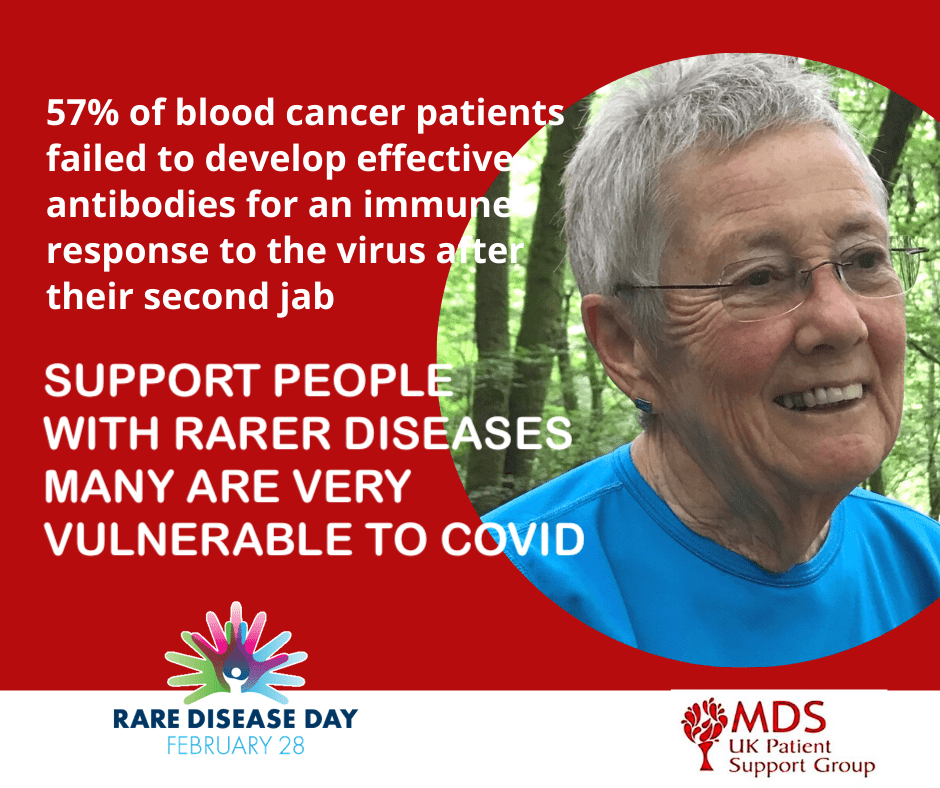
SUPPORT PEOPLE  WITH RARER DISEASES MANY ARE VERY VULNERABLE TO COVID

Rare diseases get forgotten

"Neil had a stem cell transplant scheduled for early March. Then UCLH checked his ferritin levels. If you’re having regular transfusions your iron levels should be monitored, Neil’s weren’t. After a year of iron-rich blood transfusions these were found to be stratospheric, so the transplant was put on the back burner."

Read Neil's story >

How can you participate?

  • Join the global chain of lights and light or decorate your home with the Rare Disease Day colors at 7:00 PM your local time on February 28th
  • Start a conversation on social media using the hashtag #RareDiseaseDay
  • Share your story
  • Advocate for equity
  • Read and share the School Toolkit which help explains living with a rare disease to young children
  • Find an event near you
MDS Patient Support
MDS Patient Support
MDS Patient Support
MDS Patient Support
MDS Patient Support

COVID-19 Vaccination and Treatment in Scotland and Wales

SCOTLAND

Getting your fourth vaccine

Some patients categorised as CEV (clinically extremely vulnerable) were sent appointment letters for a fourth vaccine in December, but when our patient representative for Scotland (Maureen) reached twelve weeks post third primary vaccination (confusingly sometimes wrongly referred to as booster), she heard nothing.

It was easy to book a next day vaccination at her local centre through the link below and she received this last Friday (no queues this time).

The same username and password as for the original vaccines. There is also a telephone number, if required:

https://www.nhsinform.scot/covid-19-vaccine/the-vaccines/coronavirus-covid-19-booster-vaccination

Covid-19 treatments for those on the “Highest Risk List”

You have to fulfil the following 3 criteria to be eligible for consideration:

  1. A positive PCR test in the last five days
  2. Symptoms of Coronavirus that have started in the last 5 days
  3. Are a member of the high risk group (MDS is specifically included on this list under “Patients with a haematologic malignancy”.)

Health Boards can accept a positive Lateral Flow Device (LFD) test result whilst waiting for confirmation of PCR test in certain circumstances.

The link below provides a table of the relevant Health Board telephone numbers for you to call (open 7 days a week including public holidays). Treatment will be provided when this is considered clinically appropriate.

We heard that some haematology patients had not required treatment because their illness was improving or their Covid symptoms were very mild.

Apparently – clinicians are also informed directly of any high risk patient with a positive PCR test result.

https://www.nhsinform.scot/illnesses-and-conditions/infections-and-poisoning/coronavirus-covid-19/coronavirus-covid-19-treatments

Patients in Scotland should have received:

  • A recent letter from the CMO describing how to get a Distance Aware Badge or Lanyard

and

  • How to obtain a priority PCR test

You should use the link below and specify that you are in the highest risk group when booking - Or phone 119

https://www.nhsinform.scot/illnesses-and-conditions/infections-and-poisoning/coronavirus-covid-19/test-and-protect/coronavirus-covid-19-get-a-test-if-you-have-symptoms

WALES

No offers to date for Priority kits from NHS Wales.
One welsh MDS patient, Tony, reported having to apply for a normal PCR test after getting Covid symptoms, meaning that result may not be back within the 5 days when an antibody/antiviral treatment MUST be started.

He added that Covid is more prevalent in his village than at any time before.

If you have more news and feedback for England, Scotland or Wales – please forward it to info@mdspatientsupport.org.uk

Please know we are continuing to communicate with NHSE to improve the situation on both vaccination and treatment


New treatments available for MDS and CMML patients with COVID-19

Have you got COVID-19? New Treatments are available for MDS and CMML patients

Covid-19 treatments for some severely immune-compromised patients are now available.
The Department of Health and Social Care (DHSC) has issued a ‘Rapid Policy Statement’ regarding ‘Neutralising monoclonal antibodies or antivirals for patients with COVID-19’, for both hospitalised and non-hospitalised settings.
The eligibility criteria for these drugs was revised on the 24th December.
The most important change is that MDS patients are eligible to receive these treatments. CMML patients on treatment are also eligible.

Two types of COVID-19 treatment are available:

  • sotrovimab (Xevudy)
  • molnupiravir (Lagevrio)

Sotrovimab is a biological medicine. It is also known as a neutralising monoclonal antibody (nMAb) while Molnupiravir is an antiviral medicine.

These treatments can help some people manage their COVID-19 symptoms and reduce the risk of becoming seriously ill.

> Read more on the NHS website:

https://www.nhs.uk/conditions/coronavirus-covid-19/treatments-for-coronavirus/

Molnupiravir capsule: antiviral drug pill for the treatment of COVID-19

Molnupiravir capsule: an antiviral drug for the treatment of COVID-19

How to get a COVID-19 treatment: Take a PCR test if you get symptoms

If you are an MDS patient or a CMML patient on treatment, you are eligible for a COVID-19 treatment.

The NHS Test and Trace should have sent you a Priority PCR test kit to keep at home. A PCR test is a test that you can do at home and send to a lab to find out if you have COVID-19.

You have been given a test kit so you can get tested quickly if you have any of the main symptoms of COVID-19

A new MHRA Commissioning document come out which quite clearly lists the symptoms of Covid-19 as follows:
Fever, chills, sore throat, cough, shortness of breath or difficulty breathing, nausea, vomiting, diarrhoea, headache, red or watery eyes, body aches, loss of taste or smell, fatigue, loss of appetite, confusion, dizziness, pressure or tight chest, chest pain, stomach ache, rash, sneezing, sputum or phlegm, runny nose.

You should take the test as soon as possible, even if your symptoms are mild.

When registering your test, it's important to enter your NHS number and postcode correctly. This is so the NHS can contact you about treatment if you test positive for COVID-19.

You can find PCR home test kit instructions for people eligible for COVID-19 treatments on GOV.UK.

Patients with MDS and CMML are having problems accessing Priority PCR kits and, potentially, anti-COVID-19 treatments

If you are having issues obtaining the right vaccine dose, or a PCR kit – please be reassured you are not on your own.

We had many reports from our members about:

  1. Problems in getting Priority PCR kits, which MDS and CMML (on treatment) patients are entitled to
  2. Patients simply not having received the letter informing them about the PCR kits and access to anti-COVID-19 treatments

We have flagged these issues to NHSE – please see this PDF document, summarising the problems and we keep campaigning on behalf of MDS and CMML patients.
If you have encountered an issue NOT covered in our summary – please email info@mdspatientsupport.org.uk with details.

In the meantime – the NHSE team is advising the following:

1- Ask your GP to send you this letter

Ask your GP to send you the following letter, which entitles you to the PCR kit and anti-COVID-19 treatments, should you test positive

Click to see the letter

MDS Patient Support

2 - Contact 119

Call 119 for advice, selecting the option for Test & Trace, if:

  • you have not received a PCR test by 10 January 2022
  • you develop symptoms before your PCR test arrives
  • you lose your PCR test or it has any damage or missing parts

The NHSE lists the following services under 119:

  • get a free PCR test or a lateral flow test
  • get help reporting PCR or lateral flow test results
  • get guidance on how to do tests
  • ask questions related to travel and testing
  • complain about a testing service or get advice about how to complain
  • get advice on when to self-isolate, and financial support while you're self-isolating

You can also use the Test and Trace Digital Service: https://enquiries.test-and-trace.nhs.uk/s/

Many patients have reported that, on occasions, 119 teams were unable to assist.
On Fri 21/01/22,  we have been assured that NHSE has formally requested 119 teams to assist with these issues – and staff are in the process of resolving these problems.

Again – please let us know if you continue to have problems when contacting 119 teams – and specify the nature of the problem. Email on info@mdspatientsupport.org.uk

MDS Patient Support

Contacting NHSE Customer Contact Centre

This is a further avenue to help resolve issues – should 119 or other options have failed.
https://www.england.nhs.uk/contact-us/
You can also expect the NHSE Resolution Team to contact you.

Further evidence of your eligibility to receive a Priority PCR Test and these new COVID-19 treatments

Interim Clinical Commissioning Policy: Neutralising monoclonal antibodies and intravenous antivirals in the treatment of COVID-19 in hospitalised patients. Patients with MDS are specifically mentioned on page 13 as eligible for these treatments.

Download PDF

More information on the new treatments, their eligibility and exclusion criteria

Below is a summary of the most main information regarding the new treatments. You can find a link to the full document above this article – as a downloadable PDF – in case you need to take the information to your GP.

What are the new treatment options for patients with COVID-19?

nMABs are synthetic monoclonal antibodies that bind to the spike protein of SARS-CoV-2, preventing subsequent entry of the virus into the host cell and its replication. This effectively ‘neutralises’ the virus particle. The following nMABs have conditional marketing authorisation (or Regulation 174 emergency use authorisation in Northern Ireland) for use in the treatment of COVID-19 in the UK:

  • Sotrovimab (Xevudy®): an nMAB that both blocks viral entry into healthy cells and clears cells infected with SARS-CoV-2. It's given to your through a drip in your arm (infusion) over 30 minutes. Learn more: https://www.nhs.uk/medicines/sotrovimab/
  • Molnupiravir: an oral antiviral drug which has been proven to halve the risk of hospital admissions and deaths from COVID-19, compared with placebo in patients with mild or moderate COVID-19. Moreover, molnupiravir has a favourable safety and tolerability profile. Learn more: https://www.nhs.uk/medicines/molnupiravir/

Non-hospitalised patients: Treatment Options

Commissioning position by DHSC
The proposal is: Sotrovimab is recommended to be available as a treatment option through routine commissioning for non-hospitalised adults and children (aged 12 years and above) with COVID-19 treated in accordance with the criteria set out in this document. Where treatment with sotrovimab is contraindicated or not possible, eligible patients may be offered an antiviral as an alternative.
Eligibility criteria
Patients must meet all of the eligibility criteria and none of the exclusion criteria.
Pre-hospitalised patients are eligible for treatment if:

  • SARS-CoV-2 infection is confirmed by polymerase chain reaction (PCR) testing within the last 5 days

AND

  • Onset of symptoms of COVID-19 within the last 5 days

AND

  • A member of a ‘highest’ risk group (as defined in Appendix 1).

The eligible patients as outlined in this policy should initially be considered for treatment with an nMAB (sotrovimab).
Where an nMAB is contraindicated or the administration of an nMAB is not possible, patients may be treated with a five-day course of molnupiravir if the onset of symptoms is in the last 5 days.
Patients who have received an nMAB within a post-exposure prophylaxis (PEP) or pre-exposure prophylaxis (PrEP) trial (such as the PROTECT-V trial) who meet the eligibility criteria of this policy can still receive treatment with an nMAB.
Exclusion criteria
Patients are not eligible for nMAB treatment in the community if they meet any of the following:

  • The pattern of clinical presentation indicates that there is recovery rather than risk of deterioration from infection
  • Require hospitalisation for COVID-19
  • New supplemental oxygen requirement specifically for the management of COVID-19 symptoms
  • Children weighing less than 40kg
  • Children aged under 12 years
  • Known hypersensitivity reaction to the active substances or to any of the excipients of sotrovimab as listed in the respective Summary of Product Characteristics

Hospitalised patients: Treatment options

Commissioning position by DHSC
Neutralising monoclonal antibodies or intravenous antivirals are recommended to be available as a treatment option for COVID-19 through routine commissioning for adults and children (aged 12 years and above) patients in hospital with COVID-19 infection in accordance with the criteria set out in this document.
Eligibility criteria
Patients must meet all of the eligibility criteria and none of the exclusion criteria under one of the following pathways:
Patients hospitalised for acute COVID-19 illness
Hospitalised patients are eligible to be considered for treatment with casirivimab and imdevimab if:

  • SARS-CoV-2 infection is confirmed by polymerase chain reaction (PCR) test or where a multidisciplinary team (MDT) has a high level of confidence that the clinical and/or radiological features suggest that COVID-19 is the most likely diagnosis

AND

  • Hospitalised specifically for the management of acute symptoms of COVID-19

AND

  • Negative for baseline serum anti-spike (anti-S) antibodies against SARS-CoV-2 (see section on ‘Serum antibody status’ below)

AND

  • Genotyping confirms the patient is infected with a non-Omicron variant.

For patients hospitalised with acute COVID-19 illness there are no available nMABs for the Omicron variant.
Please see access policies to dexamethasone (CAS alert), remdesivir and IL-6 inhibitors for these patients.
Clinicians are encouraged to enter all other patients admitted to hospital due to COVID-19 infection (including those infected with the Omicron variant, regardless of antibody status) into the RECOVERY trial, which is studying sotrovimab vs standard of care.
The following patients are NOT eligible for treatment in Group 1:

  • Children weighing less than 40kg
  • Children aged under 12 years
  • Known hypersensitivity reaction to the active substances or to any of the excipients of casirivimab and imdevimab as listed in the Summary of Product Characteristics

Appendix 1: Patient cohorts considered at highest risk from COVID-19 and to be prioritised for treatment with nMABs

MDS UK Note:

Please consult the full document for more precise information and various hospital situations, including COVID-19 acquired in hospital. The following is a section of Appendix 1 detailing the list of eligible blood cancers, including MDS. Please note that CMML patients on treatment, although not explicitly mentioned, are also included.

Description: Patients with a haematological diseases and stem cell transplant recipients

Cohorts

The following patient cohorts were determined by an independent advisory group commissioned by the Department of Health and Social Care (DHSC).

  • Allogeneic haematopoietic stem cell transplant (HSCT) recipients in the last 12 months or active graft vs host disease (GVHD) regardless of time from transplant (including HSCT for non-malignant diseases)
  • Autologous HSCT recipients in the last 12 months (including HSCT for non-malignant diseases)
  • Individuals with haematological malignancies who have received chimaeric antigen receptor (CAR)-T cell therapy in the last 24 months, or radiotherapy in the last 6 months
  • Individuals with haematological malignancies receiving systemic anti-cancer treatment (SACT) within the last 12 months except patients with chronic phase chronic myeloid leukaemia (CML) in molecular response or first or second line tyrosine kinase inhibitors (TKI).
  • All patients with myeloma (excluding MGUS) or chronic B-cell lymphoproliferative disorders (e.g. chronic lymphocytic leukaemia, follicular lymphoma) or myelodysplastic syndrome (MDS) who do not fit the criteria above.
  • All patients with sickle cell disease.
  • Individuals with non-malignant haematological disorder (e.g. aplastic anaemia or paroxysmal nocturnal haemoglobinuria) receiving B-cell depleting systemic treatment (e.g. anti-CD20, anti-thymocyte globulin [ATG] and alemtzumab) within the last 12 months.

More information on these treatments on NHS England pages. For a full list of conditions, please check these links:
https://www.england.nhs.uk/coronavirus/publication/interim-clinical-commissioning-policy-neutralising-monoclonal-antibodies-or-antivirals-for-non-hospitalised-patients-with-covid-19/
https://www.england.nhs.uk/coronavirus/publication/neutralising-monoclonal-antibodies-and-intravenous-antivirals-in-the-treatment-of-covid-19-in-hospitalised-patients/

Prioritising and protecting cancer services during the Omicron COVID-19 wave FAQs

COVID-19 Community Treatments

Q: What new treatments are being offered to people at the highest risk of becoming seriously ill if they become infected with Covid-19?
A: Since 16 December 2021, the NHS has been offering new treatments to people with coronavirus (COVID-19) who are at highest risk of going to hospital and becoming
seriously ill. Around 1.3 million of these highest risk patients are due to be contacted from 20 December with information on how they may be considered to receive these
treatments if they test positive for COVID-19 by PCR. A copy of the letter sent to 1.3 million patients is available here:
https://www.england.nhs.uk/coronavirus/publication/letter-to-patients-important-information-about-new-treatments-for-coronavirus/
Specialist doctors, including cancer doctors, have also been written to asking them to assist in identifying eligible patients not captured in the initial 1.3 million. A copy of this
letter is available here: https://www.england.nhs.uk/coronavirus/community-treatments/

Q: Who can access these treatments? How can I access them?
A: Further information on who can access these treatments and how they can be accessed
is available at www.nhs.uk/CoronavirusTreatments

Q: It doesn’t look like I am in the highest risk patient groups. Is there another way I can access coronavirus treatments?
A: If you are not in the highest risk group, you may be eligible to join the PANORAMIC study. The PANORAMIC study is open to individuals living anywhere in the UK who
meet the following criteria:
• Have received a PCR positive test for COVID-19.
• Feel unwell with symptoms of COVID-19 that started in the last five days.
• Are aged 50+, or 18-49 years old with an underlying medical condition that can
increase the risk of developing severe COVID-19.

Participants in the study will be randomly selected to either be in a group who receives a course of oral antiviral treatments, or a group that doesn’t. Two different groups are needed
so the study team can see any difference in the health of those who received the antiviral treatment compared to those who didn’t. All participants will be able to access any other
NHS care that they would normally expect to receive.
Further information on eligibility for the national study can be found on the PANORAMIC website: www.panoramictrial.org. If you receive a positive PCR test for COVID-19 and
believe you may be eligible for the study, we encourage you to call the trial team on freephone number 08081 560017 to discuss your eligibility to enrol in the study.

Q: What happens after an NHS clinician confirms I need treatment?
A: If a neutralising monoclonal antibody treatment is right for you, it will usually be given to you through a drip in your arm (infusion). You’ll usually get it at a local hospital or health
centre. Treatment takes approximately 30 minutes with time afterwards to check you feel OK.

Your local NHS provider will give you instructions on where the treatment will be given to you, and how to get there and back home safely. The NHS may be able to arrange for
your transport if you are unable to make your own COVID-safe travel arrangements.
If you are given an antiviral treatment, they normally come as capsules that you swallow and they can be taken at home. A hospital pharmacy will usually arrange for the
medicine to be delivered to you or it can be collected by someone else such as a friend, relative or NHS volunteer responder.

Q: Where is my local treatment centre? How do I travel there safely?
A: Your local NHS provider will give you instructions on where the treatment will be given to you. Some people are eligible for non-emergency patient transport services (PTS). To
find out if you're eligible for PTS and how to access it, you'll need to speak to the local NHS staff who have organised your appointment at the treatment centre.

Q: How do I know if I have a health condition that means I should get antiviral treatment or neutralising monoclonal antibodies?
A: A summary of the health conditions is provided at www.nhs.uk/CoronavirusTreatments, with more detail provided in Appendix 1 of the policy.
Most people with one of these health conditions will receive a letter or email from the NHS by the end of December 2021 and receive a PCR testing kit (to be used if COVID
symptoms are experienced) by 10 January 2022. This letter tells you about the treatments but does not guarantee treatment as doctors will need to assess you.
If you have a health condition which makes you eligible for one of these treatments and you test positive for COVID by PCR, you should be contacted by an NHS clinician to
discuss the treatments which may be suitable for you.

Q: What should I do if I think I might be eligible for treatment but have not been sent a PCR testing kit?
A: If you think you may have one of the health conditions which makes your eligible and you have not received a PCR testing kit, you can request one by calling 119, selecting the option for Test & Trace, and telling them that you think you might be eligible.
You can also request a PCR test kit to keep at home by going online at https://www.gov.uk/get-coronavirus-test. For the question, ‘Does the person who needs a test currently have any coronavirus symptoms?' you should answer: ‘No’. When it asks ‘Why are you asking for a test?’, select ‘I’ve been told to get a test by my local council, health protection team or healthcare professional’, and then select ‘A GP or other healthcare professional has asked me to get a test’.

Q: What should I do if I think I might be eligible for treatment but have not received a letter from the NHS about these treatments?
A: If you think you may have one of the health conditions which makes your eligible, but you haven’t received a letter, you can contact your GP practice or consultant to discuss
whether you are in the highest risk group. They will make an assessment of any conditions you may have, and will provide you with information on what to do, should you
test positive for coronavirus.

Q: What should I do if I think I’m eligible for treatments and have tested positive for COVID, but I have not been contacted by the NHS?
A: If you think you may have one of the health conditions which makes you eligible, but you haven’t received a letter, you can contact your consultant or GP practice if you test
positive to discuss whether you might be in the highest risk group. If they feel you may be eligible, they will be able to make a referral for you so that you can be considered for
treatment.

Q: Why have I received a letter or email about COVID treatment?
A: Health experts, including the UK chief medical officers, have looked at the health conditions which put people at the highest risk of coronavirus. The majority of patients in
this highest risk group will be informed by a letter or email which tells them that they may be eligible to receive these treatments, should they test positive for COVID.
If you have received a letter from NHS England about coronavirus treatments, it means your medical records show that you have, or previously had, one or more of those health
conditions, which means that these new treatments might be suitable for you if a PCR test confirms you have coronavirus.
You can find out how the NHS has used your information to identify and contact you about this treatment at www.digital.nhs.uk/coronavirus/treatments/transparency-notice.

Q: I need this information in another language or alternative format
A: Easy read and other language versions of the letter that went out to patients are available at https://www.england.nhs.uk/coronavirus/treatments.
Braille can also be posted to potentially eligible patients on request by emailing england.contactus@nhs.net.

Q: Where can I get further information?
A: Further information for patients is available here:

www.nhs.uk/CoronavirusTreatments


COVID-19 vaccines and MDS: Approvals and Advice – Updated 24/01/2022

Prioritising and protecting cancer services during the Omicron COVID-19 wave FAQs

Date: 21 December 2021

Overview
On 12 December the Prime Minister announced a rapid expansion of the booster programme to seek to mitigate the swiftly-growing wave of Omicron-variant Covid-19 cases.
The following day, the NHS confirmed in a letter from Amanda Pritchard (chief executive, NHS England) and Stephen Powis (chief executive, NHS Improvement) to the system that it is moving back into level 4 and incident response measures are being implemented. This document provides answers to frequently asked questions on the implications of these and other recent developments for cancer pathways and cancer patients.

Third and fourth doses of Covid-19 vaccinations

Q: What’s the position on third doses and boosters for severely immunosuppressed patients?
A: People in this group are entitled to three ‘primary’ doses of coronavirus vaccines and a ‘booster’, which for them will be a fourth dose, 12 weeks after their third.
It doesn’t matter whether these patients’ third dose was described as a “third primary dose” or a “booster” when they had it – the practical outcome is the same. They are still eligible for a fourth dose (their “booster”) 12 weeks after their third jab. While a small handful of patients are already eligible for their fourth coronavirus vaccination, the majority of this group will be due early in the New Year.

Q: How can I get my third dose of the COVID-19 vaccine?
A: If you are eligible for a third dose, your GP or hospital consultant should contact you to let you know. You may also have received a letter from the NHS advising that you may be eligible and to discuss this with your doctor. Your doctor will discuss with you how you can get your vaccine. You'll usually get vaccinated at your local hospital or a local NHS
service, such as a GP surgery.
If you are aged 18 or over and have a letter from a GP or hospital consultant confirming your eligibility for a third dose, you can also book your vaccination appointment online through the National Booking System or attend a walk-in vaccination site if you bring the letter with you to your appointment.
If you are eligible and you do not have a referral letter from your GP or hospital consultant, you can still opt for a walk-in vaccination appointment, but you will need to present relevant medical documentation confirming your condition and have an assessment on site by a qualified healthcare professional. It’s important to be aware that not every walk-in site is able to offer vaccination for people who are severely immunosuppressed, so please use our online walk-in site finder to make sure you choose the right site for you.
Examples of medical evidence that can be used to confirm your eligibility includes, but is not limited to:

  • A hospital letter describing your condition at the time of your 1st and/or 2nd dose
  • Evidence of prescribed medication at the time of your 1st/2nd dose – either in a hospital letter that describes the medication being prescribed, a prescription copy or a medication box with your name and the date on it.

Q: How can I get my COVID-19 booster (fourth dose)??
A: If you are aged 18 and over and have already received a third dose of the vaccine, you should get a booster three months after your third vaccination. If you are eligible for a booster, your GP or hospital consultant should contact you to let you know and invite you to book your appointment.

If it has been three months since your third dose and you haven’t heard from your doctor yet, you should contact them to discuss your vaccination.

Alternatively, if you already have a letter from a GP or hospital consultant confirming your eligibility for a third dose, you will be able to get a booster at a walk-in vaccination site if you take the letter with you, subject to assessment on site by a qualified healthcare professional. It is important to be aware that not every walk-in site is able to offer boosters for people who are severely immunosuppressed, so please use our online walk-in site finder to make sure you choose the right site for you.

Q: NHS systems record third doses as a booster – is that a problem and could it prevent a patient from getting their vaccine?
A: A third primary vaccination dose for patients defined as severely immunosuppressed is recorded in the Point of Care system as a booster, with the booster (fourth dose) recorded as a second booster. The classification of a third dose does not preclude a patient from receiving a booster, nor will it impede access to any subsequent vaccinations they might require. Eligibility is based upon the patient being identified as severely immunosuppressed rather than on the number of vaccinations they have received. If a patient has been identified by a clinician as being eligible for a third primary dose or a booster dose, the Point of Care system will not be a barrier to vaccination.

Print this poster and ask your GP to display in their surgery! Share on facebook/Instagram/Twitter!

Covid-19 vaccination: 3rd and 4th vaccine doses for MDS patients

COVID-19 vaccination for the severely immunosuppressed

People with a weakened immune system who are classified as severely immunosuppressed either due to underlying health conditions or medical treatment are being identified and offered a third primary dose of COVID-19 vaccination to help reduce their risk of getting seriously ill.

If someone was immunosuppressed when they had their first two doses, the vaccine may not have provided as much protection as it can for people who do not have a weakened immune system.

It is recommended that the third dose be given at least eight weeks after the second, as part of the primary course of immunisation, but if the patient’s GP or consultant believes that a different interval should be offered, because of ongoing treatment or starting treatment which will suppress the individual’s immune system, then this timing may be altered.

The JCVI also recommends a booster dose for this group a minimum of three months (91 days) after the third primary dose.

Who is eligible for a third primary COVID-19 dose?

Guidance from the Joint Committee on Vaccination and Immunisation (JCVI) recommends that a third dose be offered to individuals aged 12 years and over with severe immunosuppression.

This includes people who had or have:

• a blood cancer (such as leukaemia or lymphoma) MDS UK note: MDS and CMML are included
• a weakened immune system due to a treatment (such as steroid medicine, biological therapy, chemotherapy or radiotherapy)
• an organ or bone marrow transplant
• a condition that means you have a very high risk of getting infections
• a condition or treatment your specialist advises makes you eligible for a third dose

Further information about the eligibility criteria for a third dose has been published by the JCVI and is available here.

Getting vaccinated

According to the latest available data, 89% of individuals identified as severely immunosuppressed have now had a third primary dose.

At present, it’s a relatively small number of people within the cohort who are eligible for a booster, with the majority due in the New Year.

Included below is all the information someone needs to get vaccinated with the 3rd and 4th doses if you are severely immunosuppressed.

How to get your third dose of a COVID-19 vaccine

If you're eligible for a third dose, your GP or hospital consultant should contact you to let you know.

You may also have received a letter from the NHS advising that you may be eligible and to discuss this with your doctor.

Your doctor will discuss with you how you can get your vaccine. You'll usually get vaccinated at your local hospital or a local NHS service, such as a GP surgery.

If you are aged 18 or over and have a letter from a GP or hospital consultant confirming your eligibility for a third dose, you can also book your vaccination appointment online through the National Booking System or attend a walk-in vaccination site if you bring the letter with you to your appointment.

If you are eligible and you do not have a referral letter from your GP or hospital consultant, you can still opt for a walk-in vaccination appointment, but you will need to present relevant medical documentation confirming your condition and have an assessment on site by a qualified healthcare professional.

It’s important to be aware that not every walk-in site is able to offer vaccination for people who are severely immunosuppressed, so please use our online walk-in site finder to make sure you choose the right site for you.

Examples of medical evidence that can be used to confirm your eligibility includes, but is not limited to:

• A hospital letter describing your condition at the time of your 1st and/or 2nd dose
• Evidence of prescribed medication at the time of your 1st/2nd dose – either in a hospital letter that describes the medication being prescribed, a prescription copy or a medication box with your name and the date on it

How to get your COVID-19 booster (fourth dose)

If you are aged 18 and over and have already received a third dose of the vaccine, you should get a booster three months after your third vaccination.

If you are eligible for a booster, your GP or hospital consultant should contact you to let you know and invite you to book your appointment.

Your doctor will discuss with you how you can get your vaccine. You'll usually get vaccinated at your local hospital or a local NHS service, such as a GP surgery.

If it has been three months since your third dose and you haven’t heard from your doctor yet, you should contact them to discuss your vaccination.

Alternatively, if you already have a letter from a GP or hospital consultant confirming your eligibility for a third dose, you will be able to get a booster at a walk-in vaccination site if you take the letter with you, subject to assessment on site by a qualified healthcare professional.

It is important to be aware that not every walk-in site is able to offer boosters for people who are severely immunosuppressed, so please use our online walk-in site finder to make sure you choose the right site for you.

How are third doses recorded?

NHS England is aware that some stakeholders have raised questions about how third doses are logged in a patient’s record. A third primary vaccination dose for patients defined as severely immunosuppressed is recorded in the Point of Care system as a booster, with the booster (fourth dose) recorded as a second booster.

The classification of a third dose should not preclude a patient from receiving a booster, nor should it impede access to any subsequent vaccinations they might require. In the unlikely event that a patient is challenged on this point and is told a third shot or booster is unable to be recorded on the system, please point the contact at the vaccination centre towards the above content.

Eligibility is based upon the patient being identified as severely immunosuppressed rather than on the number of vaccinations they have received. If a patient has been identified by a clinician as being eligible for a third primary dose or a booster dose, the Point of Care system will not be a barrier to vaccination.

What adjustments are being made to support people who are severely immunosuppressed attending walk-in vaccination appointments?

Vaccination sites have been asked to ensure that appropriate arrangements and reasonable adjustments are in place such as priority lanes to support people who are less able to queue, including those in the severely immunosuppressed cohort.

NHS England have produced a poster highlighting that staff should ensure people who are immunosuppressed, alongside other priority groups, have their wait time reduced.

Download the document here:

Third Covid Dose Available To Book Online For People Who Are Severely Immunosuppressed

Please read the official information from NHS England:

People who are severely immunosuppressed can book their third COVID jab online.

In line with Joint Committee on Vaccination and Immunisation (JCVI) guidance, those who are classed as severely immunosuppressed as a result of treatment, for conditions such as cancer or for those with long-term chronic conditions where their immunity is affected by medication, are eligible for a third dose eight weeks after their second dose.

So far more than three quarters of those who are severely immunosuppressed have had a third COVID vaccination.

From today, adults who are eligible for a third dose of the COVID vaccine and have received a clinical referral letter from their doctor can go online and book an appointment, as the NHS COVID-19 vaccination programme continues to protect those most at risk from the virus.

The NHS COVID-19 vaccination booking service offers an option to ‘book my 3rd dose appointment’ for adults who had a weakened immune system at the time they had a second dose.

After JCVI recommended offering a third primary dose to those who are severely immunosuppressed, the NHS wrote twice to trusts and GPs asking that doctors identify and contact people in this important group, either to offer them a third dose directly or to provide them with a letter so that this can be accessed elsewhere at vaccination sites.

The NHS also wrote directly to around 400,000 potentially eligible patients encouraging them to speak to their clinician if they had not already done so.

Professor Stephen Powis, NHS National Medical Director, said: “NHS staff continue to deliver first, second and third doses, to those who are eligible, alongside administering around 14 million boosters in just over nine weeks.

“Decisions on when to get a third dose remains between a patient and their clinician who knows about their ongoing treatment – more than three quarters of people who are severely immunosuppressed have had their third dose so far, and from today people can also book in online with a letter from their GP or clinician.

“It’s incredibly important that people get the full recommended course of COVID vaccines, especially those most at risk from the virus – boosters and third doses are not a nice to have, they are the best way to protect you and your loved ones this winter”.

Although the number of people in this cohort can change over relatively short periods of time – for example patients may start chemotherapy or other treatments and so their eligibility for third and subsequent doses will change – around half a million are eligible for a third jab in England, and more than seven in 10 have already had theirs.

The decision on when to get a third jab for people who are severely immunosuppressed is made between patients and their clinicians, and the majority of third doses are being administered through hospital consultants and GPs.

In line with JCVI guidance, the third dose for those with severe immunosuppression should usually be given at least eight weeks after the second dose.

Those with a clinical referral letter from their doctor can also use the NHS online COVID vaccine walk-in finder and attend their local vaccination centre for their third dose.

The NHS has already taken steps to improve access for those who are severely immunosuppressed, such as writing to trusts and GPs asking them to identify and contact people in this group; writing to around 400,000 eligible patients encouraging them to speak to their clinician if they had not already done so; and writing to cancer leads to support patient identification and the provision of a clinical authorisation letter.

In addition to people being vaccinated through their GP or hospital, for those with a referral letter there are currently around 1400 vaccination sites offering bookings for third dose COVID-19 vaccinations and 300 sites offering walk-in appointments.

The offer of a third dose for people who are severely immunosuppressed is separate to the booster programme.

Since the NHS in England made history with the first COVID vaccination delivered outside a clinical trial in December 2020, 95 million doses of the life-saving vaccine have been delivered – with more than nine in 10 adults having had their first vaccination.

Around 14 million boosters have been delivered in total since the booster campaign kicked off in September, less than 48 hours after updated JCVI guidance.

There are more places delivering vaccines now than at any other point in the programme, including pharmacies, GP practices and other community sites, meaning the vast majority of people live within 10 miles of a fixed vaccination clinic.

Boosters (4th doses) at walk-in sites
If you or your child are eligible for a booster (4th dose), you can go to any walk-in vaccination site that is offering boosters if you have a letter from a GP or hospital specialist inviting you for either a 3rd dose or a booster (4th dose) for people with a severely weakened immune system.

You must take your letter with you to the walk-in site. Please also check that the site is offering vaccines for your or your child’s age group.

Please contact us should you have any issues or queries:
Tel: 02077337558 - Email: info@mdspatientsupport.org.uk

Important:

You must have a letter from your GP or hospital doctor. If you do not bring the letter, you will not be able to receive a 3rd or a 4th dose of the vaccine.

The 3rd dose and the booster: Differences

There seems to be a lot of confusion in GP practices and from the 119 Covid Helpline about the differences between the 3rd primary dose and a booster.

A third primary dose is an extra ‘top-up’ dose for those who may not have generated a full immune response to the first 2 doses. This is about half a million people in the UK.

The decision on the timing of the third dose should be made by their specialist. As a general guideline, the third dose should usually be at least 8 weeks after the second dose but with flexibility to adjust the timing so that, where possible, immunosuppression is at a minimum when the vaccine dose is given. Most MDS patients who were identified as (CEV) Clinically Extremely Vulnerable, would now be well over this 8-week interval.

A booster dose is a later dose to extend the duration of protection from the primary course of vaccinations. This is given to other, often vulnerable, people but who are not immunocompromised. It is given to people 6 months after their first course has ended.

In addition, if the Moderna vaccine is used as a 3rd dose, a full dose should be given. When given as a booster, only a half dose of Moderna is used. It is very important to check this when you have the vaccine.

It is very important you insist you qualify for a 3rd primary dose - not a booster - so that you can be vaccinated on time and with the right dose.

Initial Feedback from our Members

MDS Patient Support

Chris: "I emailed my GP practice on 28th September, pointing out the JCVI advice and requesting an invitation for a 3rd vaccine for myself and a booster for my husband, as somebody living with an immunosuppressed person.  I received an automated reply, stating “PLEASE NOTE - if your email is enquiring on your eligibility for your covid vaccination or attempting to book your covid vaccination we will not respond to your email.”"

"I was then quite surprised to get a phone call from the GP practice the next morning inviting me to get a vaccine that afternoon! And also, to ask my husband to make an appointment the following week for his booster dose!  All then went well, except that when I gave my details to the admin person at the point of having my vaccine she said “Oh, but you shouldn’t be having your booster yet as it hasn’t been 6 months since your 2nd dose!" So I had to tell her that this wasn’t a booster but a 3rd dose as I had leukaemia and was immunosuppressed! I was surprised that she didn’t seem to know this. "

MDS Patient Support

Claudia: "I had been waiting, as instructed, to hear from my GP or specialist regarding a 3rd vaccine, but instead received an email and a text from the NHS on 29th September, inviting me to make an appointment for a COVID-19 booster, on the basis of my “age, gender or ethnicity.” I rang 119 the next day to clarify, and started by explaining that I was classed as CEV due to being a blood cancer patient and had been expecting to be contacted regarding a 3rd vaccine, rather than the booster."

"The scheduler evidently didn’t understand the distinction, as she began to look for a booster appointment for me. I then again explained that this was not what I was expecting, based on the JCVI advice that immune-compromised people should first have a 3rd primary dose. At that point, she put me on hold in order to consult her supervisor. After 5-10 minutes, she came back on the line to inform me that they had today received a Bulletin containing the JCVI advice and that she could now see from the system that she could make an appointment for me to have a 3rd dose. If I hadn’t insisted that she shouldn’t make me a booster appointment, I’m sure that is what I would have been given. "

New survey to evaluate antibody response in individuals with cancer

The SOAP Study

King's College Hospital is monitoring MDS patients, as part of the SOAP study.

This study is measuring how effective the vaccines are in blood cancer patients and specifically MDS patients, as initial results have shown vaccines may not be as effective as in the general population.

The study is testing for T-cell response as well as antibodies and its results are expected soon.

More information on COVID-19 vaccines and recommendations for MDS Patients

  • Oxford University/AstraZeneca Covid-19 vaccine approved by the UK regulator
  • Pfizer/BionTech Covid-19 vaccine approved by the UK regulator
  • Moderna Covid-19 vaccine approved by the UK regulator

UK Medicines & Healthcare products Regulatory Agency (MHRA) Approvals

All vaccines undergo a review by the Medicines and Health Regulatory Agency (MHRA) (in the UK).  Other regulatory agencies, such as the European Medicines Agency (EMA) and the Food and Drug Administration (FDA) in the USA conduct their own assessment.

Oxford University/AstraZeneca Covid-19 vaccine:  MHRA Approval

The COVID-19 vaccine developed by Oxford University/AstraZeneca has today (30 December 2020) been given regulatory approval by the Medicines and Healthcare products Regulatory Agency (MHRA) after meeting required safety, quality and effectiveness standards.

Following a rigorous, detailed scientific review by the MHRA’s expert scientists and clinicians and on the basis of the advice of its scientific, independent advisory body, the Commission on Human Medicines, the UK regulator has approved COVID-19 Vaccine AstraZeneca for use across the UK.

MHRA Chief Executive Dr June Raine said:

"We are delighted to announce the good news that the Oxford University/AstraZeneca vaccine for COVID-19 is now approved for supply following a robust and thorough assessment of all the available data."

"A huge collaborative effort and commitment goes into these assessments which include reviewing vast amounts of data. Our staff have worked tirelessly to ensure we continue to make safe vaccines available to people across the UK."

"No stone is left unturned when it comes to our assessments. This approval means more people can be protected against this virus and will help save lives. This is another significant milestone in the fight against this virus. We will continue to support and work across the healthcare system to ensure that COVID-19 vaccines are rolled out safely across the UK. Protecting health and improving lives is our mission and what we strive for."

The Oxford University/AstraZeneca vaccine has been approved for use for people 18 years or older and consists of two doses, with the second dose administered 4-12 weeks after the first dose. The transportation and storage requirements for this vaccine mean that it needs to be kept at temperatures of 2C to 8C, which is similar to a conventional fridge for up to six months and can be administered within existing healthcare settings.

Read the full article: https://www.gov.uk/government/news/oxford-universityastrazeneca-covid-19-vaccine-approved

Pfizer/BionTech Covid-19 vaccine approved by MHRA

MHRA approval of the Pfizer/BionTech Covid-19 vaccine

The first COVID-19 vaccine for the UK, developed by Pfizer/BioNTech, has today been given approval for use following a thorough review carried out by the Medicines and Healthcare products Regulatory Agency (MHRA).

The decision by the UK regulatory authority was made with advice from the Commission on Human Medicines (CHM), the government’s independent expert scientific advisory body. A dedicated team of MHRA scientists and clinicians carried out a rigorous, scientific and detailed review of all the available data, starting in October 2020.

The MHRA expert scientists and clinicians reviewed data from the laboratory pre-clinical studies, clinical trials, manufacturing and quality controls, product sampling and testing of the final vaccine and also considered the conditions for its safe supply and distribution
MHRA Chief Executive, Dr June Raine said:

We have carried out a rigorous scientific assessment of all the available evidence of quality, safety and effectiveness. The public’s safety has always been at the forefront of our minds – safety is our watchword.

I’m really pleased to say that the UK is now one step closer to providing a safe and effective vaccine to help in the fight against COVID-19 – a virus that has affected each and every one of us in some way - and in helping to save lives.

Read the full article: https://www.gov.uk/government/news/uk-medicines-regulator-gives-approval-for-first-uk-covid-19-vaccine

Moderna Covid-19 vaccine approved by MHRA

MHRA approval of the Moderna Covid-19 vaccine

The COVID-19 vaccine developed by Moderna has been given regulatory approval for supply by the Medicines and Healthcare products Regulatory Agency (MHRA). This follows a thorough and rigorous assessment by the MHRA’s teams of scientists, including advice from the independent Commission on Human Medicines, which reviewed in depth all the data to ensure this vaccine meets the required standards of safety, quality and effectiveness.

This is the third COVID-19 vaccine to be approved for use by the MHRA and is the second mRNA vaccine (the Pfizer/BioNTech vaccine approved in December 2020 is also an mRNA vaccine).

MHRA Chief Executive Dr June Raine said:

Today’s approval brings more encouraging news to the public and the healthcare sector. Having a third COVID-19 vaccine approved for supply following a robust and thorough assessment of all the available data is an important goal to have achieved and I am proud that the agency has helped to make this a reality.

The progress we are now making for vaccines on the regulatory front, whilst not cutting any corners, is helping in our global fight against this disease and ultimately helping to save lives. I want to echo that our goal is always to put the protection of the public first.

Read the full article: https://www.gov.uk/government/news/moderna-vaccine-becomes-third-covid-19-vaccine-approved-by-uk-regulator

More information on the different COVID-19 vaccines

Pfizer/BioNtech: 95% effective in a study of 43,000 people. The trial also looked at people aged 65 and over, whose immune systems are weaker than those of younger people. In this older group, 94% effectiveness was observed. This vaccine works by taking part of the genetic code of the coronavirus and putting it in a vaccine. Once injected, this code tells our cells to produce a protein found on the surface of the coronavirus. Our immune systems respond to this and ‘remember’ what coronavirus looks like. When encountered again, our body will recognise it, allowing us to respond quickly to avoid becoming ill.

Moderna: Similar technology to the Pfizer/BioNtechvaccine. This saw 95% effectiveness levels in a study of 30,000 participants. They looked specifically at 7,000 people over the age of 65, as well as people with diseases that put them at high risk of complications from the coronavirus, such as diabetes and cardiac disease.

Astra Zeneca Oxford: This vaccine is made from a modified version of a virus that causes the common cold in monkeys. Researchers have inserted a gene in this vaccine, which when injected, prompts our bodies to make a protein found on the coronavirus. This is NOT a protein that will cause infection. Our immune system should then respond to this, preventing infection in the future. This vaccine has been shown to be between 60 and 90% effective depending on how doses are administered in a clinical trial of 20,000 people.

This summary was created by the MDS UK team and approved by the UK MDS Forum experts:

Prof G. Mufti, Dr D. Culligan, Prof D. Bowen, Dr S. Killick, Dr A. Kulasekararaj


Wishing you a very Merry Christmas and a Happy New Year


Blood Cancer: The Forgotten Fifth

Blood Cancer and MDS, the forgotten cancers

Blood cancer patients are less likely to see their needs fully met than patients with the four most common cancers - breast, colorectal, lung and prostate.

The blood cancer community, via the umbrella group Blood Cancer Alliance, has launched an important new campaign, called the Forgotten Fifth, pointing out that blood cancer is just as dangerous as the 4 main cancers, but often not given the same attention, nor allocated the same resources.

The Forgotten Fifth campaign aims to achieve equal status for blood cancer patients to the other four most common cancer patients, enabling better treatment and faster diagnosis. 

MDS Patient Support

MDS, the most forgotten

In addition, MDS is ‘the forgotten cancer’, as it is often not labelled as a form of cancer, and therefore not captured in data collected by the health authorities. As a support group, we have seen hundreds of cases where diagnosis of MDS was delayed. Delays means impaired quality of life for most patients, frequent infections, or, for a few of them a death sentence.

This campaign reinforces the evidence shown in our national MDS survey.

We are calling for attention to blood cancers, and MDS specifically.

"Neil had a stem cell transplant scheduled for early March. Then UCLH checked his ferritin levels. If you’re having regular transfusions your iron levels should be monitored, Neil’s weren’t. After a year of iron-rich blood transfusions these were found to be stratospheric, so the transplant was put on the back burner in order for these levels to be brought under control. Sadly, this wasn’t a treatment routinely offered by our local NHS Trust due to funding issues."

Read Neil's story >

What are we asking?

  • The Alliance is now calling for the NHS to treat blood cancer patients as equal to those with the four most common cancers in NHS policy making and decision making.
  • As a basic measure, the Alliance is asking that NHS England add data on blood cancer patients to the Cancer Data Dashboard it uses as a key information source for cancer strategies.

Do please point your MP to this campaign, to ensure that blood cancer stops being forgotten. Help us get there, please.

  1. Share your story with your MP. You can find out their email here.
  2. Share the images below on social media and with friends and family.

[envira-gallery id="33044"]


Managing MDS in the wake of a global pandemic

MDS Patient Support

This article was first published on the MDS Foundation Fall/Winter 2021 Newsletter. Many thanks to our colleagues from the MDS Foundation.

Important: The article below is destined to an American audience, and it lists some drugs and trials only available in the USA. Patients in the UK – please bare that in mind when reading.

By AMY ELIZABETH DEZERN, MD, MHS
Director, Bone Marrow Failure and MDS Program
Associate Professor of Oncology Johns Hopkins Sidney Kimmel Comprehensive Cancer Center Baltimore, Maryland

MDS Patient Support

Introduction

Few people would dispute that 2020 into 2021 has been an unprecedented time throughout the world. Much of this is attributable to Coronavirus disease 2019 (COVID-19). Briefly, COVID-19 is a contagious disease caused by severe acute respiratory syndrome coronavirus 2 (SARSCoV-2). The first known case was identified in Wuhan, China, in December 2019. The disease has since spread worldwide, leading to an ongoing pandemic. The disruptions have ranged from modest to supreme and have affected all differently. However, patients suffering with myelodysplastic syndromes (MDS) have had unique and specific challenges.

Risk to MDS patients defined

Older and immunocompromised populations appear to be at a higher risk for severe, potentially life-threatening illness related to COVID-19 compared with the general population, with reported case fatality rates as high as 15% in patients aged 80 years or older in early series from China.1

The initial study of COVID-19 and Cancer Consortium (CCC19) data found that 30-day all-cause mortality was 13% among patients with active or prior cancer and confirmed SARS-CoV-2 infection.2 This presents a particular concern for patients with MDS. More specific to MDS, a systematic review and meta-analysis quantified the outcomes (deaths, hospitalizations, and complications) of patients with hematologic malignancy and COVID-19.3 This included MDS as an acquired bone marrow failure syndrome. This analysis of 14 studies and a total of 231 patients included showed a pooled risk of death of 53% (95% CI, 34-72; I2, 77%) for patients with MDS, the highest of all hematologic malignancy subtypes. These sobering data nearly a year into the pandemic required us to “double-down” on our efforts to protect our patients.

Issues specific to MDS patients

As we know, patients diagnosed with MDS may have various disease manifestations depending on their disease phenotype. Management can range from close observation of mild cytopenias to supportive treatments with transfusions all the way through active chemotherapy and even early allogeneic hematopoietic stem transplantation (BMT).

Nonetheless, as the world was shutting down, all of these were impacted, disrupting the therapeutic pathway for patients with MDS. This interference with standard clinical care was compounded by the added fear that immunosuppressed MDS patients were at increased risk of morbidity and mortality from COVID-19. This led to many discussions (often via telemedicine) between patients, families, and providers. In the early days of the pandemic, there were few hard data to guide treatment or protective recommendations, and guidance was limited to expert opinion.4,5

For patients whose disease required close observation and monitoring, care interruptions may have manifested as limited access to laboratory appointments for blood work assessment. Patients who required transfusional support, especially those who lived in areas with few transfusion facilities, were markedly impacted by the nationwide shortage of blood supply. And patients undergoing chemotherapy were faced with decreased clinic/infusion center operating hours and inaccessible providers.

Moreover, for patients in need of chemotherapy there was the ongoing concern that the ensuing immunosuppression after chemotherapy could further predispose them to COVID-19 infection and severe disease. In many cases, this may have altered the balance between risk and benefit of chemotherapy. Finally, there were simply the fear of unknown. How long could patients go without treatment? What risk does an active cancer, whether low- or high-grade, impart to an individual human being? And from a human perspective, how could patients weigh the risks of seeing family or friends, knowing both that social gatherings would increase the risk of infection and that their remaining time together may be shortened due to their diagnosis of MDS.

MDS Patient Support

As the world was shutting down, all treatments were impacted.
This interference with standard clinical care was compounded by the added fear that immunosuppressed MDS patients were at increased risk of morbidity and mortality from COVID-19.

General recommendations 5

Expert consensus panels rapidly assembled to pool knowledge and provide guidance to patients and clinicians.6

These panels emphasized that, as always, treatment decisions should be based on category in the revised international prognostic scoring system.

Close observation without definitive treatment remained a reasonable strategy in patients with only modest cytopenias.7

For higher risk disease, newly diagnosed patients requiring treatment with a hypomethylating agent should commence therapy (and patients already on a hypomethylating agent should continue therapy).

It was thought reasonable to maintain normal treatment intervals until evidence of response is seen, but in order to balance risk of exposure with risk of disease progression, once a response is evident, lengthening the duration between treatment cycles and reducing dosing within each cycle is reasonable.

Subcutaneous azacitidine is preferred over intravenous azacitidine to decrease the time spent at infusion centers and in contact with potential COVID-19 exposures.

For lower risk MDS, consensus agreement favored a longer watch-and-wait approach for most patients. Erythropoiesis- stimulating agents (for patients naive to these agents) and early luspatercept initiated may avoid or delay the need for red blood cell transfusions.

Most experts agreed with deferral of lenalidomide in newly diagnosed patients with del(5q) disease given the risk for myelosuppression.

Over the course of the pandemic, this guidance has migrated back to baseline practice patterns of more aggressive treatment. This is primarily due to increasing comfort and confidence in infection prevention practices.

Unfortunately, clinical trials, a long-time priority in MDS, were dramatically and negatively affected by the COVID-19 pandemic. Many studies were paused, and study participation was nearly non-existent.8 For studies that continued, rates of study deviations increased, and the shortage of laboratory supplies was a significant barrier to continued sample collection.

Blood is an (even more) limited resource

MDS patients have always been counseled that blood is not an unlimited resource, but relatively few have truly not had potential access to transfusional support. However, during the first summer of the pandemic, the US national and even world- wide blood supply reached an all-time low.9,10

This posed an even greater challenge for patients in whom supportive care with red cells or platelets represented a way of life. Certainly, anemia from MDS causes decreased quality of life, but there are relatively sparse data regarding the minimum hemoglobin values for which a MDS patient may safely forgo transfusions with no evidence of end-organ damage. The work of Dr. Abel and colleagues provided some guidance on this topic during COVID.

The authors applied a modified Delphi method with 13 expert MDS clinicians to discussions of minimum safe hemoglobin for this population. There was a 100% consensus that it be no greater than 7.5 g/dL.11

This was a comfort to patient and physicians alike as we were able to pull back on individual transfusions to lower levels as well as single unit (as opposed to two) transfusion episodes to ration the blood supply where feasible.

MDS Patient Support

Over the course of the pandemic, treatment has migrated back to baseline practice patterns. This is primarily due to increasing comfort and confidence in infection prevention practices.

Drugs approved during the pandemic

Ironically, given that it had been over 15 years since the last regulatory approval for a drug for patients with myelodysplastic syndromes, two drugs were approved during the pandemic timeframe. Both actually have particular relevance in the setting of goals to decrease healthcare interactions and space out clinic visits.

On April 3, 2020, the Food and Drug Administration approved luspatercept- aamt (REBLOZYL, Celgene Corporation) for the treatment of anemia failing an erythropoiesis stimulating agent and requiring 2 or more red blood cell (RBC) units over 8 weeks in adult patients with very low- to intermediate-risk myelodysplastic syndromes with ring sideroblasts (MDS-RS) or with myelodysplastic/myeloproliferative neoplasm with ring sideroblasts and thrombocytosis (MDS/MPN-RS-T). It is a first- in-class erythroid maturation agent that binds to the select transforming growth factor-β superfamily ligands to reduce aberrant Smad2/3 signaling and enhance late-stage erythropoiesis. (Editor's Note: more information on Luspatercept for the UK will follow next week).

In the MEDALIST trial 12 randomized, multi-center, double-blind, placebo-controlled trial in 229 patients with IPSS-R very low, low, or intermediate-risk myelodysplastic syndromes who had ring sideroblasts and required RBC transfusions (2 or more RBC units over 8 weeks), patients were randomized 2:1 to luspatercept or placebo. All patients received best supportive care, which included RBC transfusions. The main efficacy endpoint in MDS-RS and MDS- RS-T was the proportion of patients who were RBC-transfusion independent (RBC-TI), defined as the absence of any RBC transfusion during any consecutive 8-week period between Weeks 1 and 24. Of the 153 patients who received luspatercept, 58 (37.9%, 95% CI: 30.2, 46.1) were RBC-TI for at least 8 weeks, compared to 10 patients (13.2%, 95% CI: 6.5, 22.9) who received placebo (treatment difference 24.6% (95% CI: 14.5, 34.6; p<0.0001.) The most common (>10%) adverse reactions to luspatercept are fatigue, headache, musculoskeletal pain, arthralgia, dizziness/ vertigo, nausea, diarrhea, cough, abdominal pain, dyspnea, and hypersensitivity. The recommended starting dose of luspatercept is 1 mg/kg once every 3 weeks by subcutaneous injection. This was adopted efficiently in eligible patients in hopes of augmenting hemoglobin enough to avoid transfusion during the pandemic and beyond.

Also approved during the pandemic (July 7, 2020) was Inqovi (decitabine and cedazuridine) for treatment of adult patients with myelodysplastic syndromes (MDS) and chronic myelomonocytic leukemia (CMML). The approval was based on two open-label, randomized, crossover clinical trials that showed similar drug concentrations between IV decitabine and oral decitabine/cedazuridine. Additionally, about half of the patients who were formerly dependent on transfusions no longer required transfusions during an eight- week period. Both trials provided comparisons of exposure and safety in the first two cycles between oral decitabine-cedazuridine and IV decitabine and a description of disease response to the new medication. Comparison of disease response between decitabine- cedazuridine and IV decitabine was not possible because all patients received decitabine-cedazuridine starting in cycle 3. The overall safety profile of oral decitabine- cedazuridine was similar to IV decitabine.

Data on active covid infections in MDS patients

For ASH 2020, Feld and colleagues 13 prospectively reviewed the records of all patients seen in the MDS clinic in New York City in the spring of 2020 to report on the effects of COVID specifically on MDS patients. Overall, 27.1% of the patient population was diagnosed with COVID-19 and 39.1% of these patients died, or 10.6% of the overall cohort. The mortality rate reported here is higher than anticipated, but at the time of the abstract, the majority of patients recovered and have resumed MDS directed therapy.

This has been my personal experience as well. Further results hinted at another problem others were seeing as well: persistently positive PCR tests up to 6 weeks post infection and COVID-19 antibodies were found in 85.7% of COVID-19 PCR+ patients tested. This suggested that MDS patients may have delayed viral clearance, but can mount a humoral response. 14 We encouraged our patients to limit exposures but get tested where feasible. There have been persistently positive patients by PCR who required longer term isolation. We look forward to MDS specific data on convalescent plasma to inpatients, and monoclonal antibody therapy for outpatients as we have gained knowledge and use.

MDS Patient Support

Persistently positive PCR tests up to 6 weeks post infection and COVID-19 antibodies were found in 85.7% of COVID-19 PCR+ patients tested. This suggested that MDS patients may have delayed viral clearance, but can mount a humoral response.

Vaccination

Based on randomized phase III clinical trials, several COVID-19 vaccines became available throughout the world in late 2020, early 2021, with the BNT162b2 (Pfizer/ BioNTech), ChAdOx1 nCoV-19 (Oxford/ AstraZeneca), mRNA-1273 (Moderna) vaccines and the Johnson & Johnson single- dose COVID-19 vaccine approved. 14-16

Ten patients with MDS were evaluated in a larger cohort for data on immunogenicity of SARS-CoV-2 vaccine in patients with hematologic malignancies.17 Through robust evaluation of immune response after 2 BNT162b2 inocula including functional seroneutralization assay and assessment of T- cell response, the authors concluded a second BNT162b2 inoculum translates into a significant increase in humoral response, allowing almost half of the patients to achieve immune protection against COVID-19. Given the increase in seroconversion rate between the first and second vaccine injections, the authors noted that evaluation of the effectiveness of such a third inoculum will be imperative.

As such, in the late summer 2021, the U.S. Food and Drug Administration (FDA) has recently authorized a booster shot of either the Moderna or Pfizer COVID-19 vaccine for certain immunocompromised people. Studies show that some people with weakened immune systems — those who have received solid organ transplants and people with conditions considered to have an equivalent level of immunocompromise — are less likely to create an antibody response from two doses of the Pfizer or Moderna COVID-19 vaccine, and these people could benefit from a third dose.

Changes here to stay and future directions

MDS patients are special. No reader (provider or patient or family and beyond) of this editorial will disagree. We learned from our colleagues and listened to our patients as we tried to protect them and still carry on with appropriate treatment. One innovation quite helpful was the development of dedicated “biomode” treatment and infusion spaces (negative pressure) to allow for a person under investigation or diagnosed with COVID to receive treatments and transfusions in an ongoing fashion. Centers also pioneered the concept of drive-up phlebotomy and shot clinics to allow patients to avoid even exiting their car to obtain routine labs and quick injections.

Perhaps the largest paradigm shift, however, was the rapid expansion of telemedicine. Not only does this allow infirm or driverless patients to see their provider, but also allowed a larger number of patients to consult both with their local hematologist as well as MDS experts. For their part, providers enjoyed seeing patients in their homes and perhaps with several generations of family members. Concerns about access to care and drug availability were mitigated through increased prescription allowances: for example, Celgene REMs allowed a 56-day supply during the pandemic. Many of these initiatives were mandated by the COVID times but are likely a permanent part of MDS care in many areas.

The NHLBI MDS Natural History Study (NCT02775383) is an ongoing prospective cohort study conducted across 144 sites in the U.S. and Israel intended to establish a data and biospecimen repository to advance the understanding of MDS. In response to the COVID-19 pandemic, the study also collected data on COVID-19 infection and management. We will look forward to summary of COVID-19 outcomes from participants in this study and the impact of the pandemic in this population of MDS patients.

Clinical trial opening and accrual are also recovering as the pandemic enters a new stage. Uniquely, in 2021, there are more phase III studies in higher risk MDS than ever before. This has produced an interesting dynamic in which agents (and their developers) are competing both for accrual and to become the new standard of care. The trials all share a similar design in their phase III registration studies with the novel product in combination compared to single-agent azacitidine. Each trial has reasonable earlier phase data, usually in both AML and/or higher risk MDS, upon which they have based their current clinical investigations.

A trial of magrolimab (NCT04313881) will examine first-in-class macrophage immune checkpoint inhibitors that targets CD47, a key molecule mediating cancer cell evasion of phagocytosis by the innate immune system. Venetoclax (NCT04401748) will be studied in higher risk MDS at a truncated dosing schema (14 days) relative to its AML trials. Dual targeting of immune effectors and leukemic cells by sabatolimab (NCT04266301) is also a trial enrolling the same higher risk patients. SY-1425, a selective RARα agonist called Tamibaterone (NCT04797780), is a biomarker driven study for those MDS patients who overexpress RARα. Having this plethora of options brings back hope to MDS patients for the future after the pandemic.

MDS Patient Support

Studies show that some people with weakened immune systems are less likely to create an antibody response from two doses of the Pfizer or Moderna COVID-19 vaccine, and these people could benefit from a third dose.

Conclusion

In conclusion, this has been a most unusual and unprecedented time throughout the world in 2020–21. We’re learning to adapt to the “new normal” — just as all MDS patients bravely adapt to their own novel routines after their MDS diagnosis. The COVID-19 pandemic has affected patients with MDS in a myriad of ways, including diagnostic and treatment delays, scarcity of blood products, higher risks of morbidity and mortality from the viral infection itself, as well as necessity of vaccinations and additional boosters. Nonetheless, we forge ahead to find novel approaches to improve the quantity and quality of life for all MDS patients.

References

  1. 1. Wu Z, McGoogan JM. Characteristics of and Important Lessons From the Coronavirus Disease 2019 (COVID-19) Outbreak in China: Summary of a Report of 72 314 Cases From the Chinese Center for Disease Control and Prevention. JAMA. 2020;323:1239–42.
  2. Kuderer NM, Choueiri TK, Shah DP, et al. Clinical impact of COVID-19 on patients with cancer (CCC19): a cohort study. Lancet. 2020;395:1907–18.
  3. Vijenthira A, Gong IY, Fox TA, et al. Outcomes of patients with hematologic malignancies and COVID-19: a systematic review and meta- analysis of 3377 patients. Blood. 2020; 136:2881–92.
  4. Shah MA, Emlen MF, Shore T, et al. Hematology and oncology clinical care during the coronavirus disease 2019 pandemic. CA: a cancer journal for clinicians. 2020;70:349–54.
  5. Zeidan AM, Boddu PC, Patnaik MM, et al. Special considerations in the management of adult patients with acute leukaemias and myeloid neoplasms in the COVID-19 era: recommendations from a panel of international experts. Lancet Haematol. 2020; 7:e601-e12.
  6. Mossuto S, Attardi E, Alesiani F, et al. SARS- CoV-2 in Myelodysplastic Syndromes: A Snapshot From Early Italian Experience. Hemasphere. 2020;4:e483.
  7. Komrokji R, Al Ali N, Padron E, et al. What is the optimal time to initiate hypomethylating agents (HMAs) in higher risk myelodysplastic syn- dromes (MDS)? Leuk Lymphoma. 2021:1–6.
  8. Unger JM, Blanke CD, LeBlanc M, Hershman DL. Association of the Coronavirus Disease 2019 (COVID-19) Outbreak With Enrollment in Cancer Clinical Trials. JAMA Netw Open. 2020;3:e2010651.
  9. Almalki S, Asseri M, Khawaji Y, et al. Awareness about Coronavirus (COVID-19) and challenges for blood services among potential blood donors. Transfus Apher Sci. 2021:103211.
  10. Schiroli D, Merolle L, Molinari G, et al. The impact of COVID-19 outbreak on the Trans- fusion Medicine Unit of a Northern Italy Hospital and Cancer Centre. Vox sanguinis. 2021.
  11. Tanasijevic AM, Revette A, Klepin HD, et al. Consensus minimum hemoglobin level above which patients with myelodysplastic syn- dromes can safely forgo transfusions. Leuk Lymphoma. 2020:1-5.
  12. Fenaux P, Platzbecker U, Mufti GJ, et al. Luspatercept in Patients with Lower-Risk Myelodysplastic Syndromes. N Engl J Med. 2020;382:140–51.
  13. Jonathan Feld, MD, Erin P. Demakos, RN, Rosalie Odchimar-Reissig, RN, Douglas Tremblay, MD, Saudia Alli, NP, Darshanie Sewah, RN, Shyamala C. Navada, MD, Lewis R. Silverman, MD. Myelodysplastic Syndromes (MDS) & COVID-19: Clinical Experience from the US Epicenter of the Pandemic. Blood. 2020;136.
  14. Baden LR, El Sahly HM, Essink B, et al. Efficacy and Safety of the mRNA-1273 SARS-CoV-2 Vaccine. N Engl J Med. 2021;384:403–16.
  15. Ramasamy MN, Minassian AM, Ewer KJ, et al. Safety and immunogenicity of ChAdOx1 nCoV-19 vaccine administered in a prime- boost regimen in young and old adults (COV002): a single-blind, randomised, controlled, phase 2/3 trial. Lancet. 2021; 396:1979–93.
  16. Polack FP, Thomas SJ, Kitchin N, et al. Safety and Efficacy of the BNT162b2 mRNA Covid- 19 Vaccine. N Engl J Med. 2020;383: 2603–15.
  17. Malard F, Gaugler B, Gozlan J, et al. Weak immunogenicity of SARS-CoV-2 vaccine in patients with hematologic malignancies. Blood cancer journal. 2021;11:142.

Take part! An international survey to understand your needs and quality of life

Take part in this survey to have a say on clinical treatment and trials

To better understand and raise awareness of your needs, the MDS Alliance has designed the MDS Global Survey.

The survey includes a validated quality of life tool (QUALMS) and is available in 11 languages.

The findings will support patients, caregivers, and advocates around the world to better understand your quality of life and address your needs as an MDS patient.

Have a say! A call to patients, carers and advocates

This survey WILL make a difference in how future clinical trials in MDS will be conducted, and what information will be collected.

Remember – you are the patients, carers and advocates. Only you can provide the patient voice for your needs in MDS care and treatments!


Deferasirox (Exjade) access in MDS – Myelodysplastic Syndromes Overview of a UK wide postcode lottery – 2015 to 2021

Deferasirox is only licensed second line for the treatment of chronic iron overload despite real-world experience showing that deferasirox is better tolerated and its compliance is far superior than first line treatment.

This has badly affected many MDS patients as some pockets of the UK still will not grant funding to this drug, effectively creating a postcode lottery.

We request an end to this postcode lottery. In the absence of a NICE submission/decision, access should be aligned to the positive Scottish Medicines Consortium (SMC) decision.

Below you'll find excerpts of the document and explanations for:

  1. Patients (and families) affected by MDS, Myelodysplastic Syndromes and on regular blood transfusions
  2. MPs representing these patients in parliament
  3. Clinicians needing support to obtain access to deferasirox (Exjade) for their MDS patients 
  • MDS patients on regular transfusions?
  • Ferritin levels increasing?
  • Discussions about iron chelation?
  • Difficulties accessing the oral version of the iron chelation treatment?

 If you, or a patient you know are living in a region which STILL denies access to deferasirox (Exjade), the oral iron chelation treatment, please read on.

In the absence of a NICE decision, some pockets of the UK still will not grant funding to this drug, effectively creating a postcode lottery.

We first reported on this anomaly in 2015: https://mdspatientsupport.org.uk/mds-patients-achieve-access-to-vital-new-treatment-option/

2021 - and we still have reports of patients denied access, despite special circumstances:

  • Bournemouth area, a half-blind elderly MDS patient who could not handle needles, was denied Exjade. He since passed away.
  • Exeter area, an MDS patient, AND main carer for his wife with a degenerative condition, has been forced to use the cumbersome pump option to reduce his ferritin levels.
  • Cornwall, further reports from consultants, who have given up on applying for IFR’s Individual Funding Requests, as all are rejected.

Below, you will find:

Part 1 - The current national BSH Guidelines for the use of iron chelation in MDS patients

Part 2 – A selection of regional decisions regarding the funding of deferasirox (Exjade), in chronological order

Part 3 – The latest clinical paper supporting the use of deferasirox as the most beneficial treatment option in this group of MDS patients.

Request: As the national patient support group for MDS, we request an end to this postcode lottery.

In the absence of a NICE submission/decision, access should be aligned to the positive SMC decision.

It is simply not ethical to deny access to a drug based on a post-code, for patients who are clearly struggling with quality of life issues, or elderly, or suffering with additional sight or manual dexterity issues.

NOTE: Clinical commissioning groups will be subsumed into integrated care systems by the end of 2021, and will be statutorily dissolved into ICS in April 2022 if the government’s planned health bill goes ahead. 

Read more:

https://www.england.nhs.uk/integratedcare/what-is-integrated-care/

https://www.pharmacymagazine.co.uk/analysis/ccgs-to-be-subsumed-into-ics-before-end-of-2021

Part 1 - BSH Guidelines for MDS – June 2021 revision

MDS Patient Support
  • Expert opinion is that deferasirox is the drug of choice for transfusion-related iron overload in patients with MDS

Iron chelation in MDS

Patients with MDS are at risk of developing iron overload from transfusion of red cells where iron build-up is inevitable (one unit of red blood cells delivers 200–250 mg iron), and there is also increased intestinal absorption of iron driven by ineffective erythropoiesis,48 mostly relevant to MDS-RS. Excessive iron ultimately leads to secondary end organ damage and cardiac disease remains the main non-leukaemic cause of death in MDS.49, 50

Iron overload is associated with adverse outcome in MDS

Retrospective studies have shown that OS is significantly shorter in transfusion-dependent MDS patients either through cardiac deaths, hepatic cirrhosis50, 51 or increased leukaemic progression.50 The European LeukemiaNet MDS Registry showed that the risk of death in transfusion-dependent patients with detectable labile plasma iron levels is independent of risk of disease progression.52 Iron overload also increases transplant-related mortality in haematopoietic stem cell transplantation (HSCT) in MDS patients53 and total transfusion burden implied a worse prognosis in a European Society for Blood and Marrow Transplantation (EBMT) study.54

Measuring iron loading

Routine estimations of iron loading can be made by serial monitoring of ferritin and tracking of red cell units transfused. However, there is little correlation between units transfused, or serum ferritin, and the degree of organ iron deposition.

Magnetic resonance imaging (MRI) for R2 (liver proton relaxation rate),55 or cardiac and liver T2* assessments56 can be used to help quantify hepatic and cardiac iron loading and its impact on organ function. 

Iron chelation can improve natural history

Effective iron chelation may improve haemopoiesis. The EPIC study57 and the GIMEMA group58 showed an International Working Group (IWG) erythroid response in 15–25% of patients although median response duration was only eight weeks in the EPIC study. Platelet and neutrophil responses were also reported.

Desferrioxamine has been shown to lower cardiac iron assessed by MRI measurements59 and deferasirox has been shown to improve alanine transaminase (ALT) levels.60 A German registry study showed that chelation therapy improved survival in almost 200 transfused lower-risk MDS patients,61 supported by prospective data from the EUMDS registry.62 Furthermore, it is now accepted that iron chelation prior to HSCT in congenital anaemia can improve transplant-related mortality.53 Although this is not yet proven to be the case in haematological neoplasms including MDS, a recent EBMT joint expert panel recommended chelation in patients who have received more than 20 units of blood prior to HSCT.63

Choice of iron chelator

Desferrioxamine remains the most efficient iron chelator available and is given subcutaneously in overnight infusions, which may decrease the labile iron pool. However, many patients find it uncomfortable and cumbersome, reporting QoL issues. Deferasirox and deferiprone are given orally and are generally well tolerated, although deferiprone is associated with agranulocytosis in around 4% of patients. Deferiprone should not be used routinely in patients with MDS, and only after careful consideration with a haematologist experienced in treating MDS. It should be undertaken with very careful monitoring (weekly blood counts), and should not be used where the baseline neutrophils are <1·5 × 109/l. Deferasirox is the only iron chelator currently licensed for use in MDS patients with proven reduction in labile iron and improved haemopoiesis in some patients.57, 64

Discussion of recommendations

Iron chelation in lower-risk MDS patients

It is recommended that all suitable lower-risk patients (IPSS low and intermediate-1; IPSS-R low and very low) should be considered for iron chelation therapy around the time they have received 20 units of red cells, or when the ferritin is more than 1 000 μg/l. Patients should have ferritin levels measured every 12 weeks and have ophthalmological and auditory examinations before commencing therapy and annually while on treatment. Iron chelation with deferasirox should be stopped if the ferritin falls below 500 μg/l and desferrioxamine should be stopped if the ferritin falls below 1 000 μg/l.

Iron chelation in higher-risk MDS patients

Patients who are considered suitable for HSCT should have iron levels monitored and iron chelation therapy given prior to transplant, if time allows. 

Drug recommendations

Deferasirox is only licensed second line (after desferrioxamine) for the treatment of chronic iron overload due to blood transfusions in patients with anaemia, such as MDS. However, real-world experience is that deferasirox is better tolerated, compliance is far superior and safety data are now mature. For these reasons, expert opinion is that deferasirox is the drug of choice for transfusion-related iron overload in patients with MDS. Desferrioxamine remains an option in those resistant to or intolerant of deferasirox. The two drugs may be combined in exceptional circumstances with heavy cardiac iron overload, but only under the supervision of a haematologist experienced in MDS treatment, although there are no data to support the combination.

There is no contraindication to the use of iron chelation in combination with other disease-modulating treatments such as lenalidomide or azacitidine.

Recommendations

  • All suitable lower-risk patients (IPSS low and intermediate-1; IPSS-R low and very low) should be considered for iron chelation therapy at the time they have received 20 units of red cells, or when the ferritin is more than 1 000 μg/l (1B).
  • Iron chelation therapy should be considered in patients prior to stem cell transplant, if time allows (2C).
  • Expert opinion is that deferasirox (although only licensed second line in MDS) is the drug of choice based on tolerability, compliance and mature safety data (2C).
  • Deferiprone is not routinely recommended in MDS (2C).
  • Iron chelation therapy with deferasirox should be stopped if the ferritin falls below 500 μg/l and desferrioxamine should be stopped if the ferritin falls below 1 000 μg/l (2C).

Part 2 - Selection of regional decisions regarding the funding of deferasirox (Exjade), in chronological order

SMC HTA – January 2017

  • Deferasirox accepted for use

“In the base case analysis, deferasirox was considered to dominate desferrioxamine ie was cheaper and more effective. Compared to desferrioxamine, deferasirox resulted in savings of -£6,783 and a QALY gain of 0.58.

Although deferasirox was associated with a relatively large incremental drug cost (£27,890) compared to desferrioxamine, this was offset by the lack of iron chelation therapy equipment costs; these were £28,847 for desferrioxamine. In addition, deferasirox resulted in fewer transfusion-related costs, treatment-related monitoring costs and complication costs.

At the PACE meeting, it was said that transfusion requirements appear to decrease in some MDS patient treated with deferasirox. Additionally, the use of an oral treatment may reduce risk of infection as patients no longer need to use needles.

Patient and clinician engagement (PACE)
A PACE meeting with patient group and clinical specialist representation was held to consider the added value of deferasirox, as an ultra-orphan medicine, in the context of treatments currently available in NHS Scotland.

The key points expressed by the group were:
· Around half of patients with MDS will develop severe anaemia and the resultant need for regular transfusions. The associated iron overload can cause iron accumulation in vital organs causing potentially life threatening problems such as liver, heart and renal dysfunction. Full compliance with chelation therapy is essential to minimise the impact of iron overload.
· Deferasirox is the only chelation treatment option available for those low to intermediate risk MDS patients who cannot tolerate administration of the desferrioxamine subcutaneous infusion or where this treatment is contra-indicated. It is of particular benefit for patients with sight or dexterity issues or those with a needle phobia.
· Existing chelation treatment involves subcutaneous infusion administered 5-7 days per week. Patients usually use the pump overnight or wear it underneath clothes for eight hours during the day, which may cause pain and discomfort. As such, current treatment is generally associated with an inferior quality of life for the patients.
· PACE participants highlighted their experience that compliance with the oral treatment is greater than that seen with the infusion and consequently deferasirox is a more effective chelation therapy option.

Deferasirox offers a vastly improved quality of life for patients with MDS and their families/carers by reducing the physical, psychological and emotional burden associated with desferrioxamine infusion therapy.”

https://www.scottishmedicines.org.uk/medicines-advice/deferasirox-exjade-resubmission-34707/

Thames Valley – July 2017

  • Subcut infusion not well tolerated, not advisable in MDS
  • Deferasirox ‘safe and effective

http://nssg.oxford-haematology.org.uk/myeloid/guidelines/ML-25-guidelines-for-oral-iron-chelation-in-mds.pdf

East of England data – June 2021

  • Routine funding not recommended
  • IFR’s or group approval via business case submission

https://medicines.blmkccg.nhs.uk/wp-content/uploads/2020/06/iron-chelators-for-iron-overload-in-myelodysplastic-syndromeMERGED.pdf

Herts Valley – Sept 2017

  • Not routinely commissioned, despite SMC cost-effectiveness acknowledged

https://hertsvalleysccg.nhs.uk/application/files/5515/3633/5366/FINAL_Iron_chelators_in_MDS_PAC_decision_document_201709_HMMC.pdf

Thames Valley – Sept 2018

  • Deferasirox to be used when subcut ICT contraindicated or inadequate

http://fundingrequests.nhsdigital.org.uk/wp-content/uploads/2018/12/26-09-18-Minutes-TVPC-Final.pdf

London data – Jan 2020

  • Clinical judgement should define choice of chelator

https://www.kingshealthpartners.org/assets/000/003/347/Pan_London_MDS_Guideline_Jan_2020_original.pdf

Greater Manchester – May 2020 (revised)

  • Deferasirox mentioned on its own

Iron Chelation
General recommendations are primarily based on studies in thalassemia, in which there is strong evidence for iron chelation (15). There is no doubt that heavily transfused MDS patients accumulate iron to potentially harmful effect.
There is evidence that iron chelation reduces iron overload in MDS, and even data suggesting reduced risk of leukaemic transformation. Iron chelation may also improve outcome after transplantation. However, there are currently no good quality controlled studies proving a survival or other long-term outcome advantage for iron chelation in MDS (16).

On balance, it is recommended that patients who satisfy the following criteria be considered for iron chelation:
• Where long-term transfusion therapy is likely (eg MDS-SLD, MDS-RS, 5q- patients; unless very high age or severe concomitant disease)
• In more advanced MDS (MDS-MLD, MDS-EB), iron chelation should be considered if life expectancy exceeds 2 years from time of iron overload (ferritin >1500 μg/l, or after 24 units of RBC).
• Candidates for allogeneic transplantation

Deferasirox (Exjade®) is an oral agent with now many years’ experience that is broadly well tolerated. Iron excretion occurs almost entirely in the faeces and is dose dependent. Caution is advised in renal and liver impairment. A film-coated preparation (FCT) is now available with better side effect profile. It is licenced but not NICE assessed (recommended by Scottish Medicines Consortium in first-line for Low/INT-1 risk MDS). Recommended starting dose is 10-30 mg/kg; starting at lower doses may improve tolerance; for FCT recommended dose is 7-21mg/kg.

https://gmcancerorguk.files.wordpress.com/2019/08/mds-guidelines-july-2019.pdf 

Somerset – March 2021

  • Deferasirox recommended for specialist prescribing only

https://www.somersetccg.nhs.uk/wp-content/uploads/2021/03/Somerset-Traffic-Light-System-39th-Edition-March-2021.pdf

Part 3 – Latest clinical paper supporting the use of deferasirox as the most beneficial treatment option in this group of MDS patients

 From Biology to Clinical Practice: Iron Chelation Therapy With Deferasirox – October 2021

Conclusions

In patients with MF and MDS, but also with AA and hemolytic anemias, the prognosis is not merely associated with individual factors such as age, comorbidities, or underlying condition, but also with complications associated with the degree of cytopenia present (severity of anemia, hemorrhages, and infections) and the treatment that they receive (blood transfusions, allogeneic transplants, etc.). In these patients, any therapeutic interventions should also face not only the management of comorbidities but also complications caused by the evolution of disease and adverse effects of primary treatments.

 The excess iron, associated with direct and indirect toxicity on the various tissues, leads to a worsening in age-related comorbidities, ultimately resulting in cumulative organ damage. Iron-induced toxicity also affects the evolution of the MDS or MF, by increasing cellular genomic instability and altering the bone marrow stroma through the oxidative stress, thus favoring progression to acute leukemia (15, 65).

The performance of a multidisciplinary evaluation of patients treated with deferasirox, at baseline and during follow-up, makes it possible to improve the therapeutic approach and optimally manage elderly patients with MF and MDS, consequently avoiding the need to discontinue specific therapy and reducing the risk of developing organ damage.”
https://www.frontiersin.org/articles/10.3389/fonc.2021.752192/full


Free donations by shopping