this must be archive.php

Joe Thomas’ English Channel challenge for MDS UK

Joe Thomas set out to swim the English Channel in support of MDS Support UK. Although dangerous currents meant the swim had to be brought to an early end for safety reasons, his incredible determination has raised vital funds and awareness for people affected by MDS.
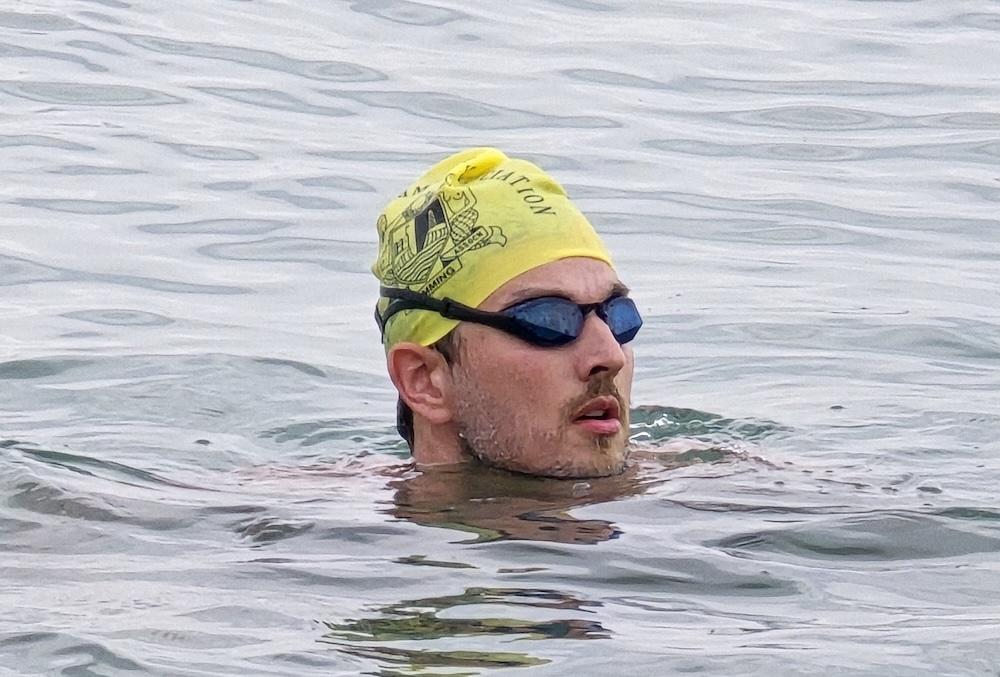
Joe Thomas swimming in open water, training for his English Channel crossing for MDS UK

Support Joe's Channel Swim

Joe took on one of the world's toughest endurance challenges. Every donation will help MDS UK provide information, support and community for people affected by MDS.

What it really takes to swim the English Channel

Many people hear "English Channel swim" and think: "21 miles. A long swim."

The reality is far tougher

This was the culmination of more than two years of relentless training and preparation for a challenge where success depends on technical efficiency, physical strength and mental resilience, balanced against the unpredictability of the wind and sea.
Despite all that preparation, Joe faced his biggest challenge as he made his way across the English Channel. Every stroke tested his endurance, determination and ability to adapt to constantly changing conditions.
Although the Channel is around 21 miles at its narrowest point, swimmers often cover much farther because of powerful tides and currents. Joe faced these relentless conditions throughout his attempt, spending hours in water as cold as 15–18°C while battling fatigue, cold, waves and ever-changing sea conditions.
Illustrated map of the English Channel swim route from England to France, showing how strong tidal currents can force swimmers to cover many more miles than the 21-mile straight-line crossing. Joe Thomas is attempting the challenge for MDS Support UK in early August 2026.

Under official Channel Swimming rules

  • No wetsuit. Joe wore only a standard swimming costume, one swim cap and a pair of goggles.
  • No stopping or touching the support boat. Every drink and feed had to be passed to Joe while he continued swimming. Touching the boat would have ended his official attempt.
He swam through one of the busiest shipping lanes in the world, guided by experienced pilots navigating commercial traffic, tides and changing conditions. Every stroke Joe took was for people affected by MDS.

This challenge was deeply personal for Joe

He took on the English Channel in support of his dad, who is living with MDS.
"Thankfully, our family has had incredible support from MDS UK, an extraordinary charity that provides invaluable help to patients like my dad. Any donation, big or small, will make a real difference,” says Joe. “It will help other MDS patients get the support they need when they receive a life-changing diagnosis.”


Throughout the swim, Joe's mum and dad were alongside him on the support boat, managing his feeding plan, monitoring his morale and stroke rate, and making decisions based on his energy levels and the inevitable seasickness he experienced. In short, they shared every high and low of the journey. As Joe battled cold water, strong tides and hours of relentless swimming, they were there encouraging him every stroke of the way.
Now he needs our support.
If you've been thinking about sponsoring Joe, this is the moment. Every donation, no matter the size, will help MDS UK continue providing information, support and advocacy for people affected by MDS and their families across the UK.

Joe's training journey: From the slow lane to the channel

When Joe took on this challenge, he couldn't swim front crawl. He started in the slow lane of his local pool and worked up from there, developing technique, stamina and cold-water tolerance.

Joe training in the pool

Training in Dover Harbour

Training then moved to Dover Harbour, with sessions in water temperatures as low as 5–6°C, carefully managed to balance progress with safety. A Channel crossing requires continuous swimming for many hours against shifting tides, without a wetsuit.
Despite a demanding work schedule and international travel, training remained on course. Every missed session was been made up, often at the expense of downtime with friends and family — a reflection of Joe's commitment to the challenge ahead.
Joe Thomas preparing to swim around Dover Harbour as part of his English Channel training
Joe Thomas in the water at Dover Harbour during training for his English Channel swim
Preparations have also been underway behind the scenes, from finalising the support crew to coordinating the logistics required for a successful crossing.
Masterpiece, the pilot boat that will accompany Joe Thomas during his English Channel crossing for MDS UK

Masterpiece — the pilot boat that will accompany Joe across the Channel

Joe Thomas with his family, who are supporting his English Channel swim for MDS UK

Joe with his family

Joe Thomas and his dad Pete experiencing cold water immersion in a garden cold plunge, as part of Joe's English Channel swim training

Joe giving his dad, Pete, a taste of the cold plunge in his back garden

Help Joe make every mile count


Joe has spent more than two years preparing for this extraordinary challenge.
Every donation helps MDS UK continue providing specialist support, trusted information and advocacy for people affected by MDS.

Why your support matters

Joe took on this incredible challenge because his family has experienced first-hand the difference MDS Support UK can make.
Thanks to supporters like Joe and everyone who donates, we can continue to be there for people facing an MDS diagnosis—providing trusted information, practical support and a welcoming community when it's needed most.


Discover the support that MDS UK offers


If you or someone you care about has been affected by MDS, we're here to help with trusted information, practical support and opportunities to connect with others who understand.
  • You don’t have to face MDS alone — explore our Support section for practical advice and emotional support via our support line and virtual meetings
  • You can download our comprehensive MDS Patient Guide for clear, reliable information about living with MDS.
  • Find out how MDS is treated and what options might be right for you on our MDS Treatments page

Birmingham Insurance Institute names MDS UK Charity of the Year

More people affected by Myelodysplastic Syndromes (MDS) will benefit from increased awareness, support and fundraising after MDS UK was named Birmingham Insurance Institute's (BII) Charity of the Year for 2026/27.
The Birmingham Insurance Institute and MDS Support UK celebrating the Charity of the Year partnership 2026.

Helping more people affected by MDS, find support

This partnership will shine a light on Myelodysplastic Syndromes (MDS), a group of rare blood cancers, helping more patients and families access trusted information, practical support and a welcoming community. Together, we want to increase understanding of MDS so that more people affected by the condition know where to turn when they need help.

The difference this will make

For many people, MDS is something they have never heard of until they or someone they love is diagnosed. Receiving a diagnosis of a rare blood cancer can feel overwhelming, and knowing where to find trusted information and support can make a real difference.

Through this partnership, we hope more patients and families will discover MDS UK when they need us most. Together, Birmingham Insurance Institute and MDS UK will raise awareness of MDS, engage members, deliver fundraising initiatives and help ensure that more people affected by the condition know where to turn for information, support and community.

How BII chose MDS UK

Helen Holyoake, President of Birmingham Insurance Institute, said:

"As President of the Birmingham Insurance Institute, I am deeply proud to partner with MDS Support UK as my chosen charity. Their work brings vital clarity, compassion and guidance to families facing Myelodysplastic Syndromes. I lost my father to this condition, and I didn't know about MDS Support UK at the time — something I wish had been different. That is why helping them widen their reach into Birmingham and the wider West Midlands means so much to me. By supporting their mission, we can ensure that more families receive the understanding and support mine never had, turning awareness into meaningful action and hope."

Dr Blossom Bell, Chief Executive Officer of MDS Support UK, said:

"We are delighted to have been chosen as Birmingham Insurance Institute's Charity of the Year. MDS remains a little-known rare blood cancer, and this partnership provides an important opportunity to raise awareness and increase understanding of the condition. We look forward to working with Birmingham Insurance Institute and its members to help ensure more patients and families know where to turn for information, support and community."

What's next?

We'll be sharing updates on our fundraising activities and the impact of this partnership throughout the year, so keep an eye on our website and social media to see what we achieve together.

Our sincere thanks go to Birmingham Insurance Institute for choosing MDS UK as its Charity of the Year. We look forward to making a meaningful difference together.


Find information, support and community from MDS UK

Helen's experience is a reminder that many people don't discover MDS Support UK until after a diagnosis. Through partnerships like this, we're working to change that.

If you or someone you care about has been affected by MDS, we're here to help with trusted information, practical support and opportunities to connect with others who understand.

  • You don’t have to face MDS alone — explore our Support section for practical advice and emotional support via our support line and virtual meetings
  • You can download our comprehensive MDS Patient Guide for clear, reliable information about living with MDS.
  • Find out how MDS is treated and what options might be right for you on our MDS Treatments page

Transforming MDS Care: New Patient Portal in Development – Dr Luke Carter-Brzezinski

In this presentation, Dr Luke Carter-Brzezinski, Haematology Consultant at the Haematology Cancer Diagnostic Partnership in Manchester, shares key insights from the latest patient survey and introduces Haem.io — an innovative patient portal currently in development. Designed to transform how patients engage with their care, Haem.io aims to support individuals throughout their long-term treatment journey. We will continue to update this page with the latest news as the project progresses.

Watch the presentation 

This session was recorded for MDS UK Patient Support Group  - April 2026.

About Dr Luke Carter-Brzezinski

Dr Luke Carter-Brzezinski, Haematology Consultant at Manchester Royal Infirmary
Dr Luke Carter-Brzezinski is a Consultant Haematologist working at the Haematology Cancer Diagnostic Partnership in Manchester, with a particular focus on diagnostics and myeloproliferative disorders.
He completed his MD at the University of Manchester, where his research explored frailty in patients with myeloma. In addition to his clinical practice in the UK, Luke is actively involved in global health initiatives as a member of the British Society of Haematology Global Health Special Interest Group, and has contributed his time to volunteering work overseas.


Further information and resources from MDS UK


  • Download our comprehensive MDS Patient Guide for clear, reliable information about living with MDS and understanding your diagnosis.


  • You don’t have to face MDS alone — explore our Support section for practical advice and emotional support via our support line and virtual meetings.

Could Vitamin B5 help alleviate anaemia in MDS patients?

Vitamin B5 (pantothenic acid) capsules being investigated in MDS research

Anaemia is one of the most common and challenging symptoms of MDS, often causing fatigue, breathlessness and a reduced quality of life. Researchers believe that Vitamin B5 (pantothenic acid) may help improve red blood cell production in some people with MDS, potentially helping to reduce the effects of anaemia.


About the new Vitamin B5 for MDS clinical trial.

This promising area of research has led to the development of the B5 for MDS clinical trial, which is now being rolled out nationally following full funding from Cancer Research UK.

The research began in 2023, when Dr Kevin Rouault-Pierre (Barts Cancer Institute, Queen Mary University of London) and his team published a study in Science Translational Medicine showing that Vitamin B5 could help restore red blood cell production in MDS cells. MDS UK helped fund the next stage of the research, which has since secured full funding from Cancer Research UK for a national clinical trial.


Watch: Dr Onima Chowdhury discuss the new national B5 for MDS trial - (recorded at the MDS UK Support meeting, June 16th 2026)

We were delighted to welcome Dr Onima Chowdhury, Consultant Haematologist at Oxford University Hospitals and Clinical Lead of the VitB5 for MDS trial, to our online support meeting on 16 June 2026. In this presentation, Dr Chowdhury discusses the new clinical trial and the potential role of Vitamin B5 as a treatment for anaemia in MDS.


Download the presentation (.pdf) 


Click or tap the thumbnail image to download a PDF of Dr Onima Chowdhury's presentation explaining the new Vitamin B5 clinical trial and what it could mean for people living with MDS.


Previous presentation: The science behind Vitamin B5 and MDS

Before the national trial was announced, Dr Onima Chowdhury, Dr Kevin Rouault-Pierre and colleagues joined MDS UK members on 18 March 2025 to explain the science behind the research and the early findings that led to the development of the clinical trial. Watch the earlier presentation below.

Watch: A recorded presentation about the Vitamin B5 study

About the Cancer Research UK funding for this national clinical trial

In April 2026, Cancer Research UK awarded full funding for the B5forMDS national clinical trial.

This is a significant achievement, reflecting both the strength of the research and the dedication of the clinical and scientific teams involved. The award enables the study to move forward as a national trial, taking the research one step closer to patients.

Speaking about the award, Dr Onima Chowdhury said:

"This is true bench-to-bedside precision medicine. I hope that this research can improve the treatment landscape for MDS, repurposing a tablet that should be easy for patients to tolerate."

While the trial will initially involve a small number of patients across specialist centres, the funding represents an important step forward for both the project and the wider MDS community.

Our congratulations and thanks go to the clinical team for bringing the study to this stage. We are proud to have supported the project and look forward to following its progress.

Find out more about the funding award


The Vitamin B5 Study Team


MDS Patient Support

Dr Kevin Rouault-Pierre is group leader and a Reader in Stem Cell Biology and Diseases at the Barts Cancer Institute, Queen Mary University of London. 

MDS Patient Support

Dr Shoshana Burke is a Clinical Research Fellow in Dr Rouault-Pierre’s laboratory and a clinician at the Barts Health NHS Trust.

MDS Patient Support

Dr Onima Chowdhury is a consultant haematologist in the Haematology department at Oxford University Hospitals where she looks after patients with myeloid malignancies. She is also a clinical lead in the diagnostics laboratory.

For more information 


If you would like to help us fund more research and trials like this please consider donating either a single amount or a small monthly donation by clicking the button below.

MDS Patient Support
MDS Patient Support
MDS Patient Support
MDS Patient Support
MDS Patient Support

Thanks to our fundraisers, a new MDS Quality of Life study is possible

At MDS UK, our work is made possible by our community. Thanks to two generous, community-funded contributions, we are now able to support a new study focused on improving quality of life (QoL) for people living with Myelodysplastic Syndromes (MDS). We are hugely grateful to both groups for making this project possible.


About the MDS Quality of Life (QoL) Study

Led by Health Psychologist and Doctoral Researcher, Stacie Thursby, the study will be looking at ways to improve everyday quality of life for those living with MDS.
The research will examine what it really means to live with MDS and aims to develop practical, evidence-based tools for use in daily life. The patient voice and lived experience will be central to every aspect of the study, ensuring any proposed solutions truly reflect the needs of MDS patients. More details of the study will be announced soon.  

Our sincere thanks to Buckby Castle Masonic Lodge


Our first major contribution comes from Buckby Castle Masonic Lodge, whose members raised £2,500 by completing a sponsored walk along Hadrian’s Wall.
The members walked in memory of Worshipful Brother Yan Pheonix’s father, Douglas. Their dedication and personal commitment to honouring Douglas’ memory — alongside their ongoing support for Yan, Marlene and his family — has directly contributed to the launch of this Quality of Life (QoL) study.


MDS UK CEO, Blossom Bell, accepting cheque for £2500 from two members of Buckby Castle Lodge
Pictured (L–R) Brother Chris Long, Dr Blossom Bell (CEO, MDS UK), and Worshipful Brother Yan Pheonix

A heartfelt thank you to The Stragglers running club


The second generous contribution comes from our longstanding partnership with the Cabbage Patch 10, an iconic 10-mile race organised by The Stragglers Running club — a club well known for its strong community ethos and commitment to supporting local charities.
Through their 2025 event, The Stragglers donated £2,500 to MDS UK.
We are deeply grateful to The Stragglers for continuing to choose us as one of the charities supported by the event, and for the warm, inclusive community they foster around the race.
Event organiser Kevin Price, pictured with MDS UK Patron Caitlin Limmer, has confirmed their intention to continue the partnership in future years — something that means a great deal to us.
To everyone who ran, organised, volunteered or cheered from the sidelines: thank you. Your miles have helped move MDS research forward.
Cabbage Patch 10 event organiser Kevin Price, pictured with MDS UK Patron Caitlin Limmer, from the Stragglers Running Club
Cabbage Patch 10 race organiser Kevin Price, with MDS UK Patron Caitlin Limmer


What your support means for people living with MDS

Together, these two donations have allowed us to move forward with a research programme focused on improving day-to-day life for people living with Myelodysplastic Syndromes.
Quality of life is about more than treatment. It’s about having the energy to get through the day, maintaining independence, feeling confident, and knowing your voice is heard. It’s about practical support that makes everyday challenges more manageable.
Because of your fundraising, this work is now underway.
On behalf of everyone at MDS UK — and the patients whose experiences will help shape this study — thank you. We look forward to sharing more with you soon.


If you would like to help us fund more research and trials like this please consider donating either a single amount or a small monthly donation by clicking the button below.


Understanding stem cell therapy for MDS

In this presentation, Patricia Cardoso, Bone Marrow Transplant Coordinator and Clinical Nurse Specialist (CNS) at King’s College Hospital, London, explains what to expect before, during, and after a donor stem cell transplant. The session covers donor selection, transplant preparation, chemotherapy, recovery, side effects, and long-term follow-up.

Watch the presentation 

This session was recorded for MDS UK Patient Support Group  - February 2026.

Download the pdf 


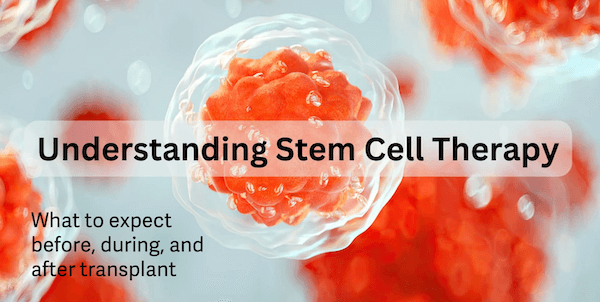
Click or tap the thumbnail image to download a pdf of Patricia Cardoso's presentation 'Understanding Stem Cell Therapy'

About Patricia Cardoso

Patricia Cardoso, Bone Marrow Transplant Coordinator and Clinical Nurse Specialist (CNS) at King’s College Hospital, London
Patricia Cardoso is a Haematology Nurse with over 10 years’ experience in cancer care and a long-standing commitment to supporting people with blood disorders. She currently works as a Bone Marrow Transplant Coordinator and Clinical Nurse Specialist (CNS) at King’s College Hospital, where she coordinates complex donor stem cell transplants and supports patients and families throughout the transplant journey.
Her work spans from transplant preparation through treatment and recovery, with a focus on helping patients feel informed, supported, and confident during this critical stage of their care.

Downloadable booklets about stem cell transplants


Patricia mentioned a number of booklets in her presentation, which we’ve listed below. Click or tap the links or booklet images to download a PDF copy.
  • Blood stem cell and bone marrow transplants: The seven steps This booklet is for people who are going to have a stem cell transplant, and for those supporting them. It explains the transplant process in clear, step-by-step stages, helping you understand what lies ahead and how each stage supports your recovery.

(If you’d prefer a printed copy, you can order one free of charge from the Blood Cancer UK online shop. Free delivery is available for information booklets.)

If you’d prefer a printed copy, you can contact: Anthony Nolan patient support via patientinfo@anthonynolan.org


Further information and resources from MDS UK


  • Download our comprehensive MDS Patient Guide for clear, reliable information about living with MDS and understanding your diagnosis.


  • You don’t have to face MDS alone — explore our Support section for practical advice and emotional support via our support line and virtual meetings.

New PyramIDH clinical trial for MDS with IDH1-mutation now recruiting in the UK

New PyramIDH clinical trial for MDS with IDH1-mutation now recruiting in the UK

About the PyramIDH trial

PyramIDH is the name of a randomised clinical study designed to measure the efficacy of Ivosidenib, an oral inhibitor which specifically targets the gene mutation IDH1, compared with the commonly used hypomethylating agent (HMA) Azacitidine (often referred to as Aza).   


Why this study matters

Following promising results from phase 2 of the study, which showed a 72% overall response rate for Ivosidenib (as a monotherapy, or single treatment) in patients with previously untreated  IDH1-mutant MDS,  the aim of this third phase is to further validate the findings by testing a wider cohort of patients.   


Trial design

The trial managers are looking to recruit approximately 48 MDS patients with the IDH-1 mutation who have not previously been treated with hypomethylating agents.  They will be split randomly into two groups, with the patients in one group to be treated with Ivosidenib and the other group Azacitidine.   


Who can take part?

You may be eligible if:
  • You are 18 or older and have been diagnosed with MDS with the genetic mutation IDH-1
  • You have not yet been treated with hypomethylating agents
  • You live within reasonable travelling distance of one of the trial centres listed below

Considering this trial?


If this trial is of interest to you and you think you may be eligible, discuss it with your consultant. Your consultant can assess whether the trial is suitable for you and how it fits with your current care.

UK trial sites and contacts

  • Churchill Hospital, Oxford – Contact: Dr Connor Sweeney
  • King’s College Hospital, London – Contact: Dr Lynn Quek
  • University College Hospital, London - Dr Rob Sellar
  • Western General Hospital, Edinburgh – Contact: Dr Victoria Campbell
  • Torbay Hospital, Torbay – Contact: Dr Zhao Rui

Full trial details on the official ClinicalTrials.gov listing


  • You can view full trial details, including eligibility criteria, trial sites and study design, on the official ClinicalTrials.gov listing: clinicaltrails.gov


‘Coping with an MDS Diagnosis’ – Presentation by Senior Psychotherapist Surabhi Chaturvedi

In this presentation, 'Coping with an MDS diagnosis', lead Psychotherapist Surabhi Chaturvedi from the haematology department at King’s College Hospital, London, discusses the emotional challenges of an MDS diagnosis and offers practical, evidence-based coping strategies for patients, families & carers.

Watch the presentation 

This session was recorded for MDS UK Patient Support Group  - November 2025.

Download a pdf of the presentation


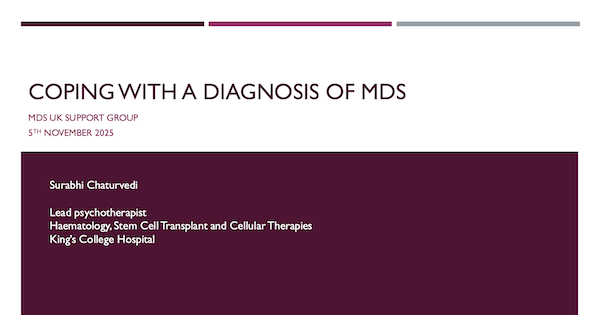
Click or tap the thumbnail image to download a pdf of Surabhi Chaturvedi's presentation 'Coping with a diagnosis of MDS'

About Surabhi Chaturvedi

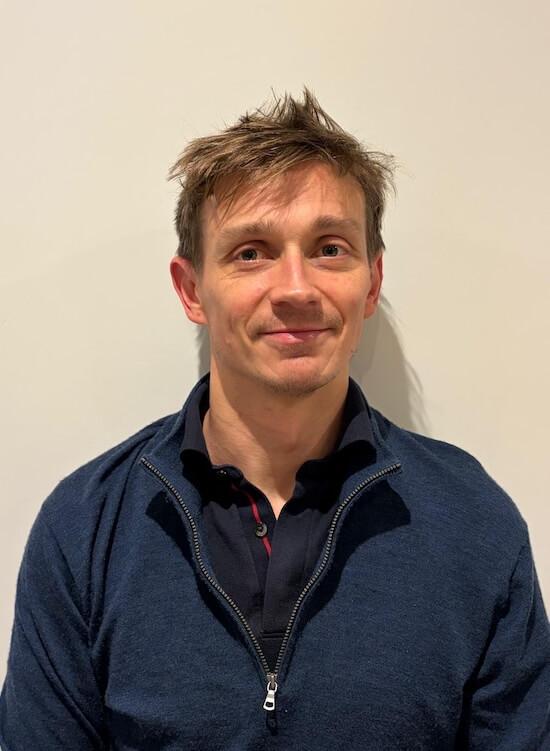
Lead Psychotherapist Surabhi Chaturvedi in the haematology department of King's College Hospital, London
Surabhi Chaturvedi is the senior psychotherapist and service lead for the Haemato-Oncology psychological support team at King’s College Hospital. An integrative psychotherapist with a background in clinical psychology, she leads a team of psychological therapists within the hospital’s Haematology, Stem Cell Transplant, and Cellular Therapies unit, providing specialist psychological support to patients and families affected by blood cancers and bone marrow failure, and delivering training on the psychological care of Haematology patients.

Resources & services - where to get help


Support from MDS UK


Apps, websites & services
Surahbi mentioned various resources that can support you and we've added some too.


Services
    • NHS Talking therapies  offers free, self-referrable mental health support for anyone struggling with anxiety, depression, or everyday emotional difficulties.
    • Maggie's offers free, compassionate cancer support both in person and online, providing a welcoming space to talk, seek guidance, and feel understood.
Apps
    • Calm  An app to help you manage stress and anxiety, get better sleep, and feel more present in your life.
    • Headspace  An app to offering evidence-based meditation and mindfulness tools, to help you create life-changing habits to support your mental health.
Web articles
Books / Audio guides
    • Jon Kabat-Zinn - Full Catastrophe Living -Jon Kabat-Zinn’s Full Catastrophe Living is a classic guide to mindfulness-based stress reduction, offering practical ways to use mindfulness to cope with stress, pain, and illness. Kabat-Zinn, the founder of Mindfulness-Based Stress Reduction (MBSR), draws on his background in integrative medicine and his decades of experience in meditation and healthcare to show how mind–body practices can support healing. This seminal book is also available as an audiobook.
    • Jon Kabat-Zinn - website. Resources, teachings, and talks from the creator of Mindfulness-Based Stress Reduction, offering insight into mindfulness and healing.

Further information and resources from MDS UK


  • You can download our comprehensive MDS Patient Guide for clear, reliable information about living with MDS and understanding your diagnosis.
  • You don’t have to face MDS alone — explore our Support section for practical advice and emotional support via our support line and virtual meetings.

Free NHS App for blood transfusion patients

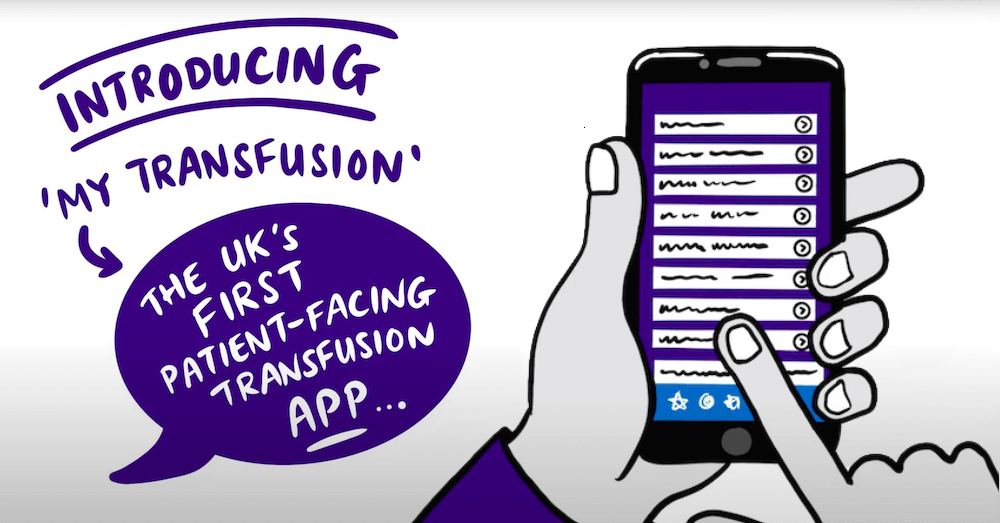
Illustration of hands holding a phone displaying the NHS My Transfusion app with the text ‘Introducing My Transfusion’.”
A new NHS-supported app, My Transfusion, has been launched to help people who receive blood transfusions better understand their treatment.


Who the app is for

It's designed for patientscarerstheir families, or anyone involved in supporting someone undergoing a blood transfusion. It may also be a useful source of information for health care staff involved in the transfusion consent and decision-making process.  

Aim of the app

Developed by the team at SHOT (Serious Hazards of Transfusion), the My Transfusion app aims to improve patient understanding, support informed choices, and enhance safety in transfusion practice.

What the My Transfusion app offers

The app provides clear, reliable information about every stage of the transfusion process, including:
  • Key information about blood transfusions
  • Other available options in place of transfusion
  • How to prepare for a transfusion and what consent involves
  • Understanding blood components and receiving blood best suited to you
  • Safety checks before transfusion and recognising acute transfusion reactions
  • Post-transfusion advice
Whether you are new to transfusions or have received them before, the app helps you feel more informed, confident, and involved in your care.

Resources for healthcare professionals


Download the app for free on all major platforms

The My Transfusion app is completely free. The easiest way to download it is to scan the barcodes below with your mobile phone using your camera function.
QR code linking to the My Transfusion app download page on the Google Play store and the Apple App Store.
If you prefer not to use the QR codes, just go to the Google Play Store or Apple App Store and search for ‘My Transfusion'.

Other ways of accessing the app


More information about transfusions on MDS UK


Blood transfusions explained : by Kelly Nwankiti, Lead Nurse at King’s College Hospital

We’re pleased to share this presentation Understanding Blood Transfusions from Nurse Kelly Nwankiti, Lead Nurse for Patient Blood Management at King’s College Hospital. Kelly explains the key details of blood transfusions — including who they’re for, why they’re needed, and what’s involved in the process. She also answers important questions from patients, helping to make this complex topic clearer and easier to understand.
Watch the video below to learn more.

Watch the presentation

"Understanding Blood Transfusions" – by Nurse Kelly Nwankiti | MDS UK

(Recorded at an MDS UK online support meeting, October 2025)

About Nurse Kelly Nwankiti

Kelly Nwankiti, Lead Nurse for Patient Blood Management at King's College Hospital
Kelly Nwankiti is the Lead Nurse for Transfusion and Patient Blood Management at King’s College Hospital, London.
In this role, she oversees transfusion services and leads initiatives to improve patient blood management. She is an active member of the British Society of Haematology’s Transfusion Task Force, contributing to national discussions and best practices in the field.
Kelly has presented widely on topics related to blood management and transfusion care, and her work has been recognised for advancing clinical standards. She has also co-authored research, including studies examining prehospital transfusion in paediatric trauma.


Download NHS Patient Information leaflet about Blood Transfusions 


Follow this link to the NHS Patient Information Leaflet Receiving a Blood Transfusion mentioned by Nurse Kelly Nwankiti in her video presentation.


More information

  • To learn more about how blood transfusions are used to manage anaemia in people with MDS, and to hear insights from Dr Matt Poynton, visit our dedicated page on Blood, or Red Cell, Transfusions.

  • Find out more below about the free NHS app for blood transfusion patients.

Free NHS App for Blood Transfusion Patients

Illustration showing hands holding a mobile phone with the My Transfusion app on screen, with the text ‘Introducing My Transfusion’
My Transfusion is a new NHS-supported app created by SHOT (Serious Hazards of Transfusion) to help patients and carers better understand blood transfusions and feel more confident in their care.
 

Free donations by shopping